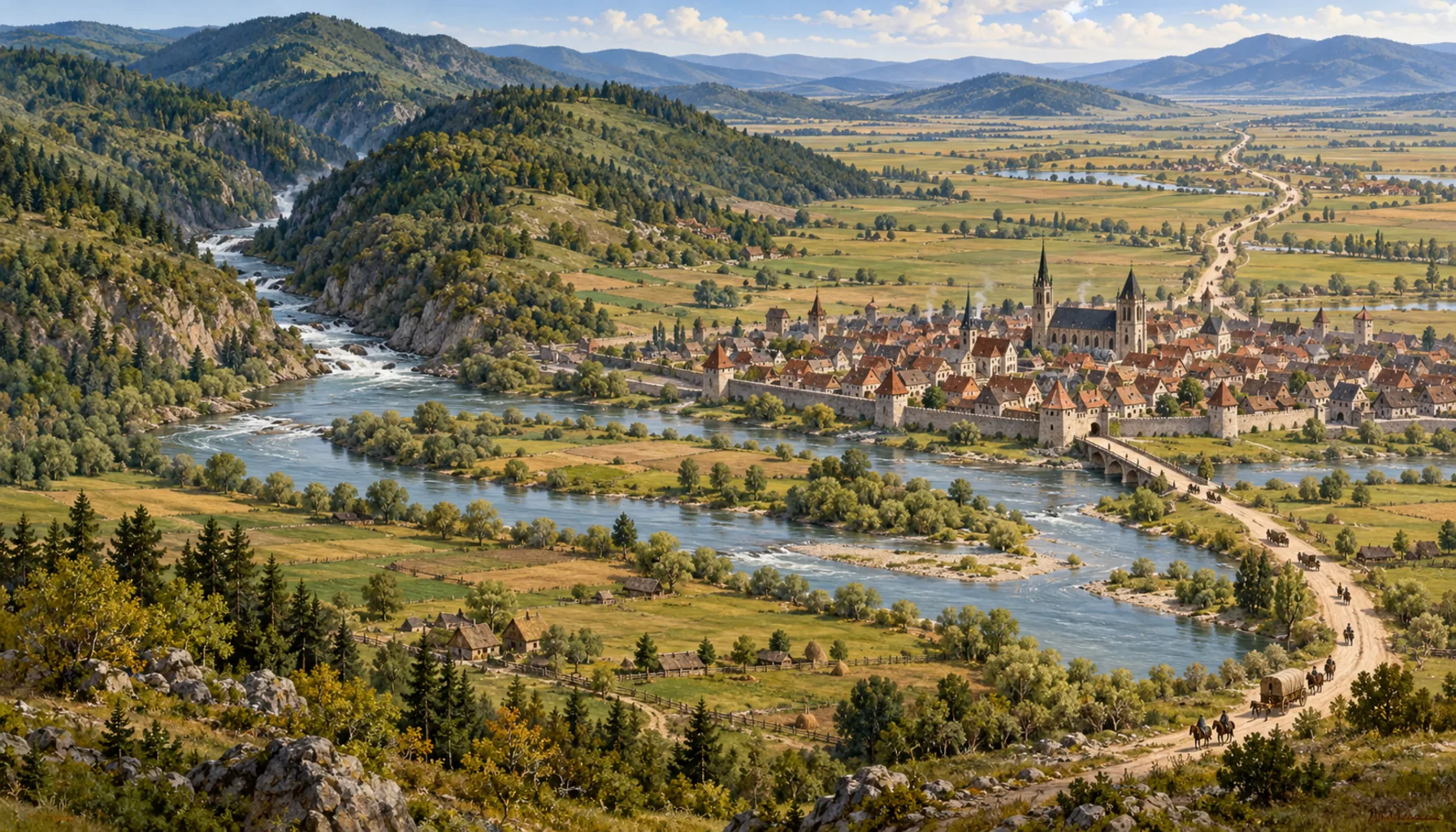
Košice sits where the river Hornád comes out of the hills into a wide, sheltered basin, and that is the whole reason the city exists. North of here the valleys narrow towards the Carpathian passes into Poland; south of here the land opens out and runs flat all the way to the Hungarian plain. Anyone moving goods between those two worlds had to come through this gap, and people have lived in it since the Stone Age — the sandy terrace at Barca, today a borough on the southern edge of the city, is one of the best-known Old Stone Age settlement sites in Slovakia. But nothing written names a settlement here until the thirteenth century, so everything we know about this long stretch comes out of the ground rather than out of a document. That difference is worth holding on to: archaeology tells you people were here, a charter only tells you when somebody first bothered to write it down.Košice ležia tam, kde Hornád vychádza z kopcov do širokej, chránenej kotliny — a práve v tom je celý dôvod, prečo mesto vzniklo. Na sever odtiaľto sa doliny zužujú k karpatským priesmykom do Poľska, na juh sa krajina otvára a plochá pokračuje až do Uhorskej nížiny. Kto chcel prevážať tovar medzi týmito dvoma svetmi, musel prejsť touto bránou — a ľudia tu žili už od doby kamennej: piesočná terasa v Barci, dnes mestskej časti na južnom okraji Košíc, patrí k najznámejším paleolitickým sídliskám na Slovensku. Nijaký písomný prameň však osadu na tomto mieste nespomína až do trinásteho storočia, takže všetko, čo o tomto dlhom období vieme, pochádza zo zeme, nie z listiny. Ten rozdiel si treba zapamätať: archeológia hovorí, že tu ľudia boli, listina len to, kedy si to niekto po prvý raz dal námahu zapísať.