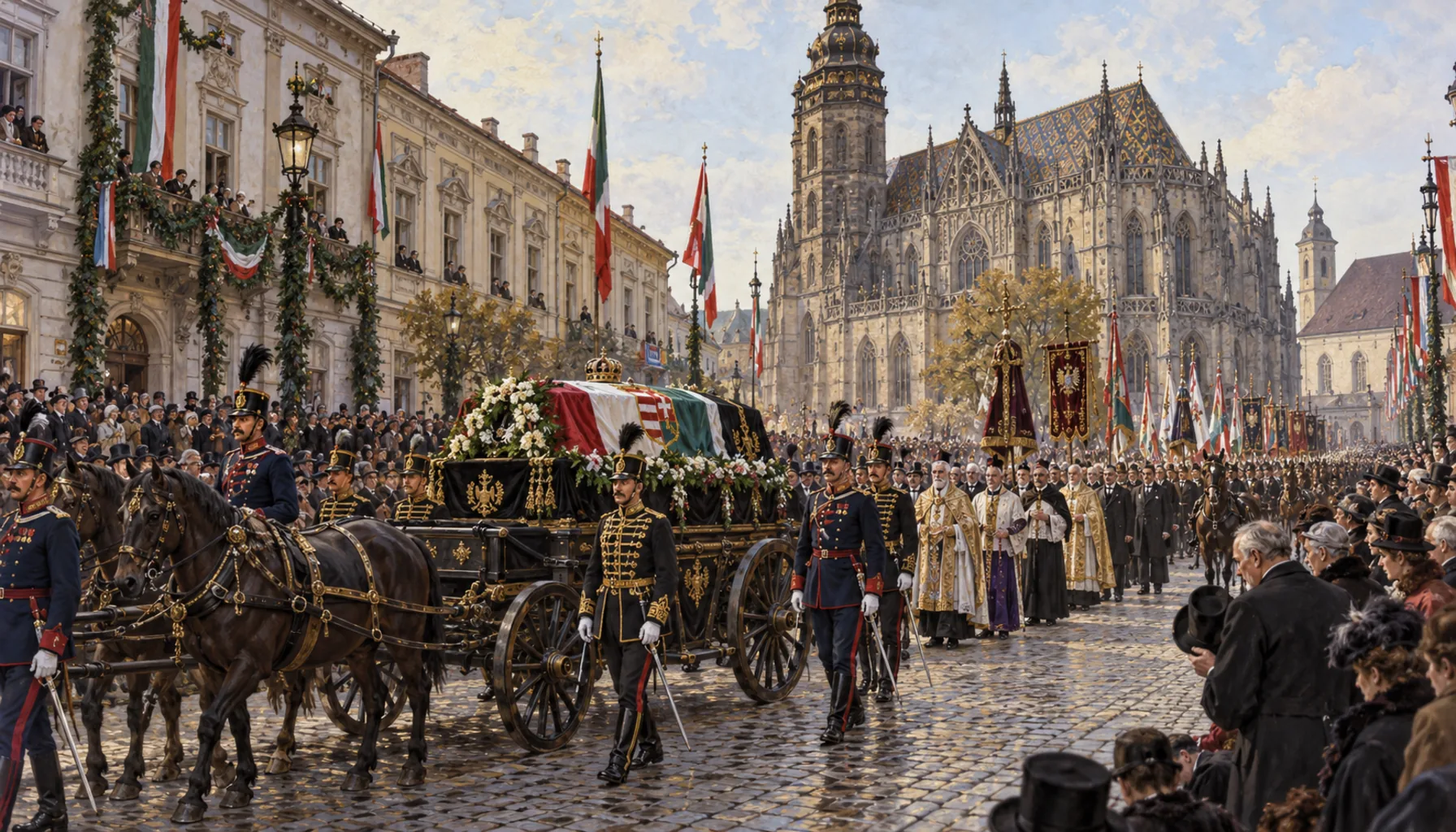
Francis II Rákóczi lost his war, went into exile and died in 1735 at Rodosto on the Sea of Marmara, in what is now Turkey. In 1906 the Hungarian government brought his remains and those of his companions back, and they were buried in a crypt built for them in the cathedral of St Elisabeth, where they still lie. Think about what that ceremony meant: a Habsburg emperor-king permitting the state burial of the man who had fought an eight-year war against his family, because by 1906 Hungarian nationalism needed a hero and the dynasty needed Hungarian loyalty. In the garden of the Executioner's Bastion the city keeps Rodošto, a replica of the house he lived in during his exile.František II. Rákoci svoju vojnu prehral, odišiel do vyhnanstva a v roku 1735 zomrel v Rodošte pri Marmarskom mori, v dnešnom Turecku. V roku 1906 dala uhorská vláda jeho pozostatky aj pozostatky jeho druhov previezť domov a pochovali ich v krypte, ktorú pre nich vybudovali v Dóme svätej Alžbety — ležia tam dodnes. Stojí za to premyslieť si, čo ten obrad znamenal: habsburský cisár a kráľ povolil štátny pohreb muža, ktorý viedol osemročnú vojnu proti jeho rodu, pretože v roku 1906 potreboval maďarský nacionalizmus hrdinu a dynastia potrebovala maďarskú lojalitu. V záhrade Katovej bašty má mesto Rodošto, repliku domu, v ktorom Rákoci vo vyhnanstve býval.