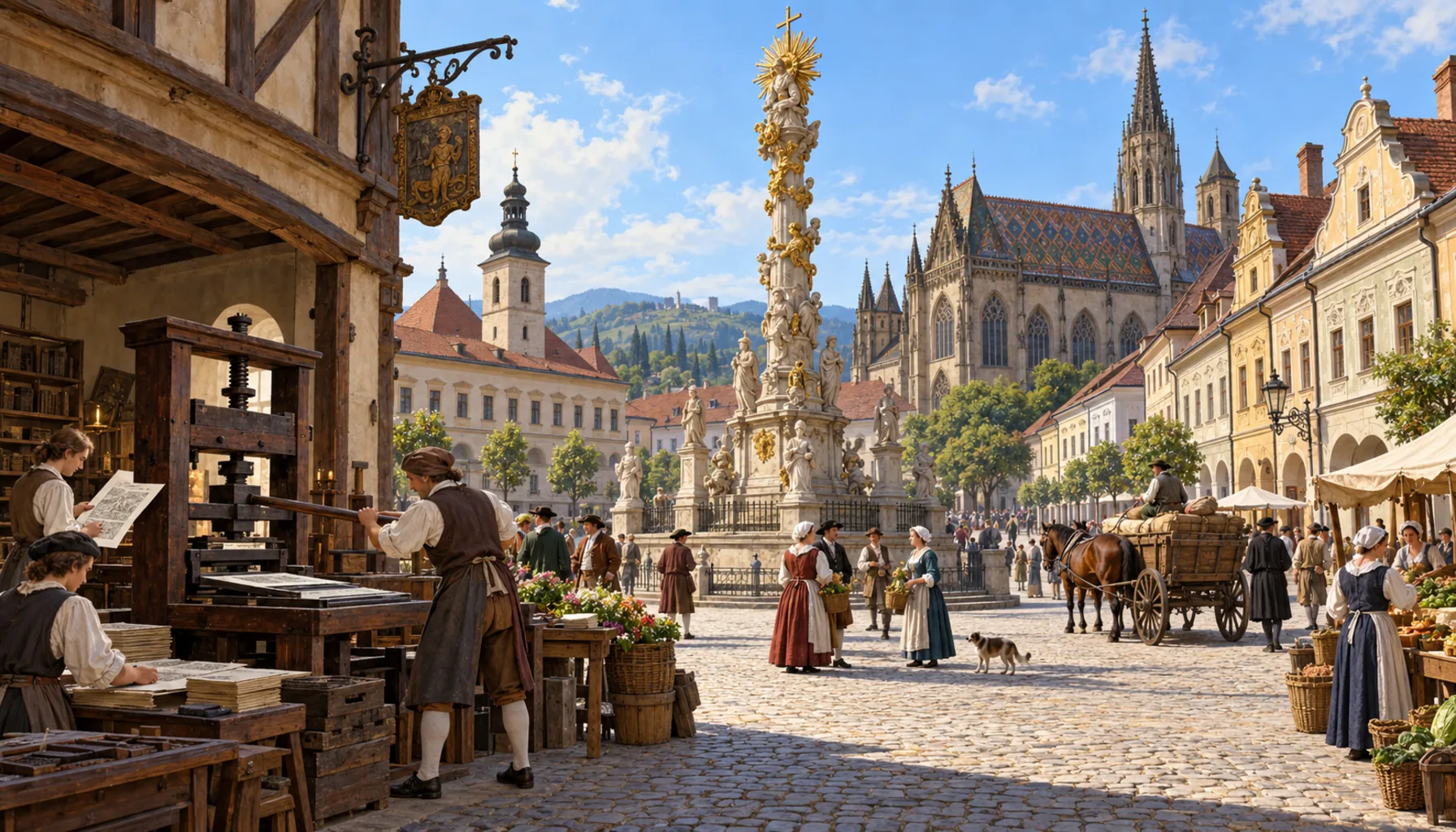
The eighteenth century was the first long stretch of peace Košice had had since the Middle Ages, and it looks like it. The tall Immaculata column went up on Hlavná in 1723 after a plague, baroque façades were put on medieval houses, and convent schools and the academy filled the town with pupils. The presses kept working: in 1788 the first periodical in the Hungarian language published anywhere in the kingdom, Magyar Museum, was printed in Košice. That is worth pausing on. The national awakenings of the nineteenth century — Hungarian, Slovak, Czech, Romanian — all began not with armies but with printers, schoolmasters and small magazines that almost nobody read, and one of the first of them came out of this town.Osemnáste storočie bolo pre Košice prvým dlhým obdobím pokoja od stredoveku — a je to na meste vidieť. Vysoký stĺp Immaculaty vyrástol na Hlavnej v roku 1723 po morovej epidémii, stredoveké domy dostali barokové fasády a kláštorné školy aj akadémia naplnili mesto študentmi. Tlačiarne pracovali ďalej: v roku 1788 vyšiel v Košiciach Magyar Museum, prvý časopis v maďarčine vydávaný kdekoľvek v kráľovstve. Pri tom sa oplatí zastaviť. Národné obrodenia devätnásteho storočia — maďarské, slovenské, české, rumunské — sa nezačali vojskami, ale tlačiarmi, učiteľmi a drobnými časopismi, ktoré čítal takmer nikto. A jeden z prvých z nich vyšiel práve tu.