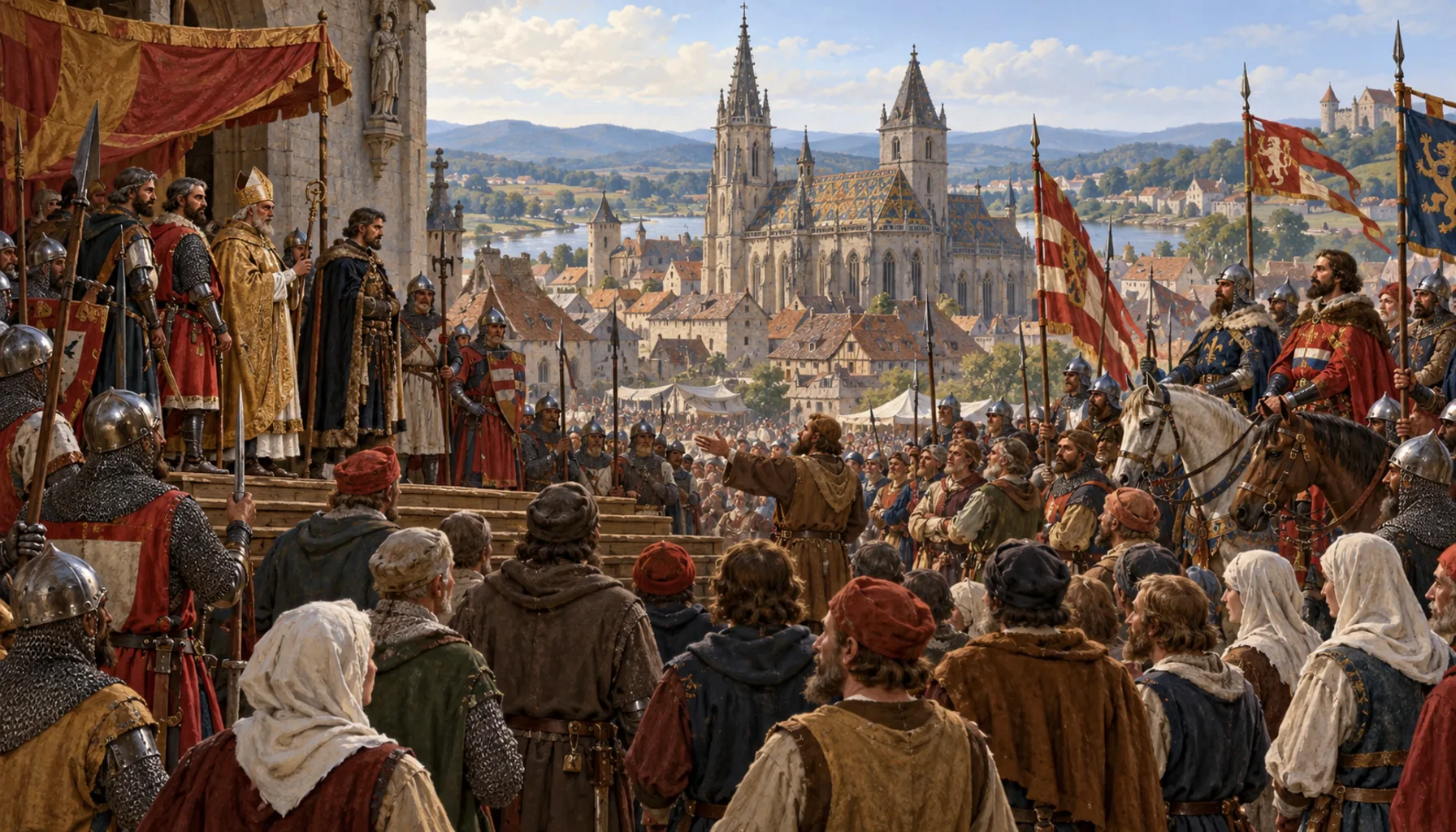
When the Árpád dynasty died out in 1301 the kingdom fell apart into the hands of great lords who ruled their own provinces — Matúš Čák in the west, the sons of Amadé Aba here in the east. Košice wanted a king rather than a neighbour with an army, and in 1311 the townspeople killed Amadé Aba in a street fight; his sons allied with Čák and came for the town. On 15 June 1312 the new king, Charles Robert of Anjou, met them at Rozhanovce a few kilometres north-east of Košice, with the town's own armed burghers fighting on his side. The chroniclers call it the bloodiest battle in the kingdom since 1241; the king won, the Aba power in the east was broken, and Košice had backed the winner. Almost everything good that happened to the town in the next century — privileges, the staple right, the coat of arms — flows from that choice.Keď v roku 1301 vymrel rod Arpádovcov, kráľovstvo sa rozpadlo do rúk veľmožov, ktorí si vládli vo vlastných provinciách — Matúš Čák na západe, synovia Omodeja Abu tu na východe. Košice chceli radšej kráľa než suseda s vojskom, a tak v roku 1311 mešťania Omodeja Abu v pouličnej zrážke zabili; jeho synovia sa spojili s Čákom a tiahli na mesto. Dňa 15. júna 1312 sa s nimi nový kráľ Karol Róbert z Anjou stretol pri Rozhanovciach, pár kilometrov severovýchodne od Košíc, pričom na jeho strane bojovali aj ozbrojení košickí mešťania. Kronikári ju nazývajú najkrvavejšou bitkou v kráľovstve od roku 1241; kráľ vyhral, moc Abovcov na východe sa zlomila a Košice stáli pri víťazovi. Takmer všetko dobré, čo mesto v nasledujúcom storočí získalo — výsady, právo skladu, erb — vyplýva z tohto rozhodnutia.