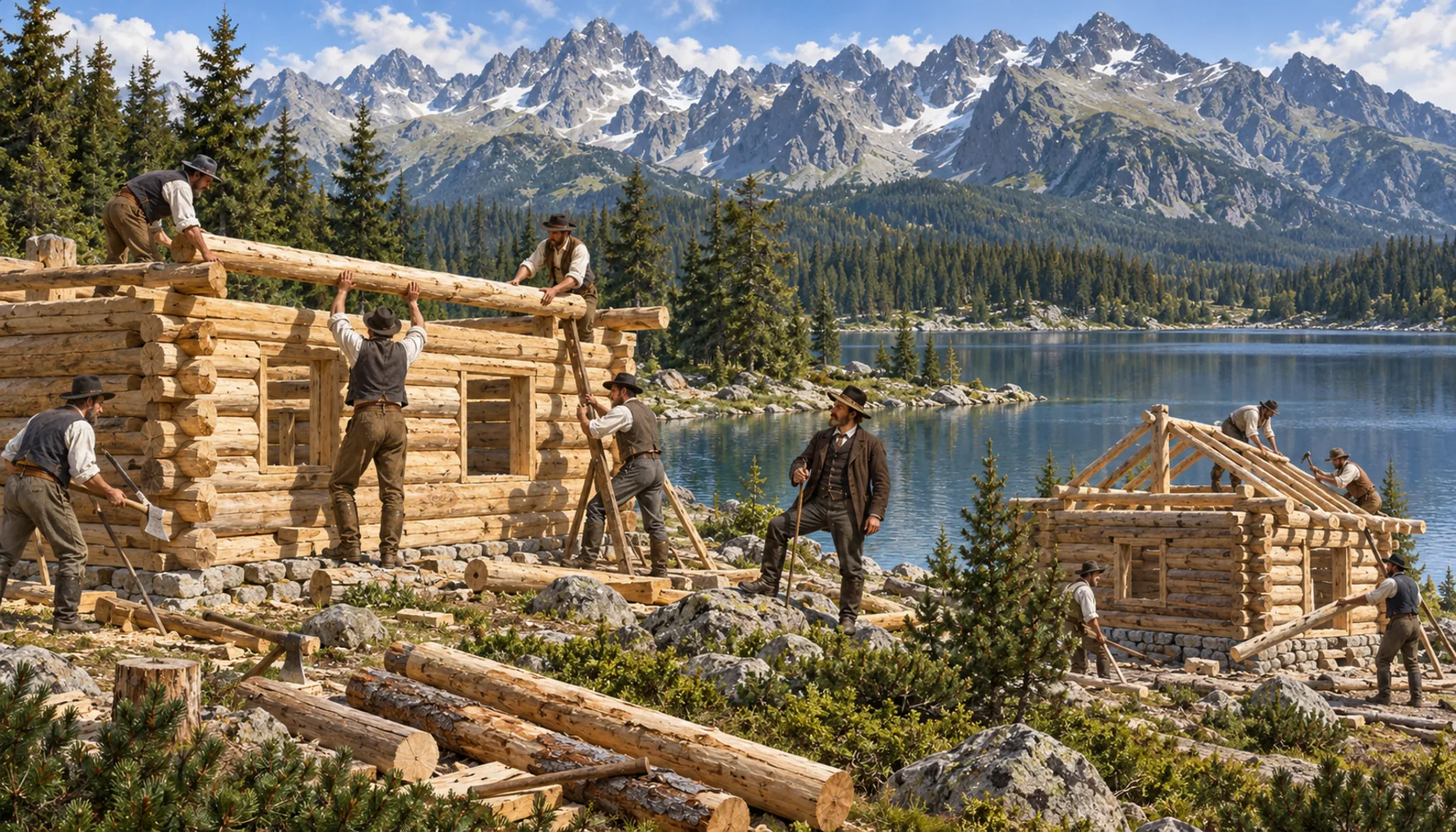
In 1872 Jozef Szentiványi and carpenters from Liptov put up two simple log cabins on the south-eastern shore of Štrbské pleso, at about 1,350 metres, and in 1875 they opened Jozefova chata — forty beds, baths, a kitchen and a room for the caretaker, beside a glacial lake. Within twenty years the architect Gedeon Majunke had given the place a restaurant, a bath house and the wooden villa style that still says Tatry to a Slovak eye. Szentiványi sold out to the Hungarian state in 1901, and the Brussels company Wagons-Lits Cook opened the first wing of a Grand Hotel there in 1906. One settlement contains the whole pattern of the Tatra boom: a private enthusiast, then an architect, then the state, then international money.V roku 1872 postavil Jozef Szentiványi s liptovskými tesármi na juhovýchodnom brehu Štrbského plesa dve jednoduché zrubové chatky vo výške asi 1 350 metrov a v roku 1875 otvorili Jozefovu chatu — štyridsať postelí, kúpele, kuchyňu a izbu pre správcu, priamo pri ľadovcovom plese. Do dvadsiatich rokov dal architekt Gedeon Majunke osade reštauráciu, kúpeľný dom a ten drevený vilový sloh, ktorý slovenskému oku dodnes hovorí Tatry. Szentiványi predal v roku 1901 uhorskému štátu a bruselská spoločnosť Wagons-Lits Cook tu v roku 1906 otvorila prvé krídlo Grandhotela. V jedinej osade je tak vidieť celý vzorec tatranského rozmachu: najprv súkromný nadšenec, potom architekt, potom štát a nakoniec medzinárodné peniaze.