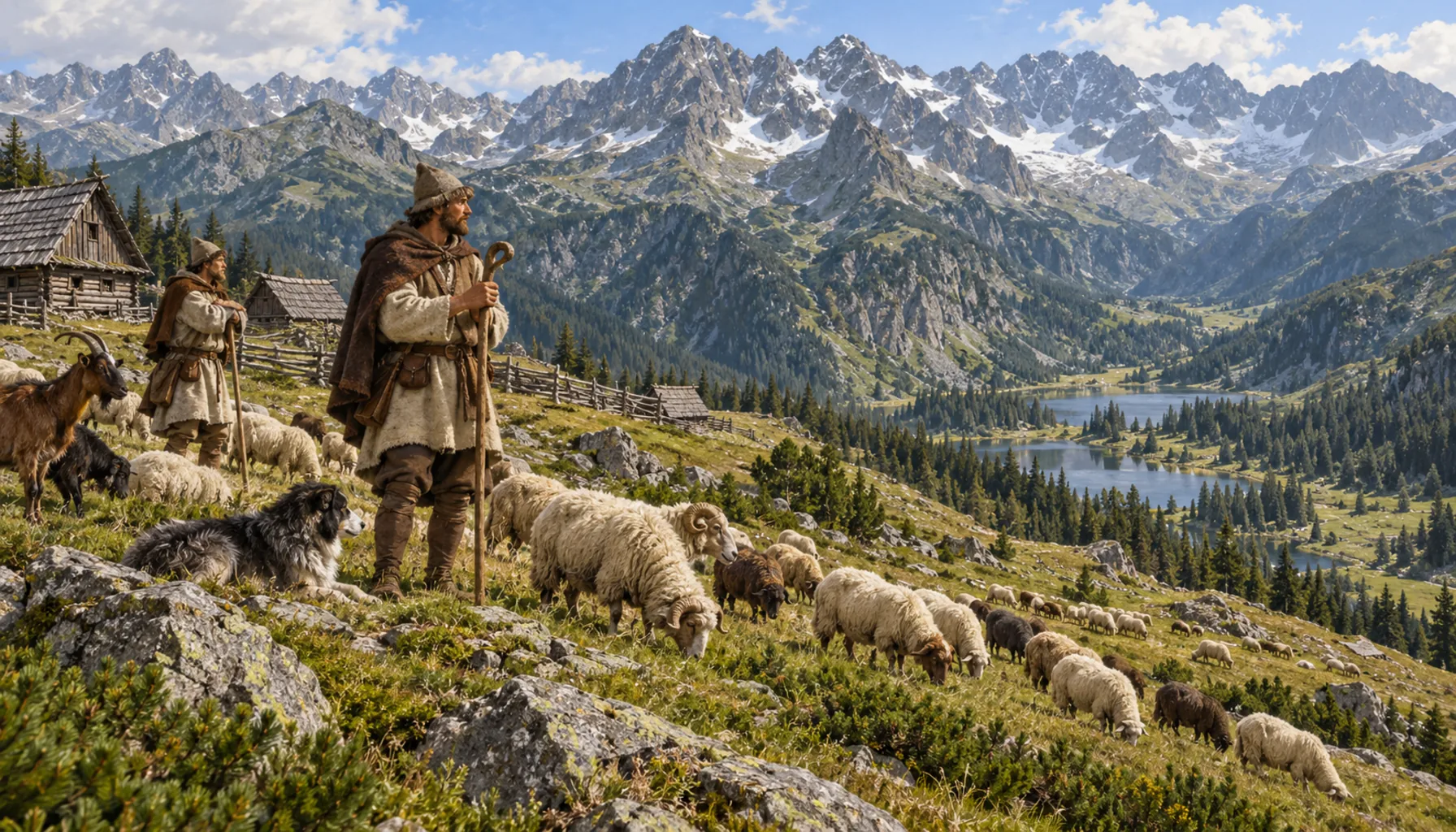
Through the late Middle Ages the Tatra valleys belonged to the estates of the Spiš and Liptov nobility and to the towns below, which held them for timber, pasture and hunting. The people who actually used them arrived with the Wallachian colonisation — a slow movement of sheep-herding communities along the Carpathian arc from the south-east, reaching this part of the range roughly between the fourteenth and the seventeenth centuries. They brought a whole working vocabulary that is still Slovak today: the salaš, the summer sheep station; the bača, the head shepherd; and bryndza, the sheep cheese that came down the mountain with them. For four hundred years that was the economy of the Tatras — grass in summer, nothing in winter.V neskorom stredoveku patrili tatranské doliny panstvám spišskej a liptovskej šľachty a mestám pod horami, ktoré ich držali pre drevo, pašu a poľovačku. Ľudia, ktorí ich naozaj využívali, prišli s valaskou kolonizáciou — pomalým postupom pastierskych spoločenstiev po karpatskom oblúku od juhovýchodu, ktorý sa do tejto časti pohoria dostal zhruba medzi 14. a 17. storočím. Priniesli celý pracovný slovník, ktorý je dodnes slovenský: salaš, letné ovčiarske stanovisko, bača, hlavný pastier, a bryndzu, ovčí syr, ktorý s nimi schádzal dolu. Štyristo rokov bolo toto celé hospodárstvo Tatier: v lete tráva, v zime nič.