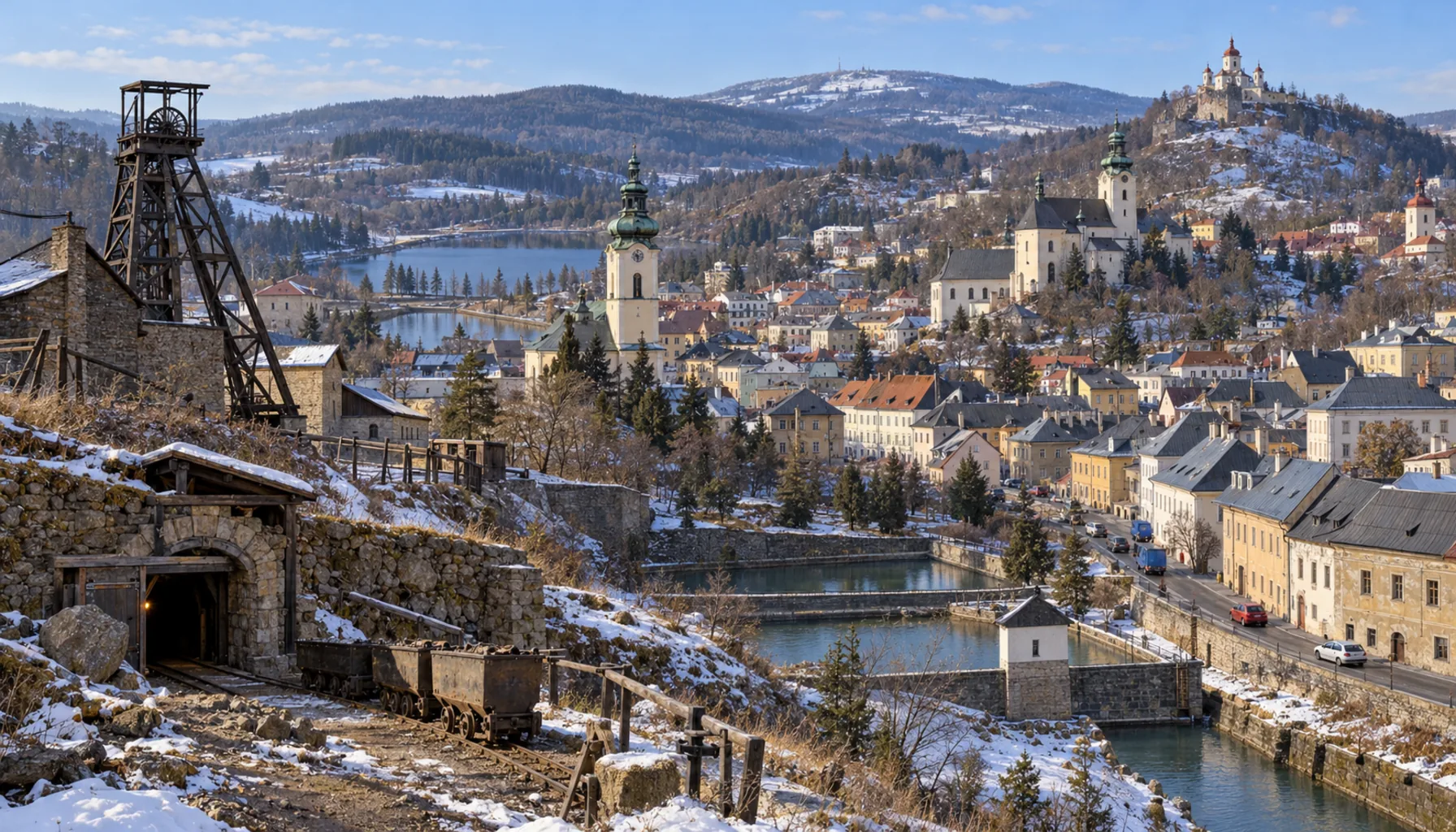
On 11 December 1993 UNESCO put the historic town on the World Heritage List together with the technical monuments around it — the shafts and adits and the water system, because the engineering and the town are one thing and cannot be listed apart. That inscription is the turn in the story. Restoration money began to arrive, people from Bratislava and elsewhere started buying and repairing the empty houses, and the tajchy found a second use: 23 of the original 60 still hold water and are now swimming lakes, Klinger and Počúvadlo and Veľká Richňava among them, linked by paths that follow the old channels. Every September the Salamander procession winds through the streets after dark, named for the shape the line of lamps makes on the slope.Jedenásteho decembra 1993 zapísalo UNESCO historické mesto do zoznamu svetového dedičstva spolu s technickými pamiatkami v okolí — so šachtami, štôlňami aj vodným systémom, lebo to inžinierstvo a to mesto sú jedna vec a oddelene sa zapísať nedajú. Ten zápis je zlomom celého príbehu. Začali prichádzať peniaze na obnovu, ľudia z Bratislavy aj odinakiaľ začali kupovať a opravovať prázdne domy a tajchy našli druhé využitie: 23 z pôvodných šesťdesiatich dodnes držia vodu a slúžia na kúpanie — medzi nimi Klinger, Počúvadlo či Veľká Richňava — a spájajú ich chodníky vedúce popri starých jarkoch. Každý september sa ulicami po zotmení vinie Salamander, sprievod pomenovaný podľa tvaru, ktorý na svahu vykreslí rad lampášov.