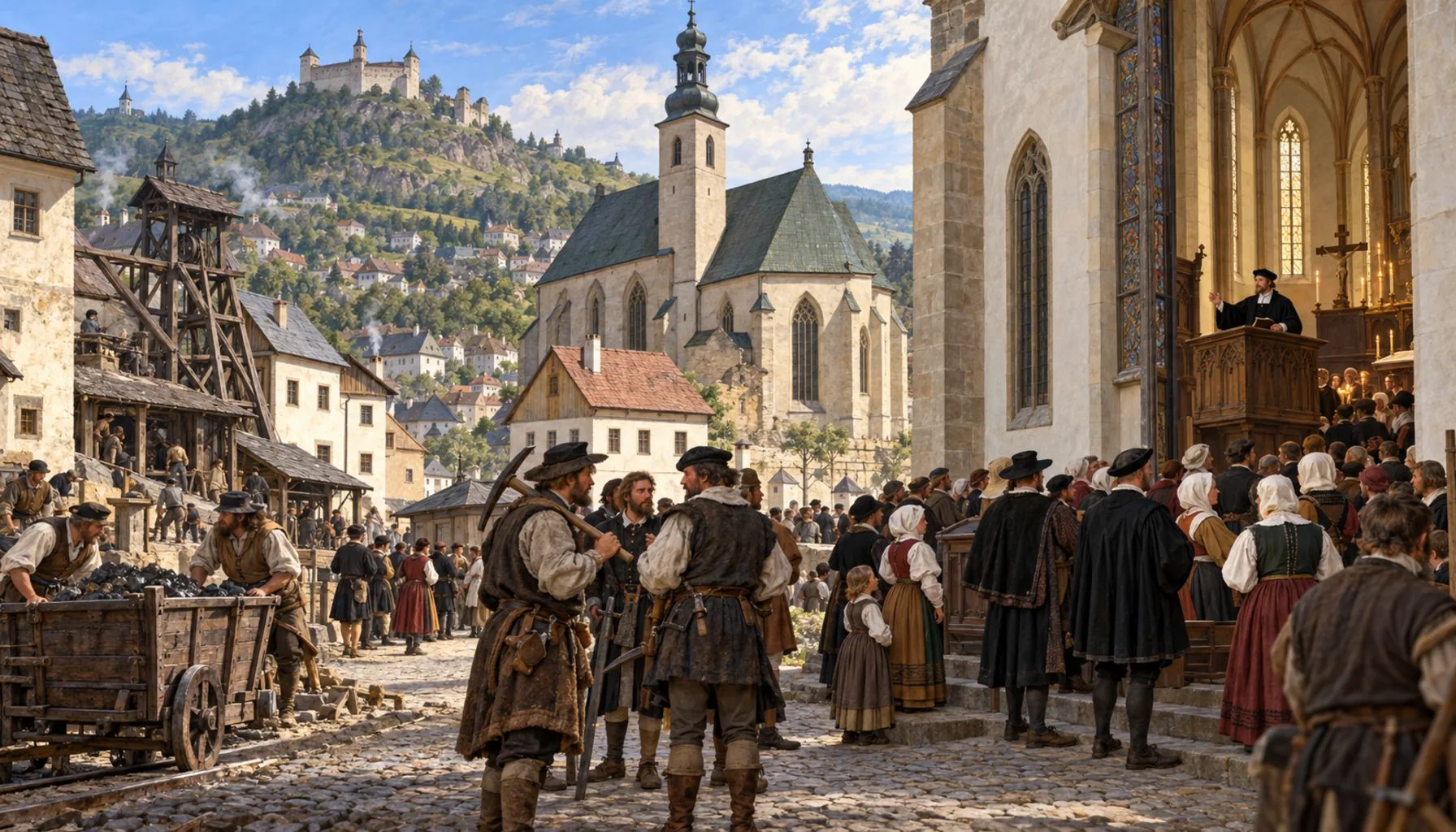
The German-speaking miners took up the Reformation early, and for almost a century, from 1575 to 1669, the town's main church was Lutheran. Banská Štiavnica was the leading member of the association of seven mining towns of Lower Hungary — with Kremnica, Banská Bystrica, Nová Baňa, Pukanec, Ľubietová and Banská Belá — which acted together over defence, over privileges and over religion. Then the Counter-Reformation caught up with them: the church passed to the Jesuits, who would leave their own mark on the hills above the town. The switch was not a matter of opinion changing; it was decided by whoever held power in Vienna and in the county.Nemecky hovoriaci baníci sa k reformácii prihlásili skoro a takmer sto rokov, od roku 1575 do roku 1669, bol hlavný mestský kostol evanjelický. Banská Štiavnica stála na čele spolku siedmich dolnouhorských banských miest — spolu s Kremnicou, Banskou Bystricou, Novou Baňou, Pukancom, Ľubietovou a Banskou Belou — ktoré vystupovali spoločne v obrane, vo výsadách aj vo viere. Potom ich dobehla protireformácia: kostol prevzali jezuiti, ktorí sa napokon zapíšu aj do kopcov nad mestom. Nešlo pritom o zmenu presvedčenia — rozhodovalo sa o tom podľa toho, kto mal moc vo Viedni a v stolici.