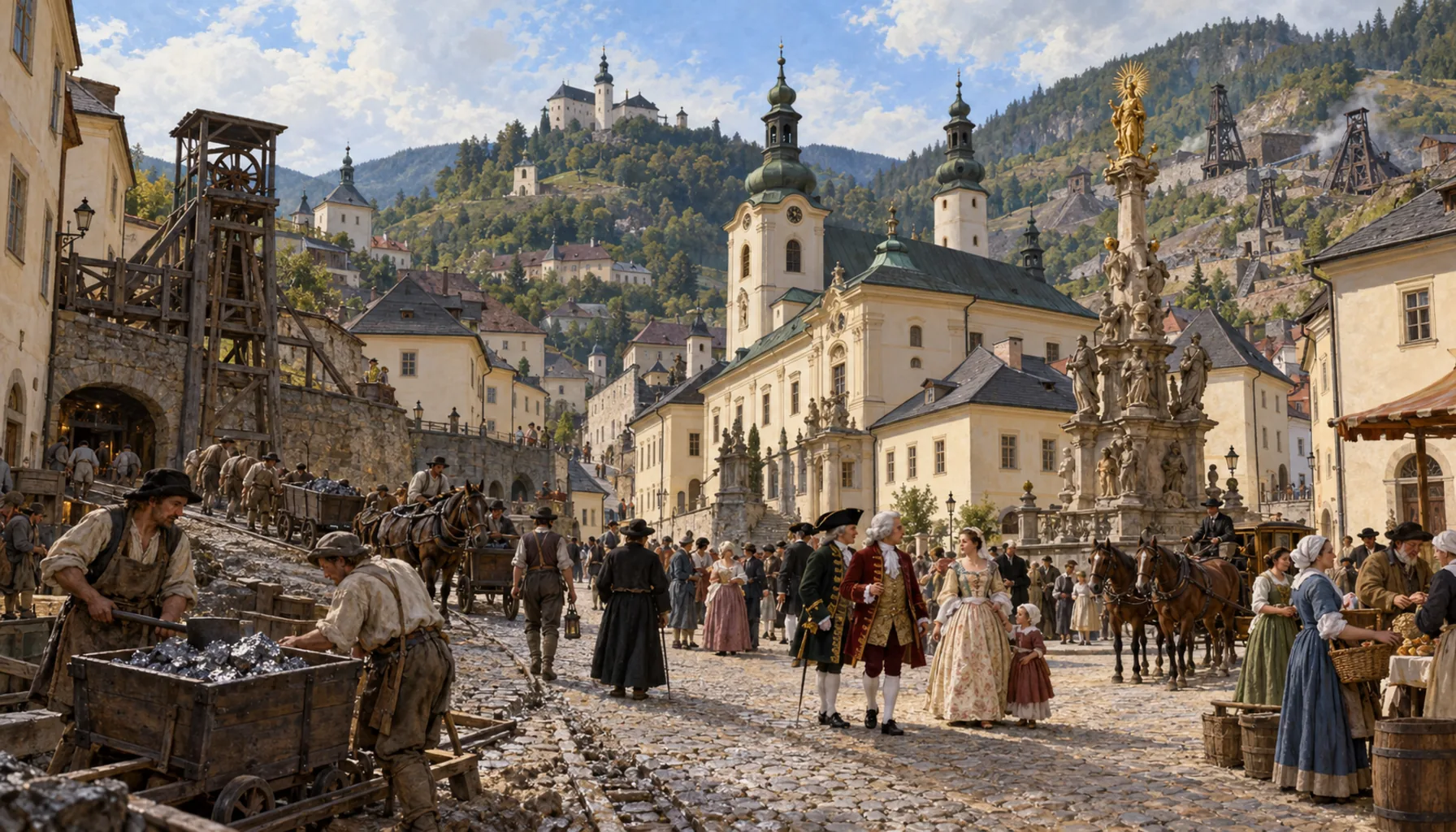
You can still see where the money went. Trinity Square is ringed by the houses of mine owners and closed by a plague column; lanes of Renaissance and Baroque houses drop away from it in every direction; and above the town, on a volcanic cone, stands the Calvary — a climb of chapels finished in 1751 on the initiative of the Jesuit František Perger, and for many people the most beautiful calvary in Europe. In 1782 Banská Štiavnica had 23,192 inhabitants, about 40,000 counting the suburbs, which made it the third largest town in the whole Kingdom of Hungary after Bratislava and Debrecen. Hold on to that number. Everything that happens next is measured against it.Kam tie peniaze išli, vidno dodnes. Trojičné námestie lemujú domy ťažiarov a uzatvára ho morový stĺp, na všetky strany z neho padajú uličky renesančných a barokových domov a nad mestom, na sopečnom kuželi, stojí Kalvária — stúpanie kaplniek dokončené roku 1751 z podnetu jezuitu Františka Pergera, pre mnohých najkrajšia kalvária v Európe. Roku 1782 mala Banská Štiavnica 23 192 obyvateľov, s predmestiami asi 40 000, a bola tak tretím najväčším mestom celého Uhorska — hneď po Bratislave a Debrecíne. To číslo si zapamätajte. Všetko, čo príde potom, sa meria oproti nemu.