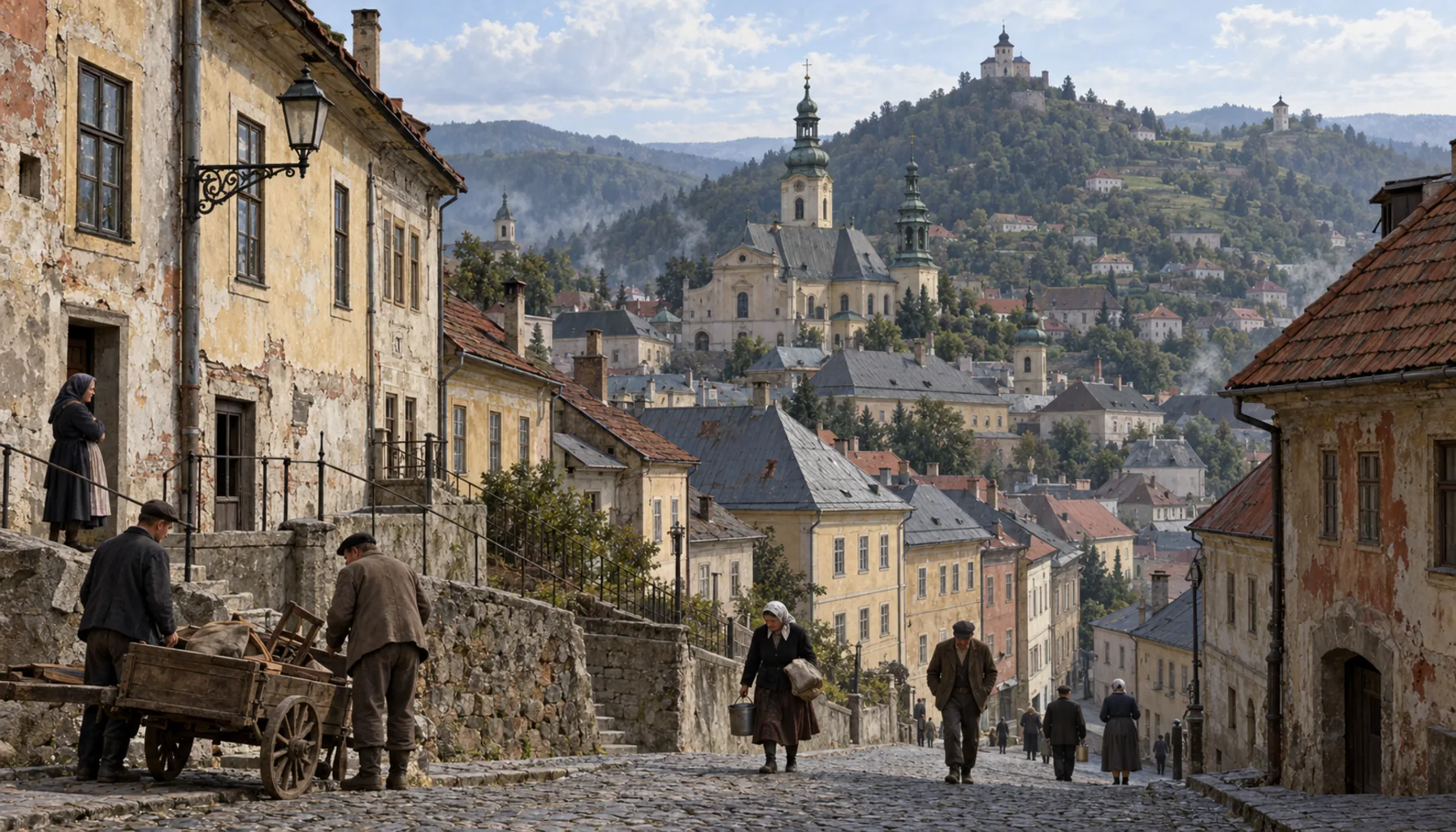
In 1950 the state declared the whole historic centre an urban heritage reserve — one of the first in Slovakia, and on paper a great honour. In practice the reason for the town was draining away underneath it. Mining shrank year by year, while the new work was down in the valley: the aluminium smelter the state built at Žiar nad Hronom in the early 1950s and the factories of the Hron towns, with modern flats and central heating beside them. Families moved out of cold houses on a steep hill into warm ones on the flat, roofs fell in behind them, and by the 1970s Banská Štiavnica was a protected monument that was quietly collapsing.Roku 1950 vyhlásil štát celé historické jadro za mestskú pamiatkovú rezerváciu — jednu z prvých na Slovensku a na papieri veľkú poctu. V skutočnosti sa pod ňou strácal dôvod, prečo mesto vôbec existovalo. Ťažba sa rok čo rok zmenšovala, kým nová práca bola dole v doline: hlinikáreň, ktorú štát postavil na začiatku päťdesiatych rokov v Žiari nad Hronom, a závody pohronských miest — a vedľa nich moderné byty s ústredným kúrením. Rodiny sa sťahovali zo studených domov na strmom kopci do teplých na rovine, strechy za nimi padali a v sedemdesiatych rokoch bola Banská Štiavnica chránenou pamiatkou, ktorá sa potichu rúcala.