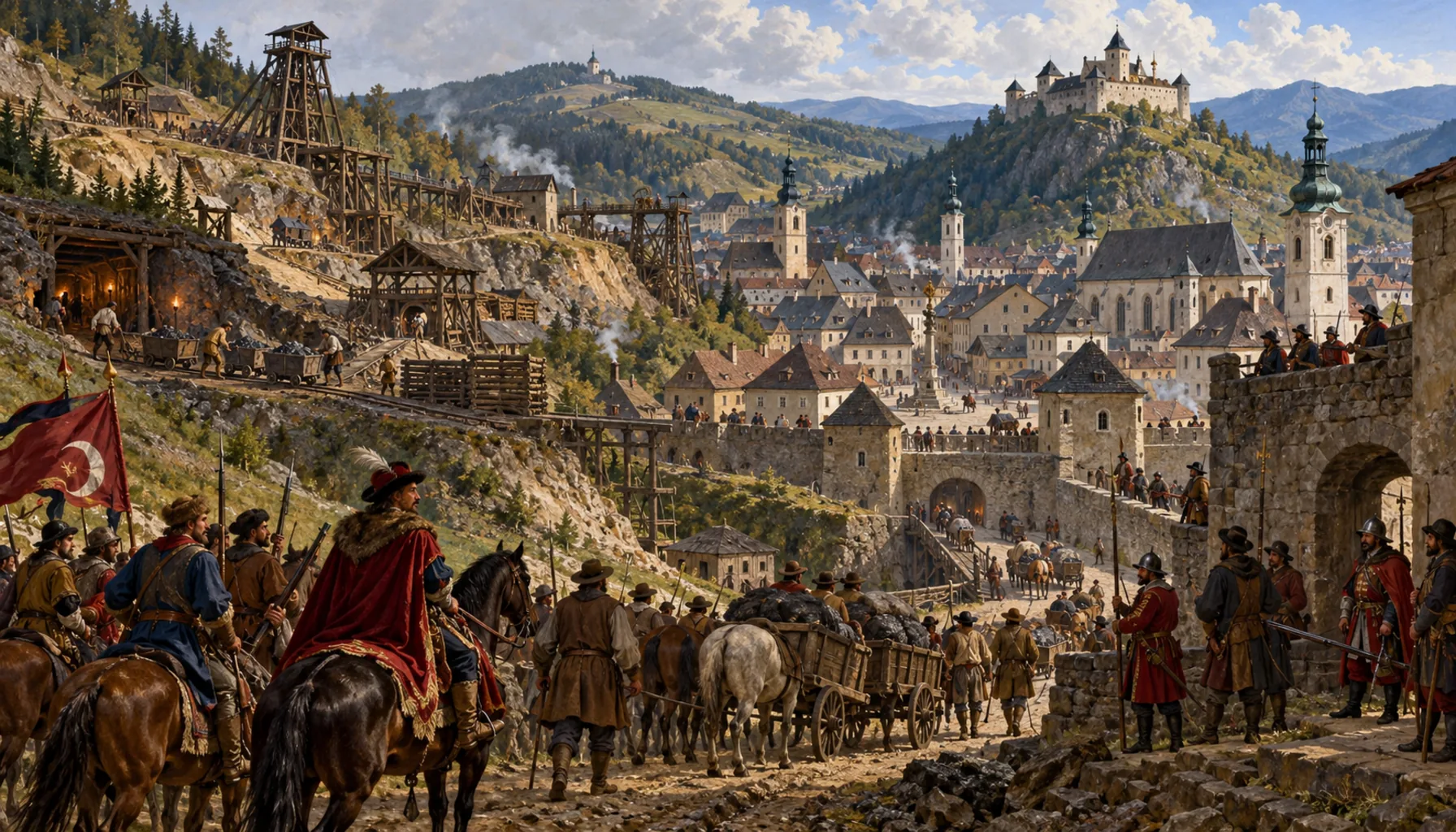
In the anti-Habsburg uprisings — Imrich Thököly's, then Francis II Rákóczi's — the mining towns were a prize, because whoever held them held the silver and the mints. In the autumn of 1703 alone the district changed hands twice: imperial troops under general Schlik retook the mining towns after the battle at Levice on 31 October, and Rákóczi's kuruc army — the name for the insurgent soldiers — took them back after the battle at Zvolen on 15 November. The uprising's chances ended at Trenčín on 3 August 1708, and the mines went back to Vienna for good. For the men underground it mattered less who owned the ore than whether the pumps kept running while the armies argued.V protihabsburských povstaniach — najprv Imricha Tököliho, potom Františka II. Rákociho — boli banské mestá korisťou, o ktorú stálo za to bojovať: kto ich držal, mal striebro aj mincovne. Len na jeseň 1703 sa panstvo nad regiónom vymenilo dvakrát — cisárske vojsko generála Schlika získalo banské mestá späť po bitke pri Leviciach 31. októbra a Rákociho kuruci, ako sa povstaleckým vojakom hovorilo, ich znovu obsadili po bitke pri Zvolene 15. novembra. Nádeje povstania sa skončili pri Trenčíne 3. augusta 1708 a bane sa nadobro vrátili Viedni. Pre chlapov pod zemou však bolo dôležitejšie, či počas hádky vojsk bežia čerpadlá, než komu ruda práve patrí.