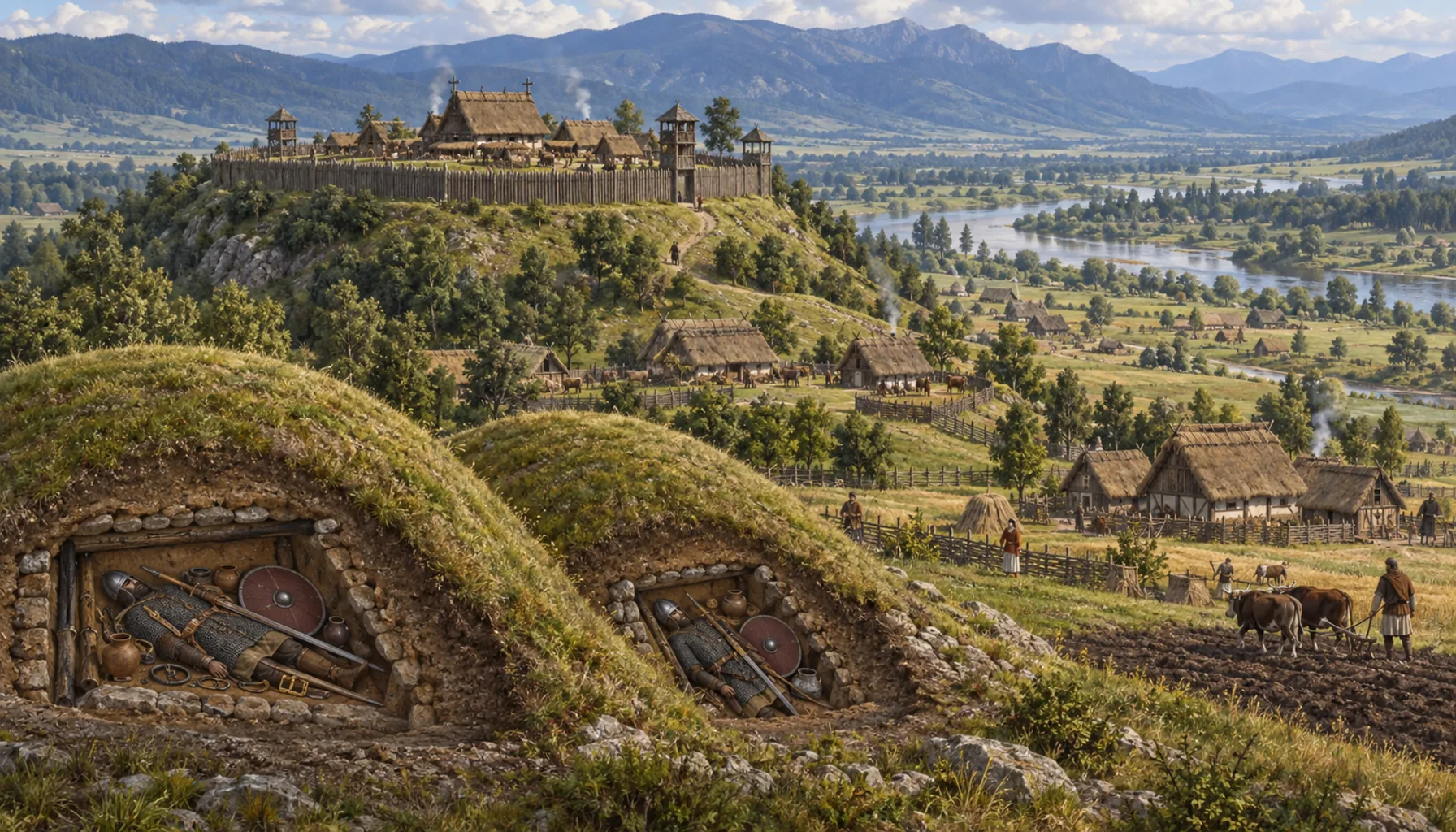
In the ninth century, when Great Moravia ran this part of Europe, a settlement stood on the Bôrik hill in what is now Žilina, with more scattered farmstead-type hamlets around it. In Bánová and in Žilina-Chrasť archaeologists uncovered Slavic burial mounds — barrows heaped over graves — holding warriors from the centre of Great Moravia, which means this valley was not a backwater but a place the ruling power kept armed men. The old hillfort at Divinka was occupied again, and Christianity, given a language of its own here after the mission of Constantine and Methodius in 863, began to spread up the valley too. Local tradition says the first Romanesque church in Žilina went up in the ninth century; archaeology has not confirmed it, so treat that one as a story the town tells about itself.V 9. storočí, keď túto časť Európy riadila Veľká Morava, stálo na žilinskom Bôriku sídlisko a okolo neho ďalšie roztrúsené osady dvorcového typu. V Bánovej a v Žiline-Chrasti odkryli archeológovia slovanské mohyly — hroby prekryté navŕšenou zeminou — s pochovanými bojovníkmi z centra Veľkej Moravy, čo znamená, že toto údolie nebolo zapadákovom, ale miestom, kde si vládnuca moc držala ozbrojencov. Znovu ožilo staré hradisko v Divinke a kresťanstvo, ktoré po misii Konštantína a Metoda z roku 863 dostalo u nás vlastný jazyk, sa začalo šíriť aj sem. Miestna tradícia hovorí, že prvý románsky kostol v Žiline postavili už v 9. storočí; archeológia to nepotvrdila, takže to zatiaľ ostáva rozprávaním mesta o sebe samom.