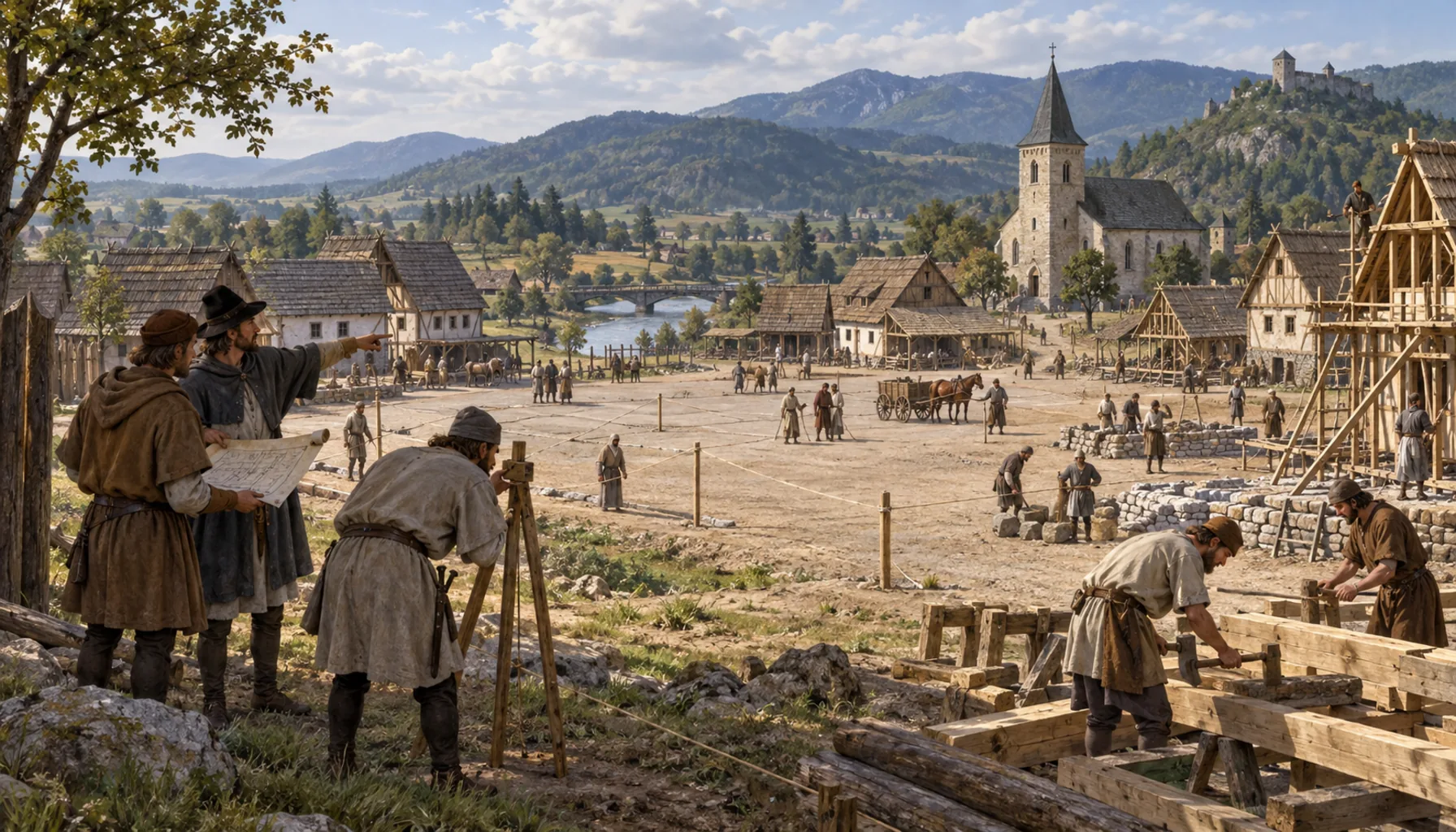
Some time before 1300, German colonists from the Silesian duchy of Teschen — today's Cieszyn, on the Polish–Czech border — began building a new settlement here. Its heart was the rínok, the market square, which is Mariánske námestie today; laying it out where they did left the older church and the castle sitting on its northern edge, which is why the medieval church in Žilina is not on the main square, as it is in most Slovak towns. The first document that calls Žilina a town dates from 1312, although in law it had been one for some years before that. It stayed small: through the whole fourteenth century the population probably never passed nine hundred.Niekedy pred rokom 1300 začali nemeckí kolonisti zo sliezskeho Tešínskeho kniežatstva — z dnešného Cieszyna na poľsko-českej hranici — stavať tu nové sídlo. Jeho jadrom sa stal rínok, čiže trhové námestie, dnešné Mariánske námestie; tým, že ho vymerali práve tam, ostal starší kostol aj hrad na jeho severnom okraji — a preto stredoveký kostol v Žiline nestojí priamo na hlavnom námestí, ako to v slovenských mestách býva. Prvá listina, ktorá Žilinu nazýva mestom, je z roku 1312, hoci právne ním bola už niekoľko rokov predtým. Mesto ostávalo malé: počas celého 14. storočia počet obyvateľov zrejme neprekročil deväťsto.