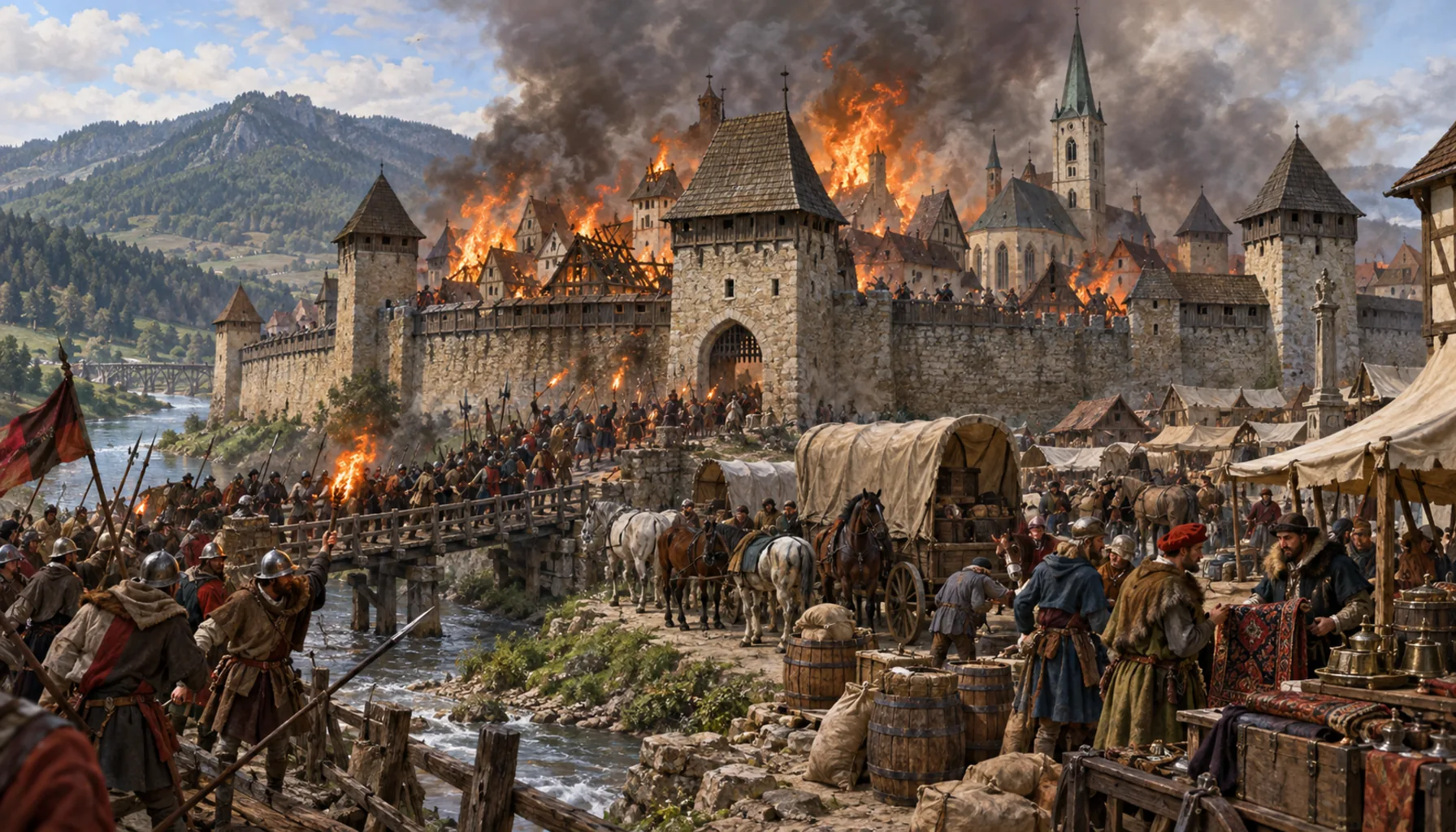
Sigismund of Luxembourg had confirmed Žilina's privileges in 1397, freed its merchants from border customs for ten years and ordered the town walled — a sign that there were traders here doing long-distance business worth protecting. It was not enough. Between 1431 and 1434 Hussite armies, the Bohemian religious reformers who campaigned across this country for two decades, took and burned Žilina twice, and the town declined for a time. The lasting damage was not to the buildings but to the German community, which never regained its weight: fewer and fewer German names appear on the council after this, and the town book starts being written in Slovak. Within two generations the parity charter of 1381 had been overtaken by events — Žilina was simply a Slovak town, and in 1438, with the first bridge over the Váh at Budatín on record, the trade northward picked up again.Žigmund Luxemburský Žiline v roku 1397 potvrdil výsady, na desať rokov oslobodil jej kupcov od pohraničného cla a prikázal mesto opevniť — znak, že tu boli obchodníci s diaľkovým obchodom, ktorý sa oplatilo chrániť. Nestačilo to. V rokoch 1431 až 1434 dobyli a vypálili Žilinu dvakrát husitské vojská, teda vojská českých náboženských reformátorov, ktorí u nás bojovali dve desaťročia, a mesto na čas upadlo. Najtrvalejšia škoda nevznikla na domoch, ale na nemeckej komunite, ktorá si už nikdy nezískala pôvodnú váhu: v mestskej rade pribúda čoraz menej nemeckých mien a v mestskej knihe sa začína písať po slovensky. Do dvoch generácií listinu o parite z roku 1381 predbehol život — Žilina bola jednoducho slovenským mestom, a keď je z roku 1438 doložený prvý most cez Váh pri Budatíne, obchod na sever sa znova rozbieha.