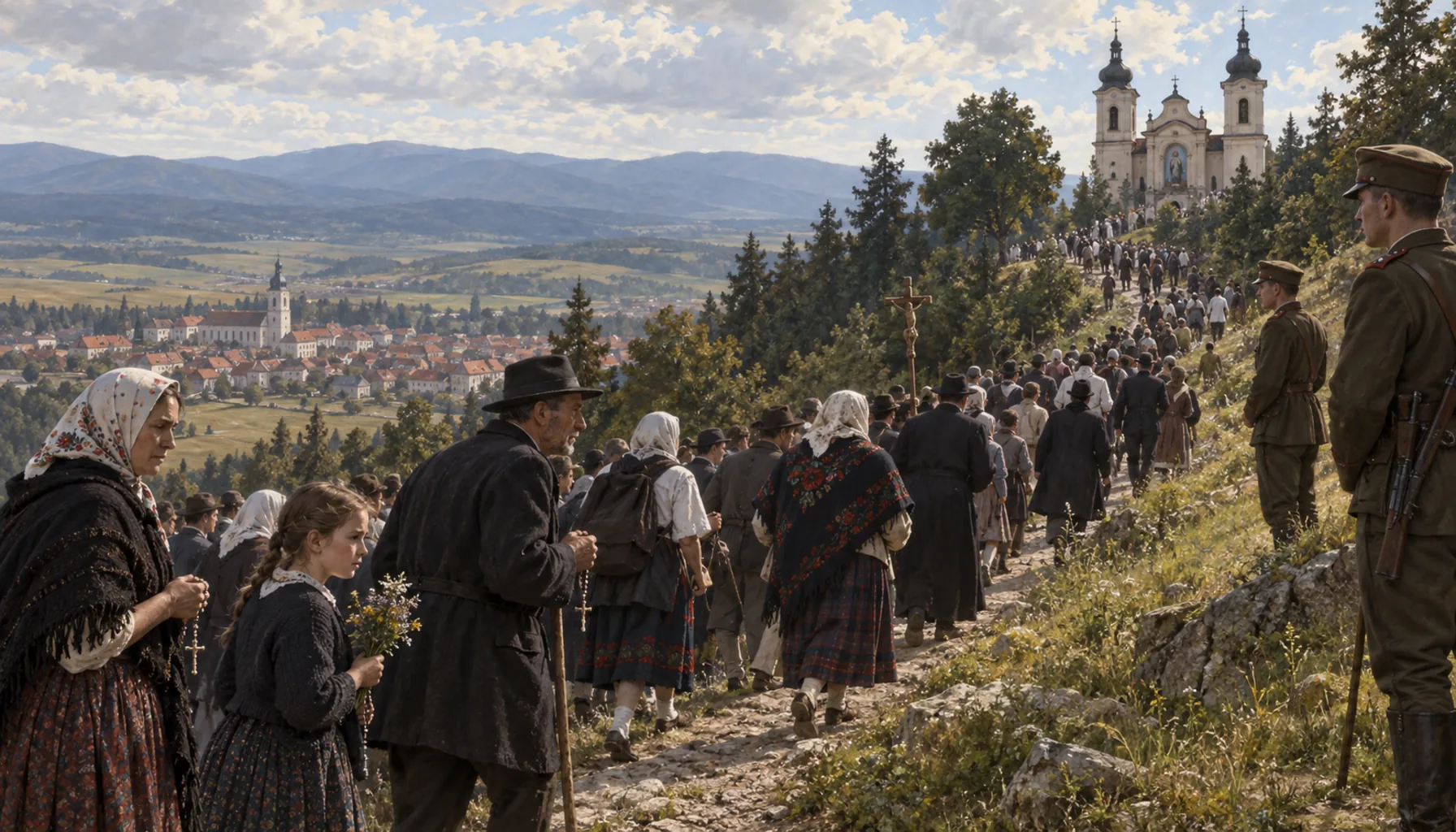
Under the communist regime, climbing Mariánska hora in July was read as a political act as much as a religious one. Buses were hard to arrange, roads could be closed, and being seen up there could be noticed at work or at school. People walked up anyway, in numbers that grew rather than fell — which is the whole point of a pilgrimage made on foot: it needs no permission and no vehicle. Behind the town, meanwhile, a large part of the Levoča Hills was closed off for decades as a military training area, which kept settlement, building and visitors out of them altogether.Za komunistického režimu sa výstup na Mariánsku horu v júli bral rovnako ako politický čin. Autobusy sa zháňali ťažko, cesty sa dali uzavrieť a to, že vás tam videli, sa mohlo objaviť v práci či v škole. Ľudia hore aj tak vystupovali pešo, v počtoch, ktoré skôr rástli, než klesali — a práve v tom je zmysel púte po svojich: nepotrebuje povolenie ani auto. Za mestom zatiaľ platil na veľkej časti Levočských vrchov desaťročia vojenský obvod, ktorý do nich nepustil ani osídlenie, ani stavby, ani návštevníkov.