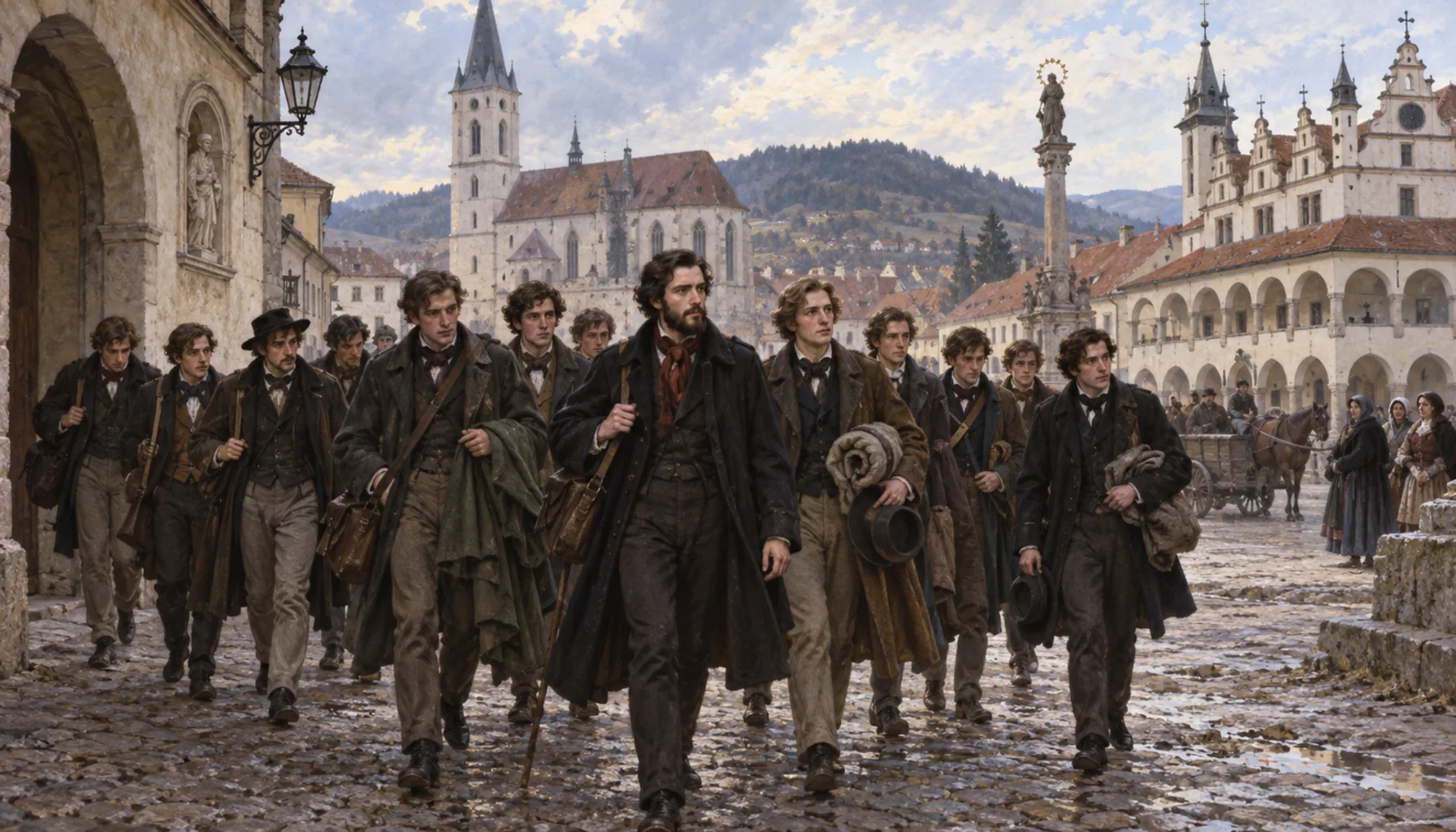
In 1843 the authorities pushed Ľudovít Štúr out of his teaching post at the Lutheran lyceum in Bratislava — the school where he and his friends had just decided what written Slovak would look like. In 1844 a group of his students left the city in protest and came east to the lyceum in Levoča, which took them in: twenty-two set out, thirteen arrived. One of them was Janko Matúška, who wrote the words of Nad Tatrou sa blýska in connection with that departure — the song that is the Slovak national anthem today. That it was his hand was only established for certain in 1966, out of a family's surviving papers.Roku 1843 pripravila vrchnosť Ľudovíta Štúra o miesto na evanjelickom lýceu v Bratislave — na škole, kde on a jeho priatelia práve rozhodli, ako bude vyzerať spisovná slovenčina. Roku 1844 časť jeho študentov na protest odišla z mesta na východ, na levočské lýceum, ktoré ich prijalo: vydalo sa ich dvadsaťdva, došlo trinásť. Bol medzi nimi Janko Matúška, ktorý v súvislosti s tým odchodom napísal slová piesne Nad Tatrou sa blýska — dnešnej slovenskej hymny. Že je to jeho ruka, sa s istotou preukázalo až roku 1966 zo zachovanej rodinnej pozostalosti.