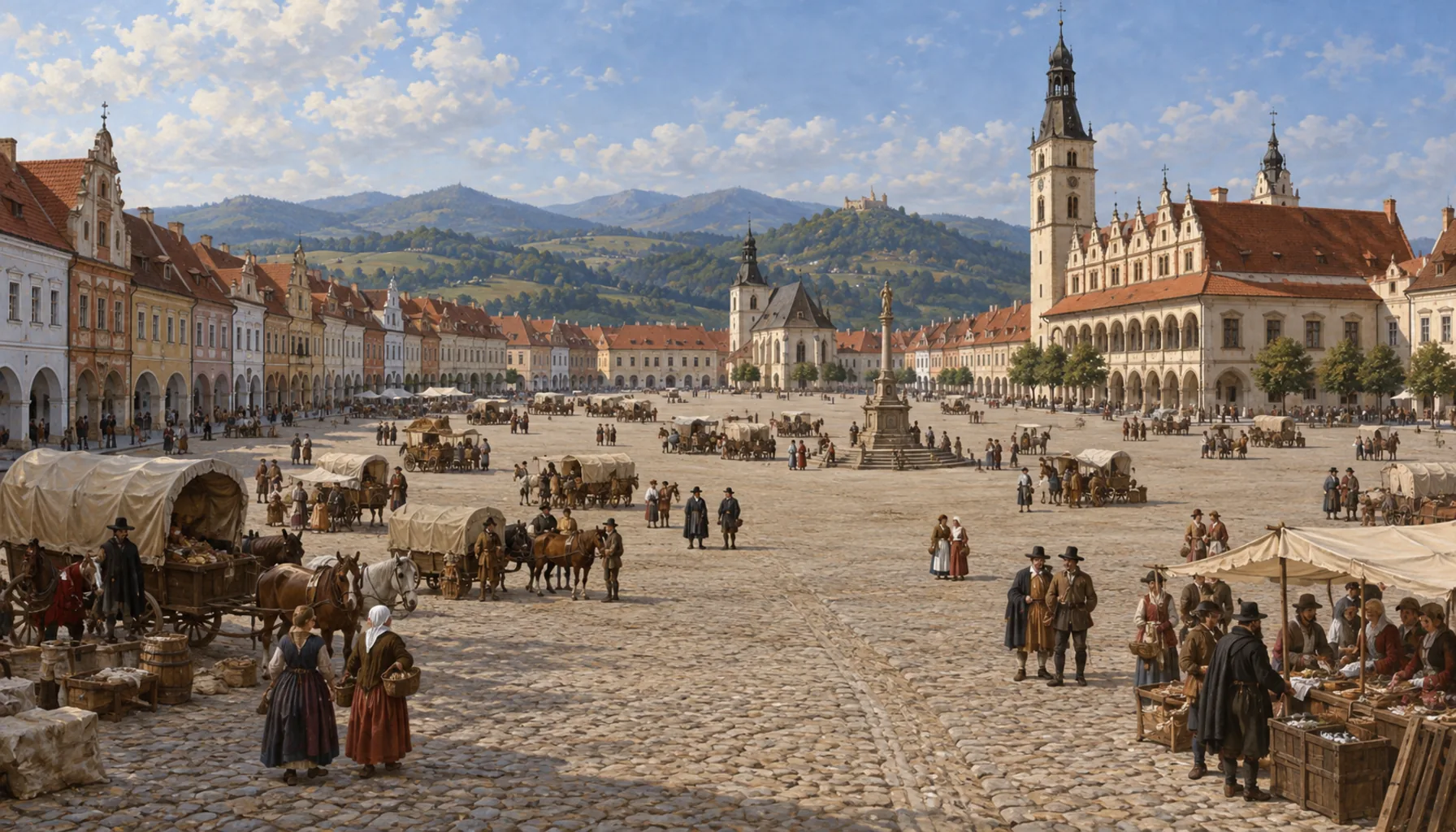
The town was laid out around a market place so large that it still swallows a crowd today — one of the biggest squares in Slovakia, with everything in Levoča turned to face it. The parish church of St James went up in the fourteenth century, on the scale a parish could afford when the whole Polish trade paid its tithes: big enough to hold a dozen carved altars at once, which is exactly what it ended up doing. Through the fourteenth and fifteenth centuries the town closed itself in with a wall and gates, of which the Košice Gate and the Gothic Polish Gate still stand. A wall is a statement as much as a defence — it says the people inside have something worth taking.Mesto vyrástlo okolo trhoviska takého veľkého, že zástup pohltí ešte aj dnes — patrí k najväčším námestiam na Slovensku a v Levoči je k nemu obrátené všetko. Farský Kostol svätého Jakuba postavili v 14. storočí, a to v rozmeroch, na aké mala farnosť peniaze vtedy, keď jej desiatky platil celý poľský obchod: dosť veľký na tucet vyrezávaných oltárov naraz — a presne to sa v ňom napokon zišlo. Počas 14. a 15. storočia sa mesto uzavrelo hradbami a bránami; z nich dodnes stoja Košická brána a gotická Poľská brána. Hradba nie je len obrana, je aj odkaz: hovorí, že ľudia vnútri majú čo strážiť.