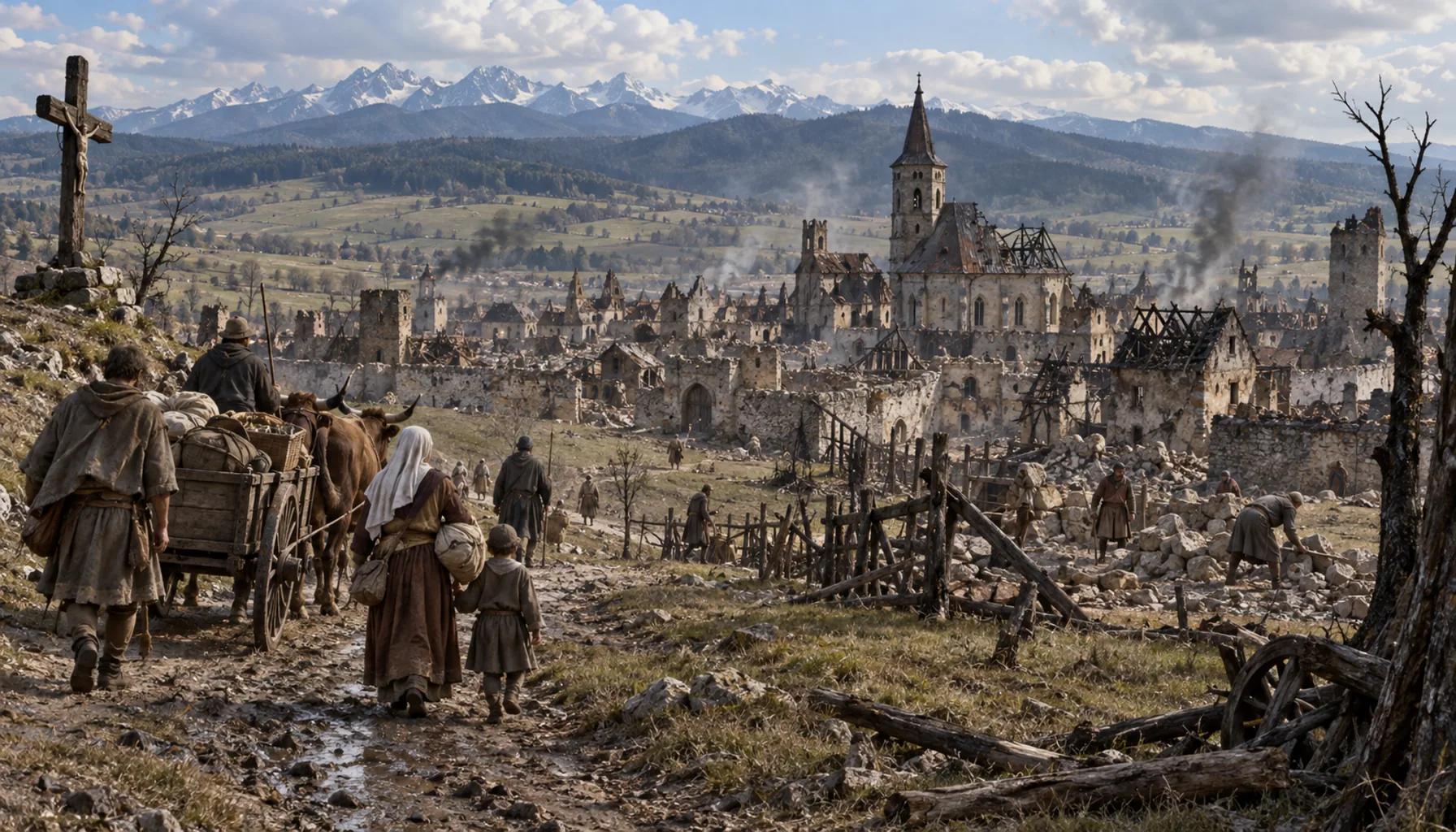
In the spring of 1241 a Mongol army broke the Hungarian king's forces and rode across the kingdom, and Spiš was emptied the way a raid empties a country. What came afterwards matters more to Levoča than the raid itself. King Béla IV invited German settlers in — hospites, meaning guests, who came with charters promising them their own law and their own elected judges — and within two generations Spiš had filled up with new towns built of stone. The oldest document that names this one is from 1249, where it is written Leucha. Local tradition also traces the pilgrimage on the hill above the town back to 1241, when townspeople are said to have sheltered up there; that is a story people have told for centuries, not something any document records.Na jar 1241 rozdrvilo mongolské vojsko uhorského kráľa a prehnalo sa krajinou; Spiš vyľudnilo tak, ako vpády vyľudňujú krajiny. Pre Levoču je však dôležitejšie to, čo prišlo po ňom. Kráľ Belo IV. pozval nemeckých osadníkov — hostí, po latinsky hospites, ktorým listiny sľubovali vlastné právo a vlastných volených richtárov — a za dve generácie sa Spiš zaplnil novými kamennými mestami. Najstaršia listina, ktorá menuje to naše, je z roku 1249 a píše sa v nej Leucha. Domáca tradícia kladie do roku 1241 aj začiatok púte na vrchu nad mestom, kde sa vraj mešťania ukryli; je to však podanie, ktoré sa rozpráva stáročia, nie údaj z listiny.