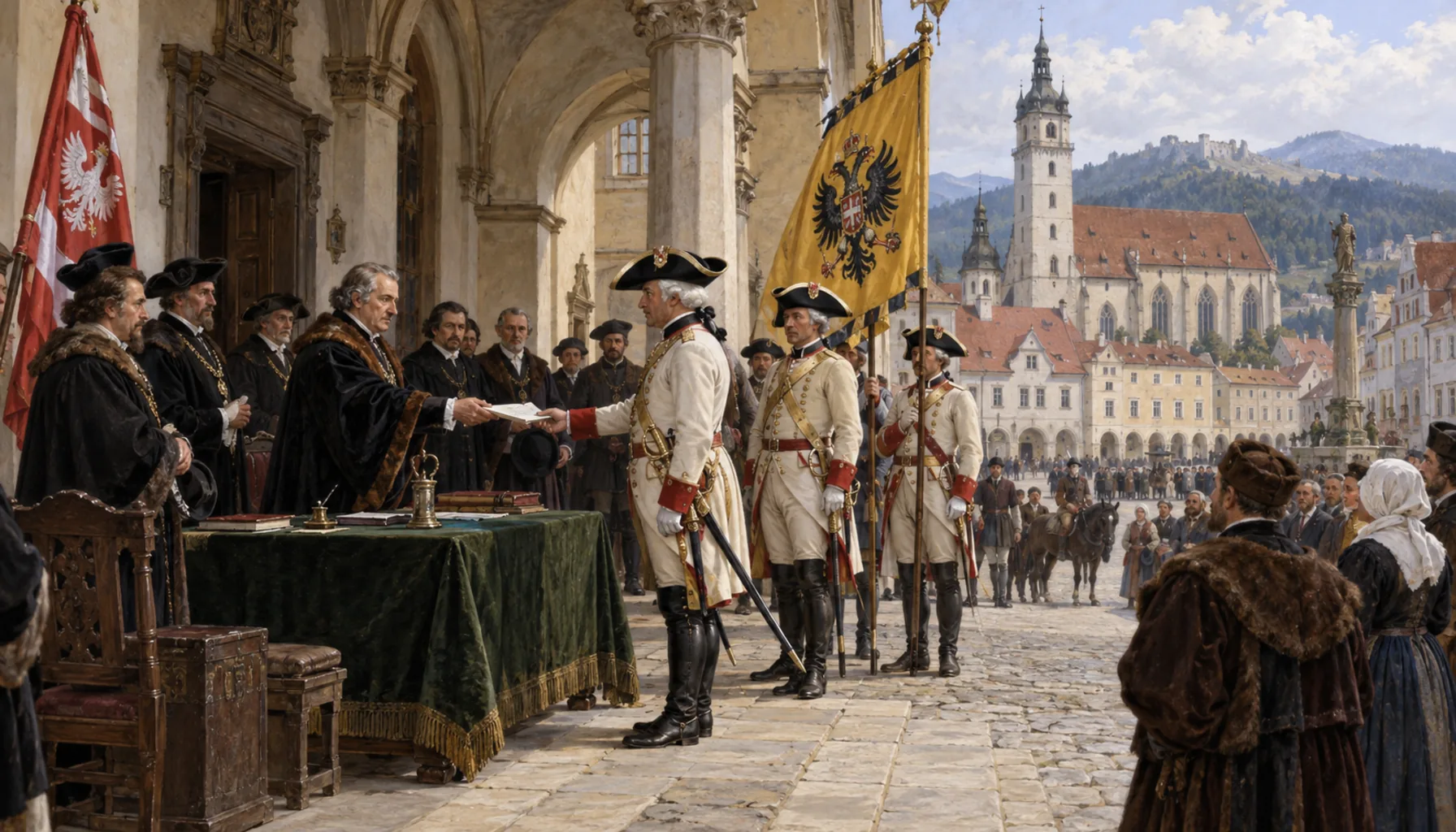
In 1772 the Spiš towns pledged to Poland in 1412 came back to Hungary after three hundred and sixty years — Poland itself was being carved up by its neighbours that year, and Vienna simply took them. In 1778 they were reorganised as the Province of Sixteen Spiš Towns, with its seat at Spišská Nová Ves. Levoča did not get that. What it kept was older and, for a while, better: it was the county town of Spiš, where the archive, the courts and the county assembly sat. In a century when imperial road-building and freer trade were sweeping the old merchant privileges away, being the town with the offices in it is what kept Levoča going.Roku 1772 sa spišské mestá, dané roku 1412 do zálohu Poľsku, po tristošesťdesiatich rokoch vrátili Uhorsku — Poľsko práve delili susedia a Viedeň si ich jednoducho vzala. Roku 1778 z nich vznikla Provincia XVI spišských miest so sídlom v Spišskej Novej Vsi. Levoča ju nedostala. To, čo si podržala, bolo staršie a istý čas aj lepšie: bola stoličným mestom Spiša, sídlil v nej archív, súdy aj stoličné zhromaždenie. V storočí, keď cisárska výstavba ciest a voľnejší obchod zmietali staré kupecké výsady, držalo Levoču nad vodou práve to, že v nej boli úrady.