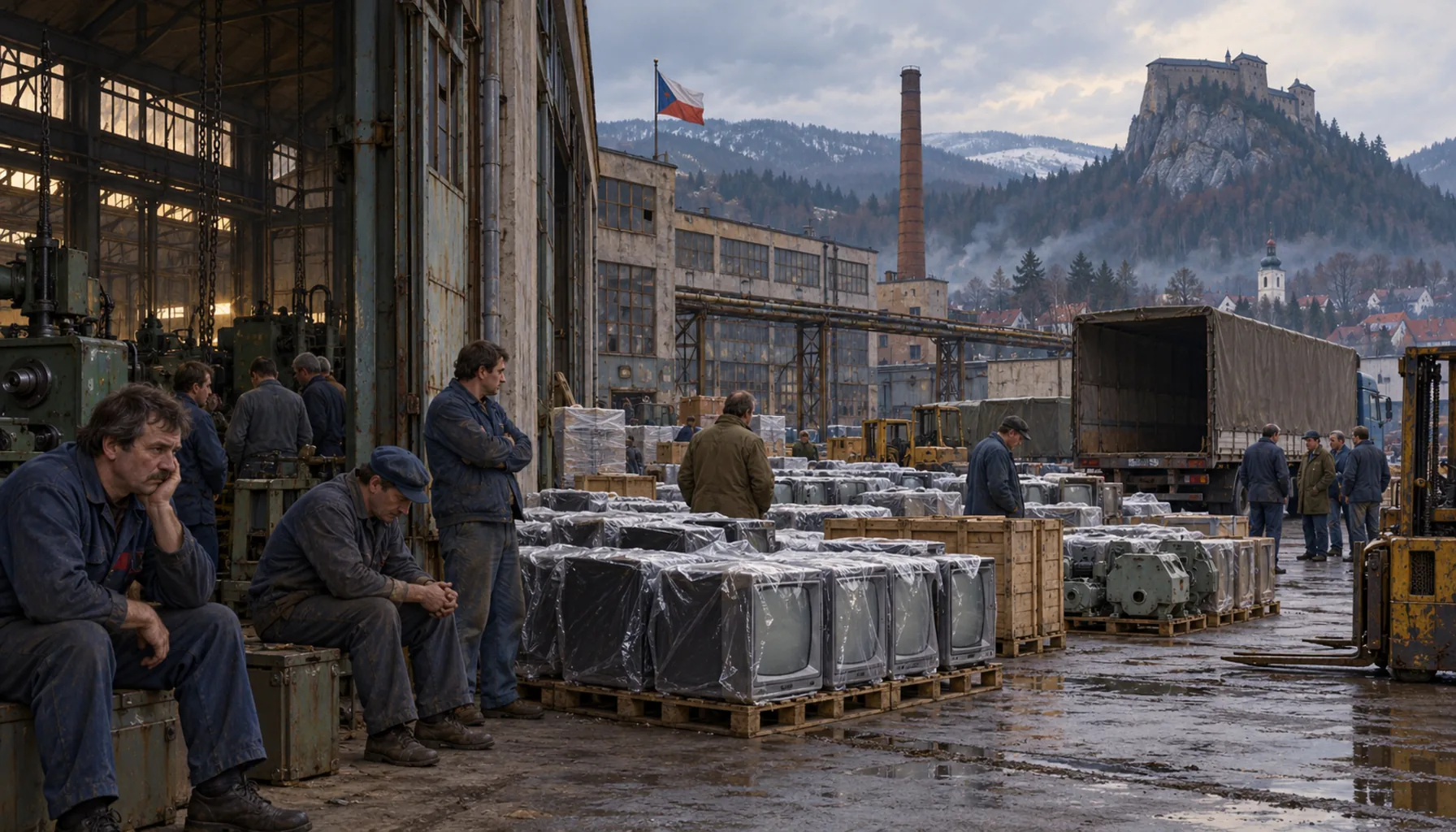
The regime fell in November 1989, and the market that had bought Orava's output fell with it. The television works at Nižná had been built for a state that no longer existed, and it broke up; what is left on the site is an industrial estate of smaller firms that inherited its buildings and its skilled workers. Unemployment in the Orava districts went to among the highest levels in Slovakia. What people did was what Orava has always done: they went where the work was. This time it was Bohemia, Austria, Britain and Ireland rather than Pennsylvania, and building crews from the upper valley worked across Slovakia and abroad. The pattern of men away on contract and families at home is older here than anybody's grandmother, and it did not feel like a new crisis. It felt like the usual one.V novembri 1989 padol režim a s ním aj odbyt, ktorý oravskú výrobu kupoval. Televízorka v Nižnej bola postavená pre štát, ktorý už neexistoval, a rozpadla sa; na jej mieste zostal priemyselný areál menších firiem, ktoré zdedili haly aj vyučených ľudí. Nezamestnanosť v oravských okresoch patrila k najvyšším na Slovensku. Ľudia urobili to, čo Orava robí vždy: šli za robotou. Tentoraz do Čiech, Rakúska, Británie a Írska, nie do Pensylvánie, a stavbárske partie z hornej Oravy robili po celom Slovensku aj v cudzine. Vzorec chlapov na montáži a rodín doma je tu starší než niečia stará mama a nepôsobil ako nová kríza. Pôsobil ako tá obvyklá.