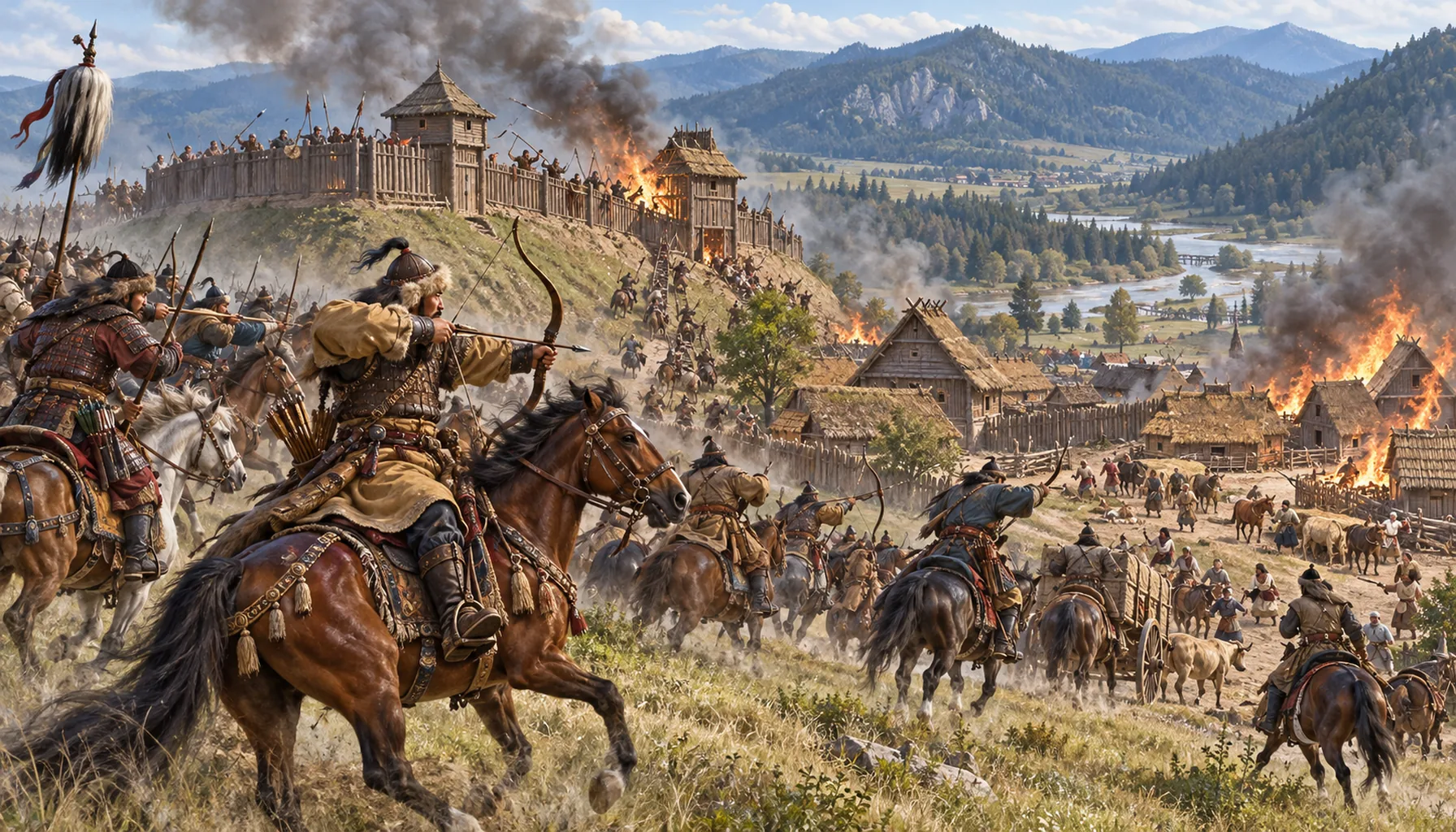
In 1241 a Mongol army destroyed the Hungarian royal host at Mohi and rode across the kingdom. Whether it reached this far up the Orava is not recorded, and you should be suspicious of any guide who tells you it did. What is certain is what came after. King Béla IV concluded that his kingdom had been defenceless because it had almost no stone castles, and spent the rest of his reign building for the crown and pressing his lords to build too. The rock in the middle of the Orava valley got one, and in 1267 the castle appears in writing for the first time, when Béla IV took it over from a nobleman named Mikuláš Balaša. Most of the Slovak castles you can visit are children of 1241 in exactly this way — built because of the invasion, not destroyed by it.V roku 1241 mongolské vojsko rozdrvilo uhorskú kráľovskú armádu pri rieke Slaná a prehnalo sa krajinou. Či sa dostalo takto vysoko po Orave, sa nezachovalo, a keď vám to sprievodca bude tvrdiť, buďte opatrní. Isté je, čo prišlo potom. Belo IV. usúdil, že kráľovstvo bolo bezbranné preto, lebo takmer nemalo kamenné hrady, a zvyšok vlády strávil stavaním pre korunu a nátlakom na šľachtu, aby stavala tiež. Skala uprostred oravskej doliny svoj hrad dostala a v roku 1267 sa hrad prvý raz spomína písomne — vtedy ho Belo IV. prevzal od šľachtica Mika Balašu. Väčšina slovenských hradov, ktoré dnes navštívite, je dieťaťom roku 1241 presne takto: vznikli pre vpád, nie boli ním zničené.