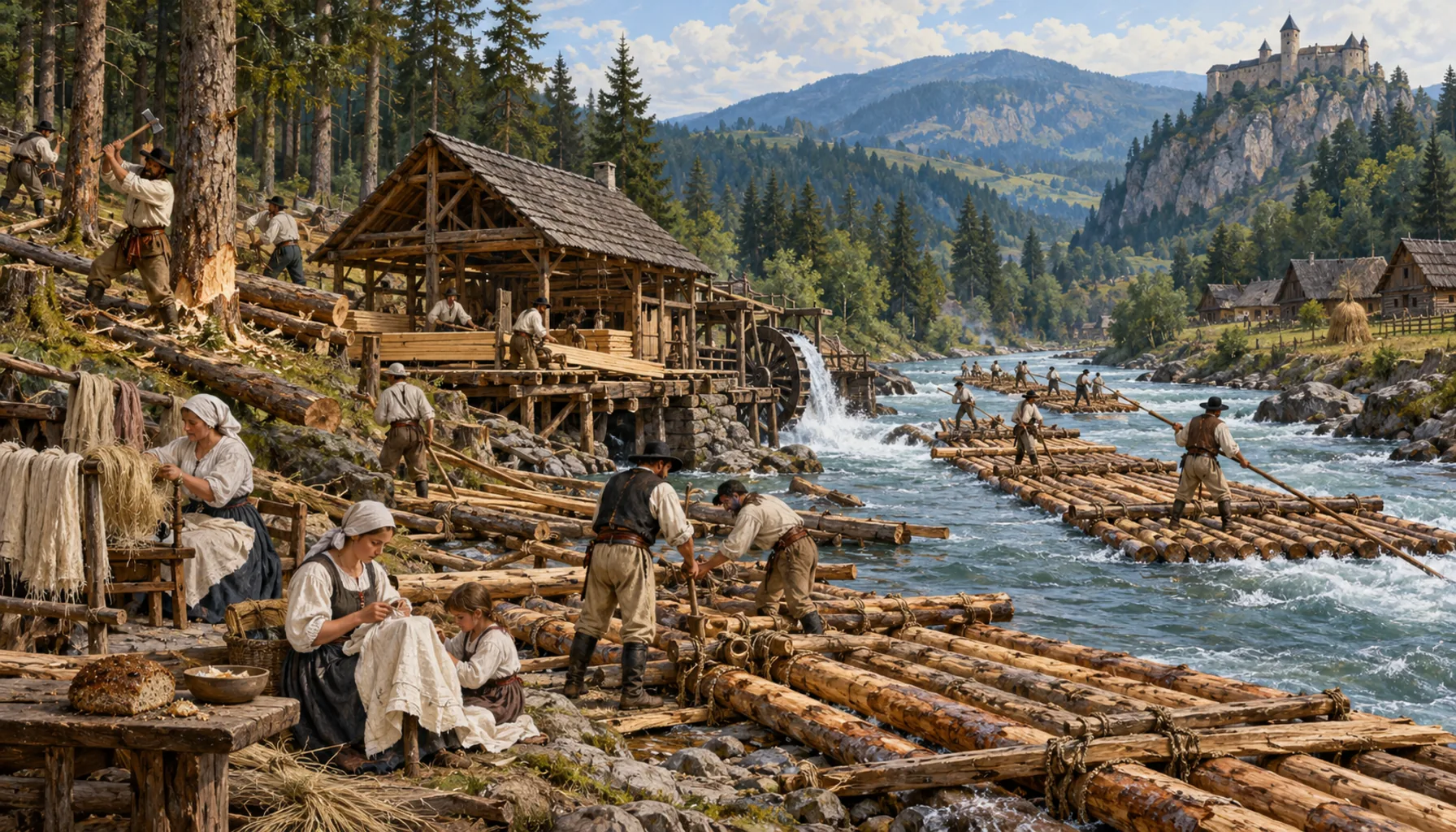
The composesorate ran Orava as a forest business: felling, sawmills, and timber bound into plte, rafts, and floated down the Orava into the Váh and on towards the lowland — a trade that employed whole villages and needed men who could read water. On the fields there was oats, flax, and from the later eighteenth century potatoes, which grew where grain would not. Women spun and wove, and Orava's linen pedlars carried cloth astonishing distances across Europe on foot and by cart. New villages were still being cut out of the highest woods: Erdútka, today Oravská Lesná, began this century as a woodcutters' settlement. And none of it was enough. Even then Orava's surplus export was people — harvest labour walking south every summer to work somebody else's better land.Komposesorát viedol Oravu ako lesný podnik: rúbanie, píly a drevo zviazané do pltí, ktoré sa plavili Oravou do Váhu a ďalej na juh — remeslo, ktoré živilo celé dediny a potrebovalo ľudí, čo vedeli čítať vodu. Na poliach ovos, ľan a od konca 18. storočia zemiaky, ktoré rástli tam, kde obilie nie. Ženy priadli a tkali a oravskí plátenníci roznášali plátno pešo aj na vozoch po neuveriteľných diaľkach Európy. Nové dediny sa ešte stále klčovali v najvyšších lesoch: Erdútka, dnešná Oravská Lesná, vznikla v tomto storočí ako osada drevorubačov. A nič z toho nestačilo. Aj vtedy bol hlavným vývozným prebytkom Oravy človek — žatevná robota, ktorá každé leto odchádzala na juh obrábať cudziu lepšiu pôdu.