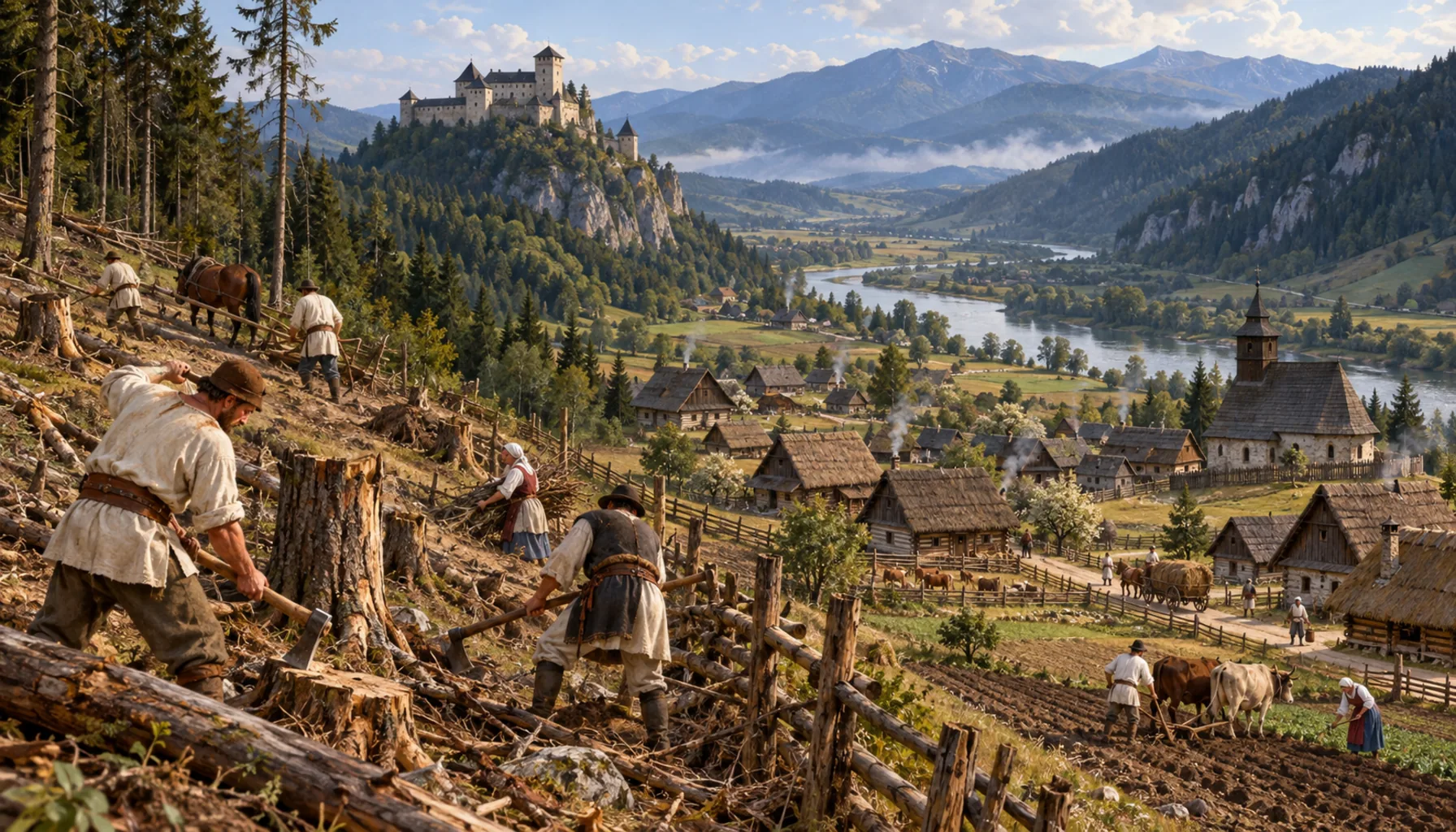
While the Ottoman wars tore up the south of the kingdom, Orava was doing something quieter and more permanent: filling up. Wallachian colonisation — communities of shepherds moving along the Carpathian ridges with sheep, cheese and a lighter set of dues in return for settling land nobody else wanted — reached Orava in the fifteenth and sixteenth centuries and pushed villages into the highest, coldest valleys. Alongside and after them came settlers from the Polish side, and the upper end of Orava became Goral country, speaking a dialect closer to Polish than to Slovak; by 1910 Gorals were the majority in twenty-four Orava communes. Námestovo was founded by the estate in the middle of the sixteenth century, at the coldest, wettest end of the valley. The upper valley stayed strongly Catholic while the lower valley kept a Lutheran gentry — a division you can still read off the churches.Kým osmanské vojny trhali juh kráľovstva, na Orave sa dialo čosi tichšie a trvalejšie: zapĺňala sa. Valašská kolonizácia — spoločenstvá pastierov postupujúcich karpatskými hrebeňmi s ovcami, syrom a miernejšími povinnosťami výmenou za osídlenie pôdy, o ktorú nikto iný nestál — dorazila na Oravu v 15. a 16. storočí a vytlačila dediny do najvyšších a najstudenších dolín. Popri nich a po nich prišli osadníci z poľskej strany a horný koniec Oravy sa stal goralským krajom s nárečím bližším poľštine než slovenčine; roku 1910 tvorili Gorali väčšinu v dvadsiatich štyroch oravských obciach. Námestovo založilo panstvo v polovici 16. storočia, na najchladnejšom a najdaždivejšom konci doliny. Horná Orava zostala silne katolícka, kým dolná si podržala evanjelické zemianstvo — rozdiel, ktorý dodnes vyčítate z kostolov.