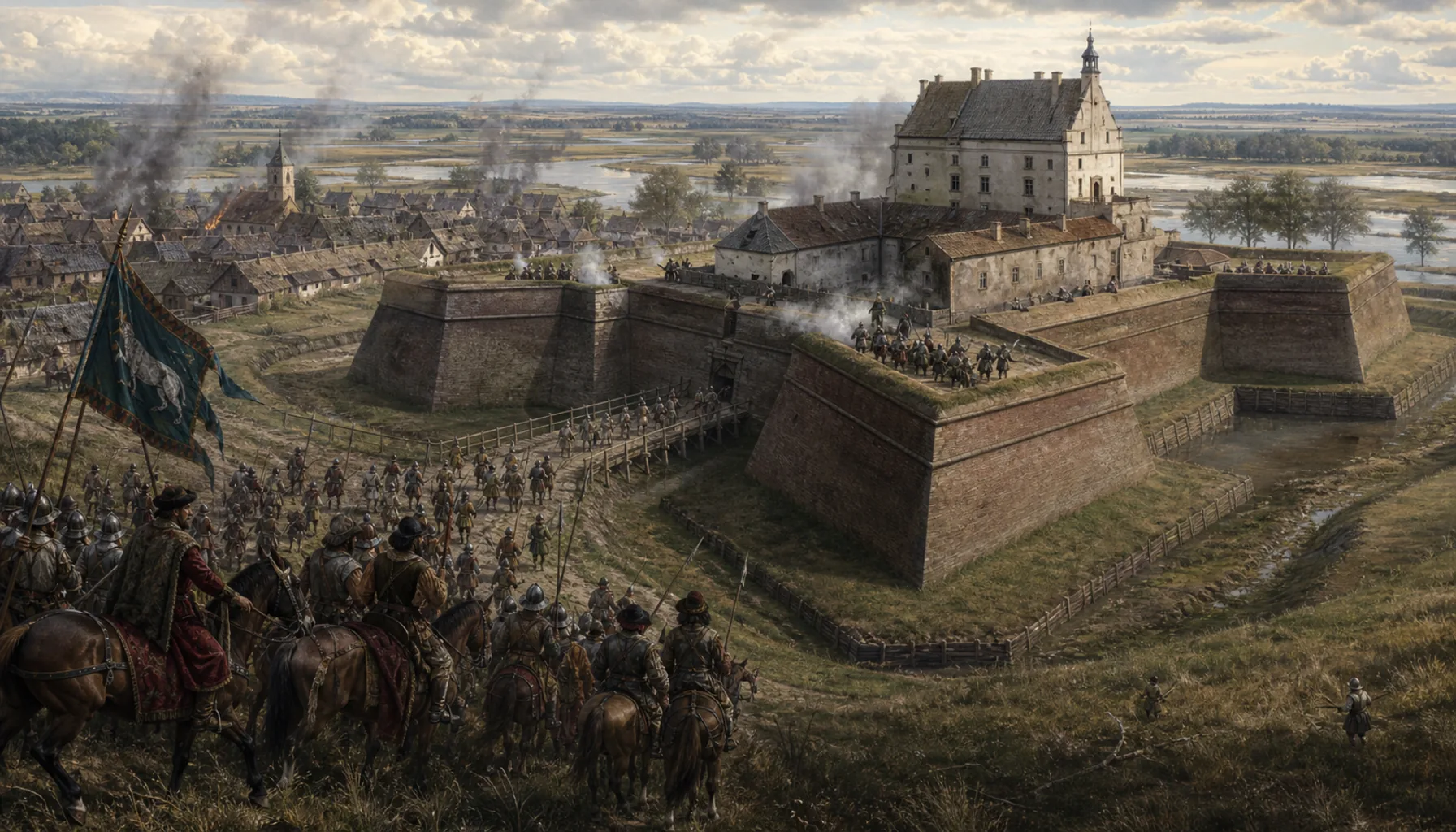
The seventeenth century in Hungary was a run of risings against the Habsburgs, and Holíč did not escape them: troops of the Transylvanian prince Gabriel Bethlen captured the castle in the 1620s. The answer, later in the century and especially after 1678, was to rebuild it the modern way. High walls fall to cannon; low, angular bastions of earth faced with brick do not, because gunners on each bastion can sweep the ditch in front of the next one. Holíč got exactly that — a star-shaped envelope with casemates, earthworks and a moat, linked to the old castle by underground passages. It is one of very few fortresses of its kind in Slovakia, and it survives because of what happened to it next.Sedemnáste storočie bolo v Uhorsku sériou povstaní proti Habsburgovcom a Holíč sa im nevyhol: hrad v dvadsiatych rokoch dobyli vojská sedmohradského kniežaťa Gabriela Betlena. Odpoveďou bolo v druhej polovici storočia, najmä po roku 1678, prestavať ho moderne. Vysoké múry padnú pod delami, nízke lomené zemné bastióny obložené tehlou nie — lebo delostrelci z každého bastiónu prestrieľajú priekopu pred susedným. Holíč dostal presne toto: hviezdicový obvod s kazematami, valmi a vodnou priekopou, prepojený so starým hradom podzemnými chodbami. Je to jedna z mála pevností svojho druhu na Slovensku a zachovala sa vďaka tomu, čo s ňou prišlo potom.