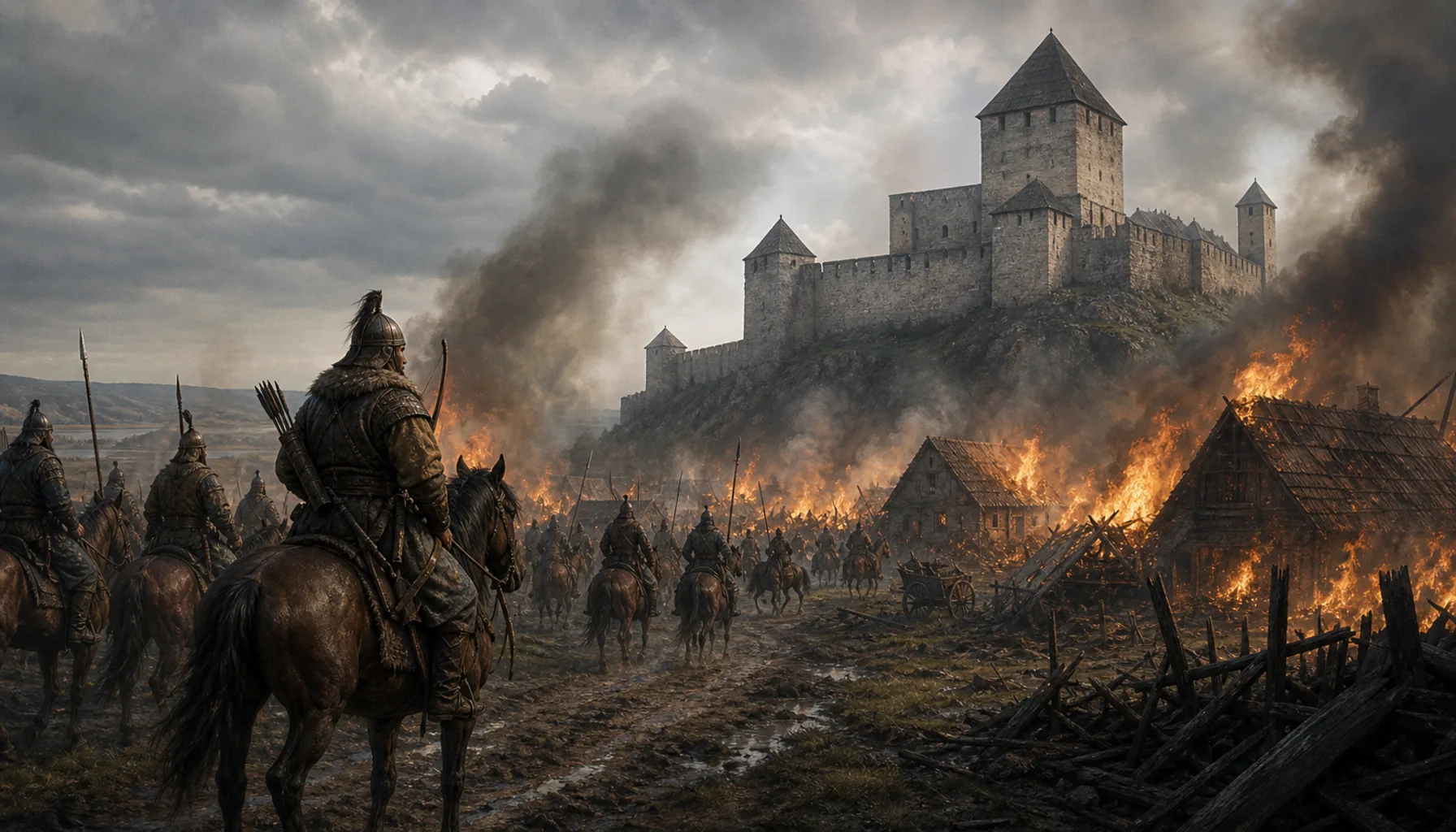
In 1241 a Mongol army broke the Hungarian royal army at Muhi and rode through the kingdom, burning what it found. The lesson King Béla IV drew was that timber forts were useless and stone castles were not, and the decades after the invasion are the great age of stone castle building in Slovakia. That is exactly what happened here: the stone castle at Holíč belongs to the period after 1241, replacing the earth-and-timber Wywar of the earlier charters. This is the single most common mistake made about Slovak castles — most of them were not destroyed by the Mongols, they exist because of them.V roku 1241 zlomilo mongolské vojsko pri Mohi uhorskú kráľovskú armádu a prehnalo sa kráľovstvom, pričom pálilo, na čo natrafilo. Kráľ Belo IV. si z toho vzal poučenie, že drevené hrádky sú na nič a kamenné hrady nie — a desaťročia po vpáde sú veľkou epochou stavby kamenných hradov na Slovensku. Presne to sa stalo aj tu: kamenný hrad v Holíči patrí do obdobia po roku 1241 a nahradil hlinito-drevený Wywar zo starších listín. Toto je najčastejší omyl o slovenských hradoch — väčšinu z nich Mongoli nezničili, väčšina z nich vďaka nim vznikla.