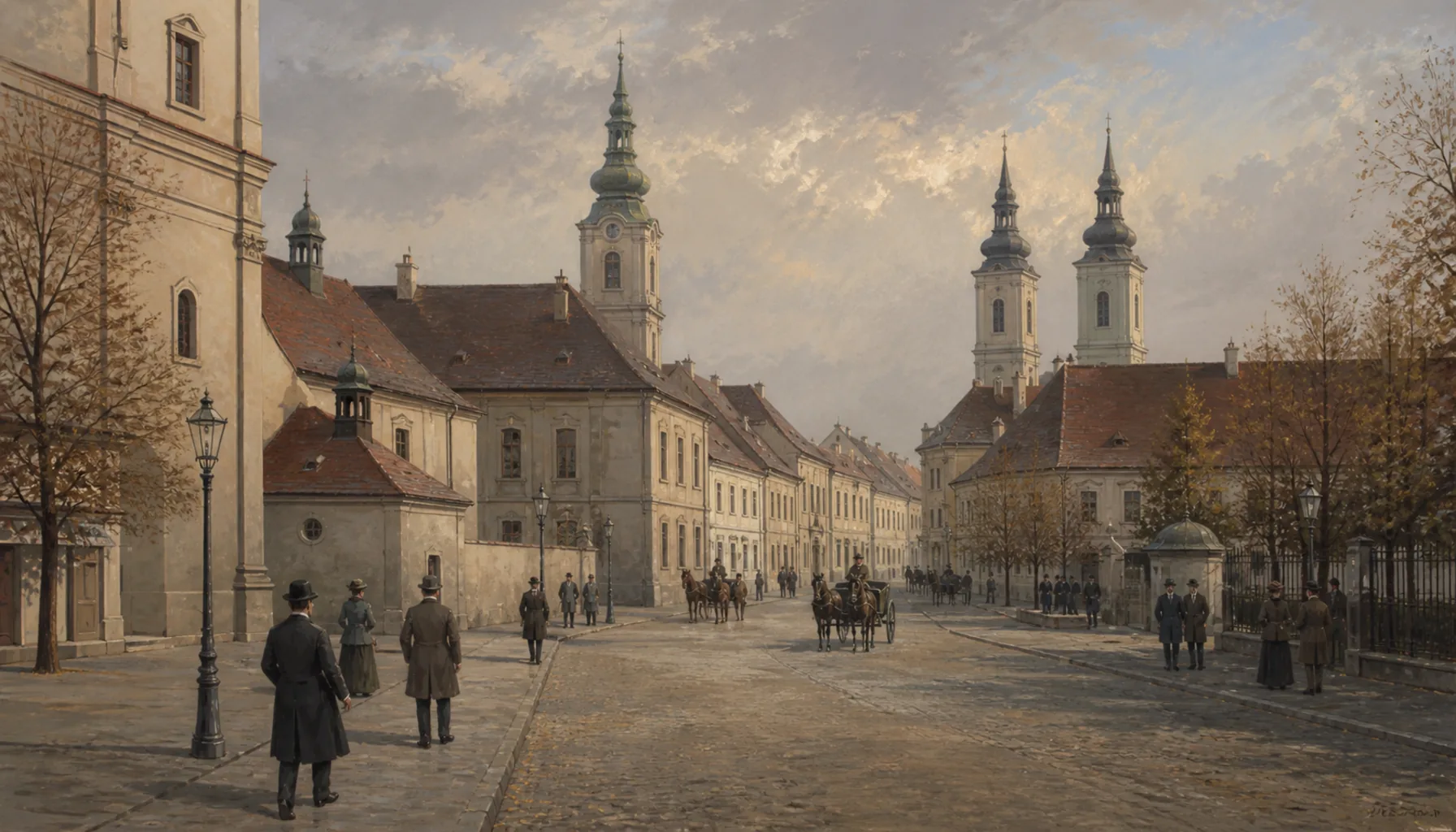
No front line came near Trnava, and no battle was fought here. What the First World War meant in a town like this was conscription — the men went into Austro-Hungarian regiments and a large number of them did not come back — plus requisitioning, shortages and four years of a war economy on the railway that had just made the town prosperous. The censuses on either side of it are almost flat: 15,163 people in 1910, 15,599 in 1919. The real change was not to the town but to the state it belonged to: in the autumn of 1918 Austria-Hungary collapsed, and Trnava, which had been in the Kingdom of Hungary for nine hundred years, found itself in Czechoslovakia without moving an inch.K Trnave sa nepriblížil nijaký front a nebola tu zvedená ani jedna bitka. Prvá svetová vojna znamenala v takomto meste odvody — muži narukovali do rakúsko-uhorských plukov a mnohí sa nevrátili —, k tomu rekvirácie, nedostatok a štyri roky vojnového hospodárstva na železnici, ktorá mestu práve priniesla blahobyt. Sčítania po oboch stranách vojny sú takmer rovnaké: 15 163 obyvateľov v roku 1910, 15 599 v roku 1919. Skutočná zmena sa netýkala mesta, ale štátu, do ktorého patrilo: na jeseň 1918 sa Rakúsko-Uhorsko rozpadlo a Trnava, ktorá bola deväťsto rokov súčasťou Uhorska, sa ocitla v Československu bez toho, aby sa čo len pohla.