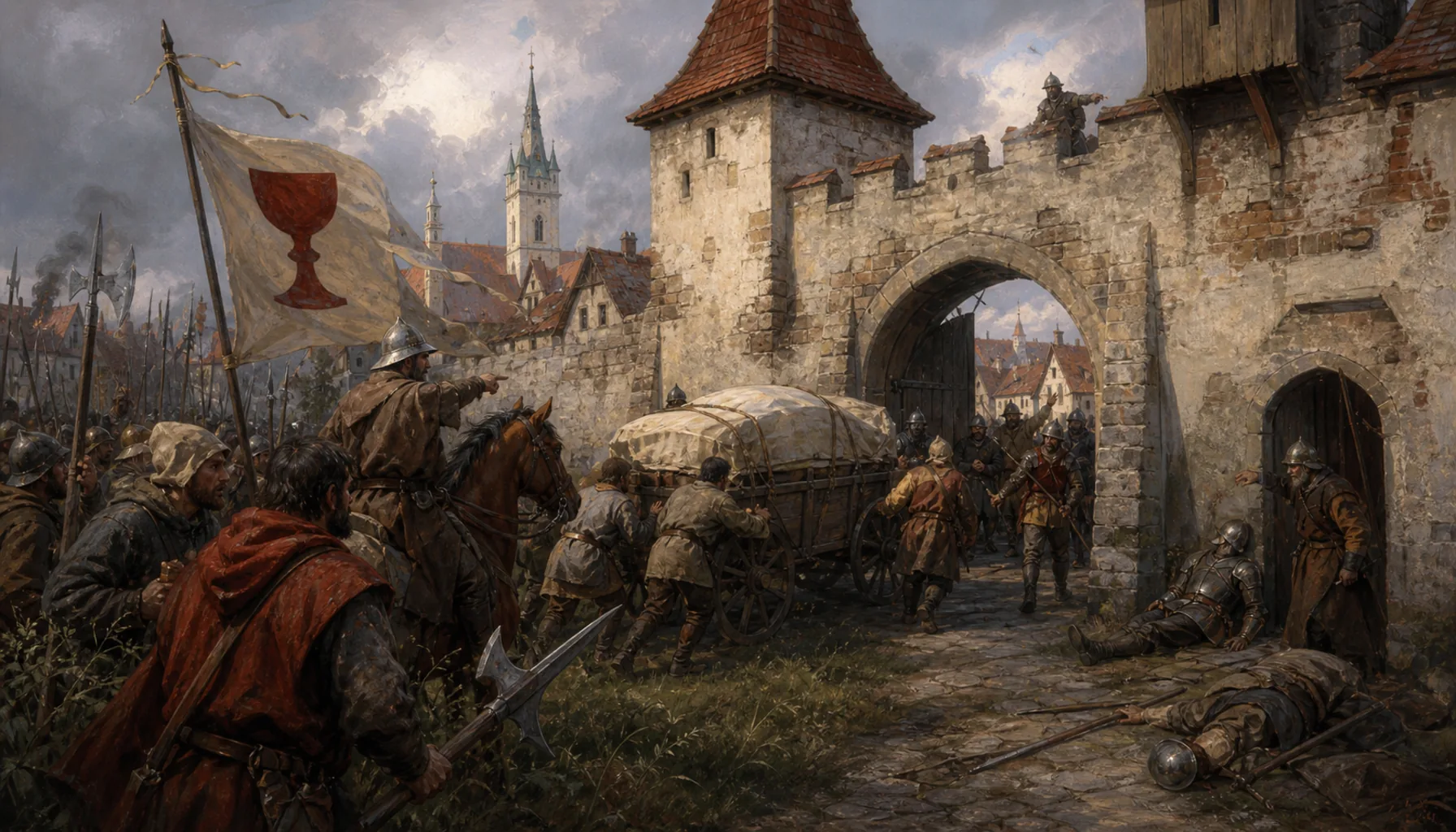
The Hussites were the armies of the Czech religious reform movement, and their columns raided deep into the kingdom for two decades. On 28 April 1430 a Hussite force beat a Hungarian army near Trnava, and then on 24 June 1432 a party of them got inside the walls disguised as tradesmen and took the town outright. They held it until 1435 and used it as their base in north-western Hungary — three years in which a free royal town of the Catholic kingdom was run by Czech heretics. Afterwards the town's German-speaking majority thinned and Slovak speech gained ground; historians link the two, though how directly is still argued. Remember this the next time you hear that a Slovak town was 'destroyed by the Turks': the thing that actually changed Trnava most in the Middle Ages came from the north-west, spoke a language close to its own, and got in by lying at the gate.Husiti boli vojská českého náboženského reformného hnutia a ich oddiely dve desaťročia podnikali výpravy hlboko do kráľovstva. 28. apríla 1430 porazilo husitské vojsko pri Trnave uhorskú armádu a 24. júna 1432 sa skupina husitov dostala za hradby prezlečená za kupcov a mesto rovno obsadila. Držali ho až do roku 1435 a robili si z neho základňu v severozápadnom Uhorsku — tri roky, počas ktorých slobodné kráľovské mesto katolíckeho kráľovstva spravovali českí kacíri. Nemecky hovoriaca väčšina sa potom v meste stenčila a slovenčina získala prevahu; historici to spolu spájajú, hoci ako priamo, o tom sa dodnes vedie spor. Spomeňte si na to, keď zase raz budete počuť, že slovenské mesto „zničili Turci“: to, čo Trnavu v stredoveku zmenilo najviac, prišlo od severozápadu, hovorilo jazykom blízkym jej vlastnému a dostalo sa dnu tak, že pri bráne klamalo.