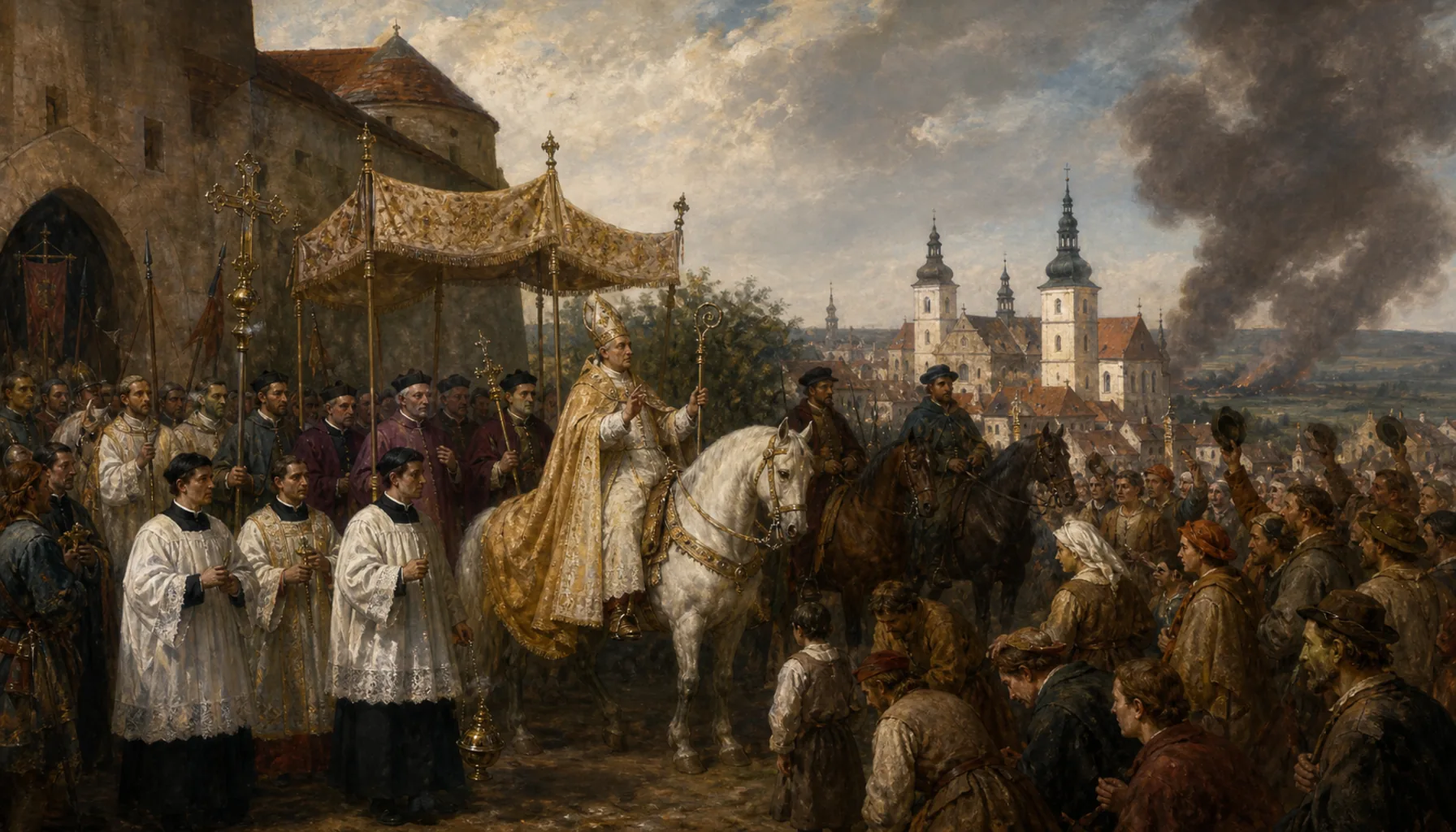
After the Hungarian army was destroyed at Mohács in 1526 the Ottoman frontier moved steadily north. Esztergom, seat of the archbishop who was the highest churchman in the kingdom, fell to the Ottomans in 1543, and the archbishop and his chapter — the college of senior priests who ran the cathedral and its estates — crossed the Danube and settled in Trnava. They stayed for nearly three hundred years. Bratislava got the parliament and the coronations; Trnava got the church, and with it the schools, the printers, the libraries and the money that follow a church around. St Nicholas became the working cathedral of the archbishops of Esztergom until 1820, church after church went up inside the small walled circuit, and people began calling the place the little Rome — the nickname the town still uses today.Po zničení uhorského vojska pri Moháči v roku 1526 sa osmanská hranica posúvala stále na sever. Ostrihom, sídlo arcibiskupa, ktorý bol najvyšším cirkevným hodnostárom kráľovstva, padol Osmanom v roku 1543 a arcibiskup so svojou kapitulou — zborom vyšších kňazov, ktorý spravoval katedrálu a jej majetky — prešiel cez Dunaj a usadil sa v Trnave. Zostali tu takmer tristo rokov. Bratislava dostala snem a korunovácie, Trnava dostala cirkev — a s ňou školy, tlačiarne, knižnice a peniaze, ktoré cirkev všade sprevádzajú. Kostol sv. Mikuláša slúžil ako katedrála ostrihomských arcibiskupov až do roku 1820, vnútri malého hradbového okruhu pribúdal kostol za kostolom a ľudia začali mestu hovoriť malý Rím — prezývka, ktorú Trnava používa dodnes.