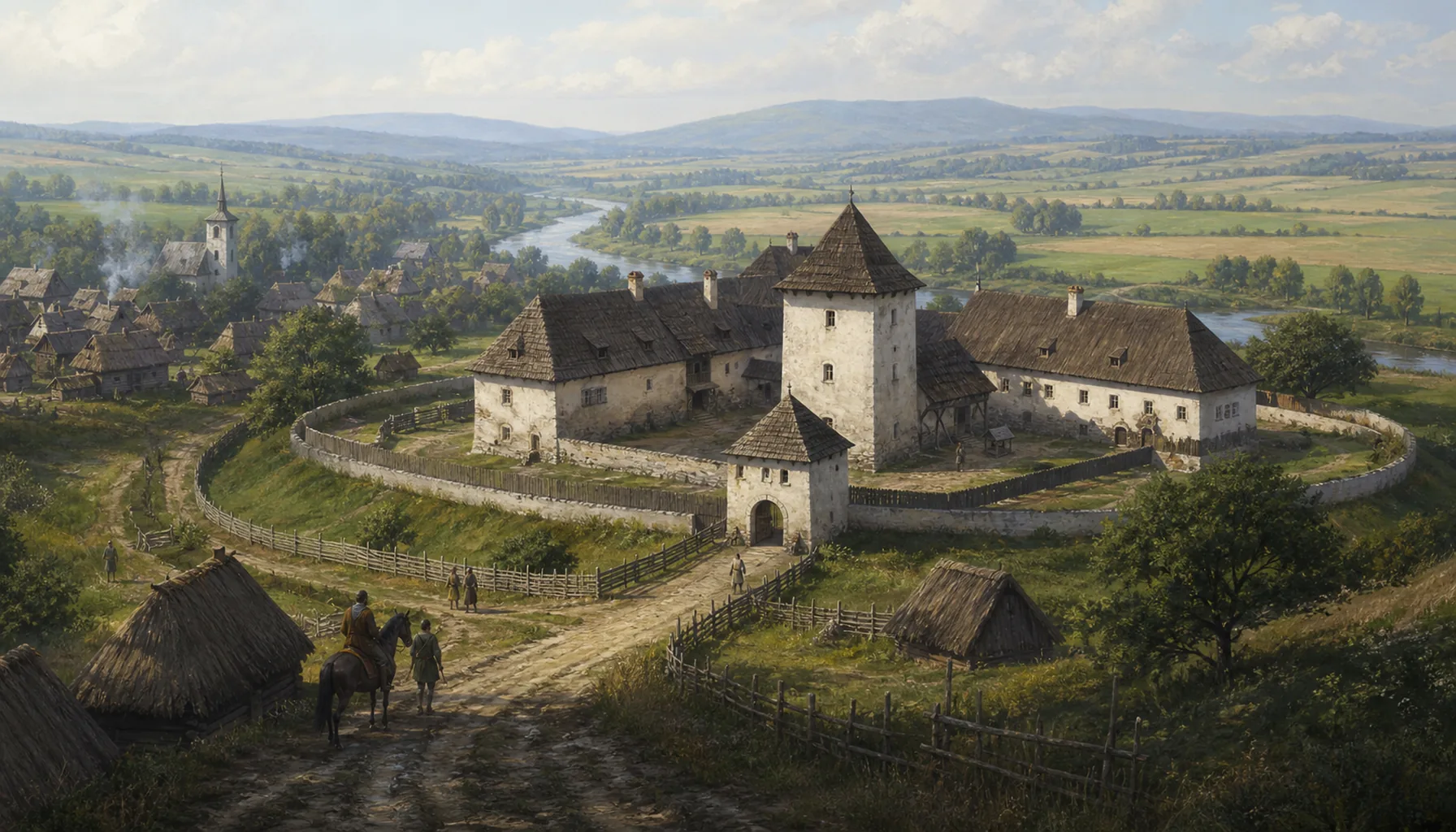
The castle is first mentioned in 1446, and it is not the crag fortress you might expect. It was a kastel: a four-winged building with corner towers and a water moat, standing on flat ground beside the river — a new type in Hungary at that date, closest in kind to the château at Bytča. Hungarian sources say it was put up shortly before 1446 by Pankrác of Svätý Mikuláš, a magnate who had seized this part of the Trenčín estate. Older writers liked the story that the Knights Templar built it in the twelfth century; there is no evidence for that, and 1446 is where the written record actually begins. The stone Gothic church and probably the lowest storey of the town tower belong to the same century.Prvá zmienka o hrade je z roku 1446 a nejde o skalnú pevnosť, akú by človek čakal. Bol to kastel: štvorkrídlová stavba s nárožnými vežami a vodnou priekopou na rovine pri rieke – v Uhorsku vtedy nový typ, najbližší dnešnému zámku v Bytči. Podľa maďarských prameňov ho krátko pred rokom 1446 postavil Pankrác zo Svätého Mikuláša, magnát, ktorý si túto časť trenčianskeho panstva privlastnil. Starší autori radi opakovali, že hrad postavili templári už v 12. storočí; dôkazy pre to nie sú a písomné dejiny hradu sa začínajú rokom 1446. Z toho istého storočia je aj murovaný gotický kostol a pravdepodobne najspodnejšie podlažie mestskej veže.