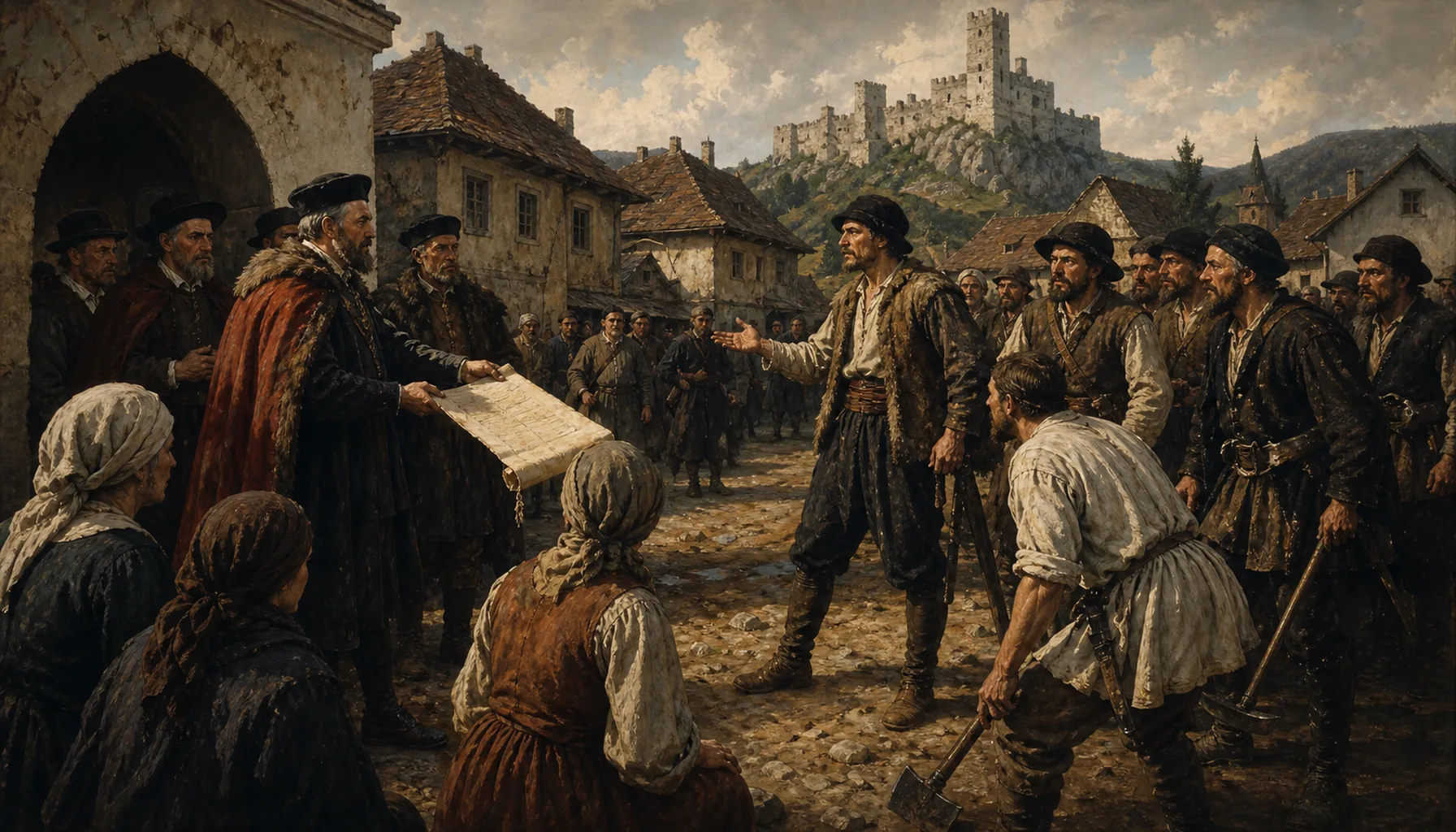
A privilege written on parchment was one thing; getting it respected was another. Through the fourteenth and fifteenth centuries the castellans of Košeca, Trenčín and Vršatec kept demanding tolls and dues from Ilava's people anyway, and the burghers kept going over their heads to the king, who kept confirming their rights. In 1405 the count of Trenčín, Stibor of Stiboricz, freed them from tolls; Sigismund later ordered every castellan and toll collector in the kingdom to leave them alone. The habit of appealing to the crown is what kept a small town from being swallowed by its powerful neighbours.Výsada napísaná na pergamene je jedna vec, presadiť ju druhá. Cez 14. a 15. storočie kasteláni z Košece, Trenčína a Vršatca aj tak vymáhali od Ilavčanov mýta a poplatky a mešťania sa cez ich hlavy obracali na kráľa, ktorý im práva vždy znova potvrdil. V roku 1405 ich trenčiansky župan Ctibor zo Ctiboríc oslobodil od mýta; Žigmund neskôr prikázal všetkým kastelánom a mýtnikom v kráľovstve, aby ich nechali na pokoji. Práve zvyk odvolávať sa ku kráľovi uchránil malé mesto pred mocnými susedmi.