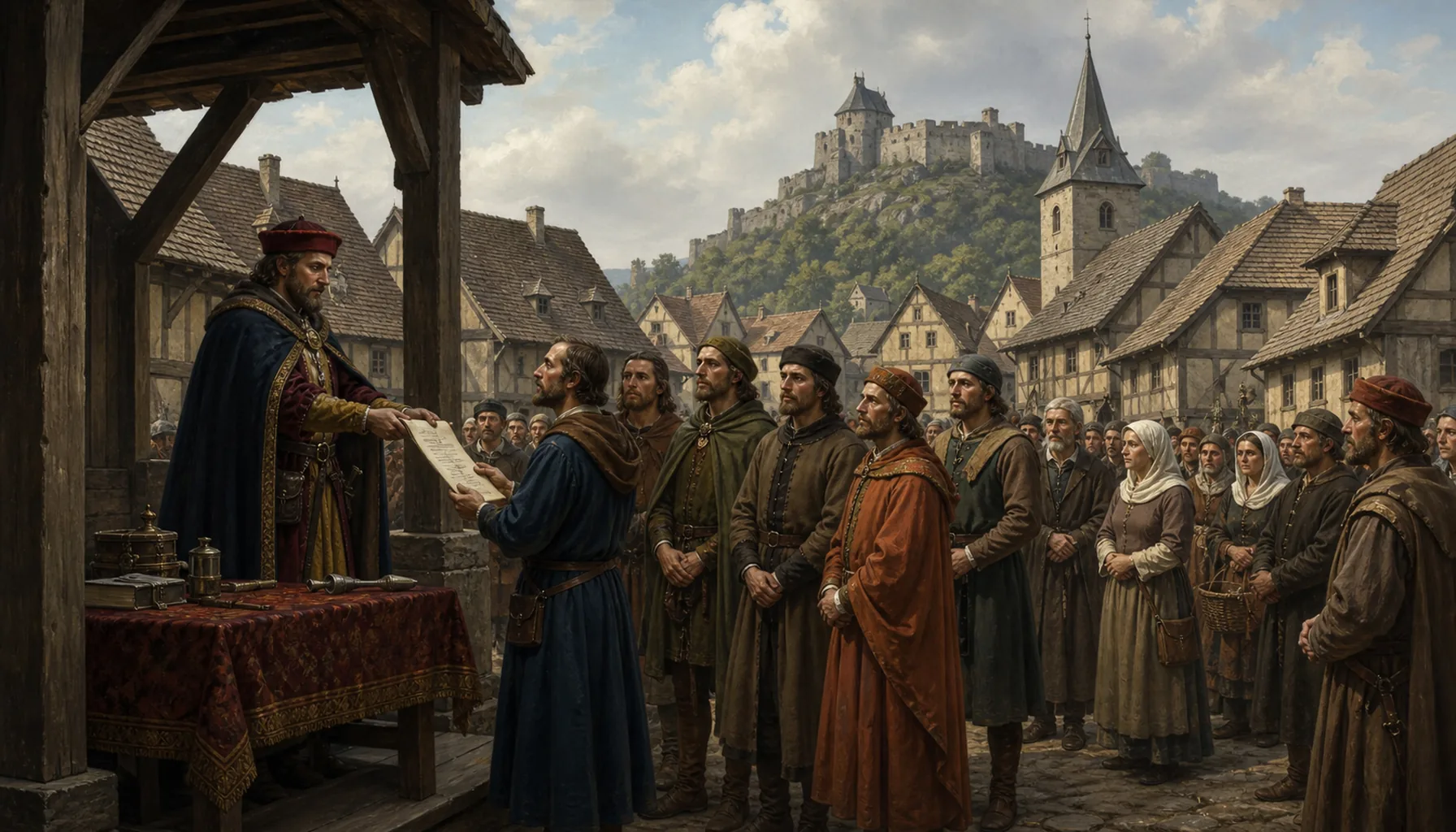
The first reliable mention comes in a charter of 1339, in which the count of Trenčín confirms the king's privileges to the judge, the jurors and all the burghers of Ilava. Notice what that means: in 1339 Ilava already had a judge, jurors and burghers, so it was a town and not a village, and the charter is not its birth certificate. It held four or five hundred people when the villages around it held one or two hundred, it was royal property, and its people paid no tolls. Its medieval name was Leva or Lewe — exactly the same name as Levice at the other end of the country, which is why old documents about the two places are so easy to confuse.Prvá hodnoverná zmienka je v listine z roku 1339, v ktorej trenčiansky župan potvrdzuje kráľovské výsady richtárovi, prísažným a všetkým mešťanom Ilavy. Všimnime si, čo to znamená: Ilava mala v roku 1339 richtára, prísažných aj mešťanov, bola teda mestom a nie dedinou – a listina nie je jej rodným listom. Žilo v nej štyristo až päťsto ľudí, kým v okolitých dedinách sto až dvesto, bola kráľovským majetkom a jej obyvatelia neplatili mýto. V stredoveku sa volala Leva či Lewe – presne tak ako Levice na druhom konci krajiny, a preto sa staré listiny o oboch miestach tak ľahko zamieňajú.