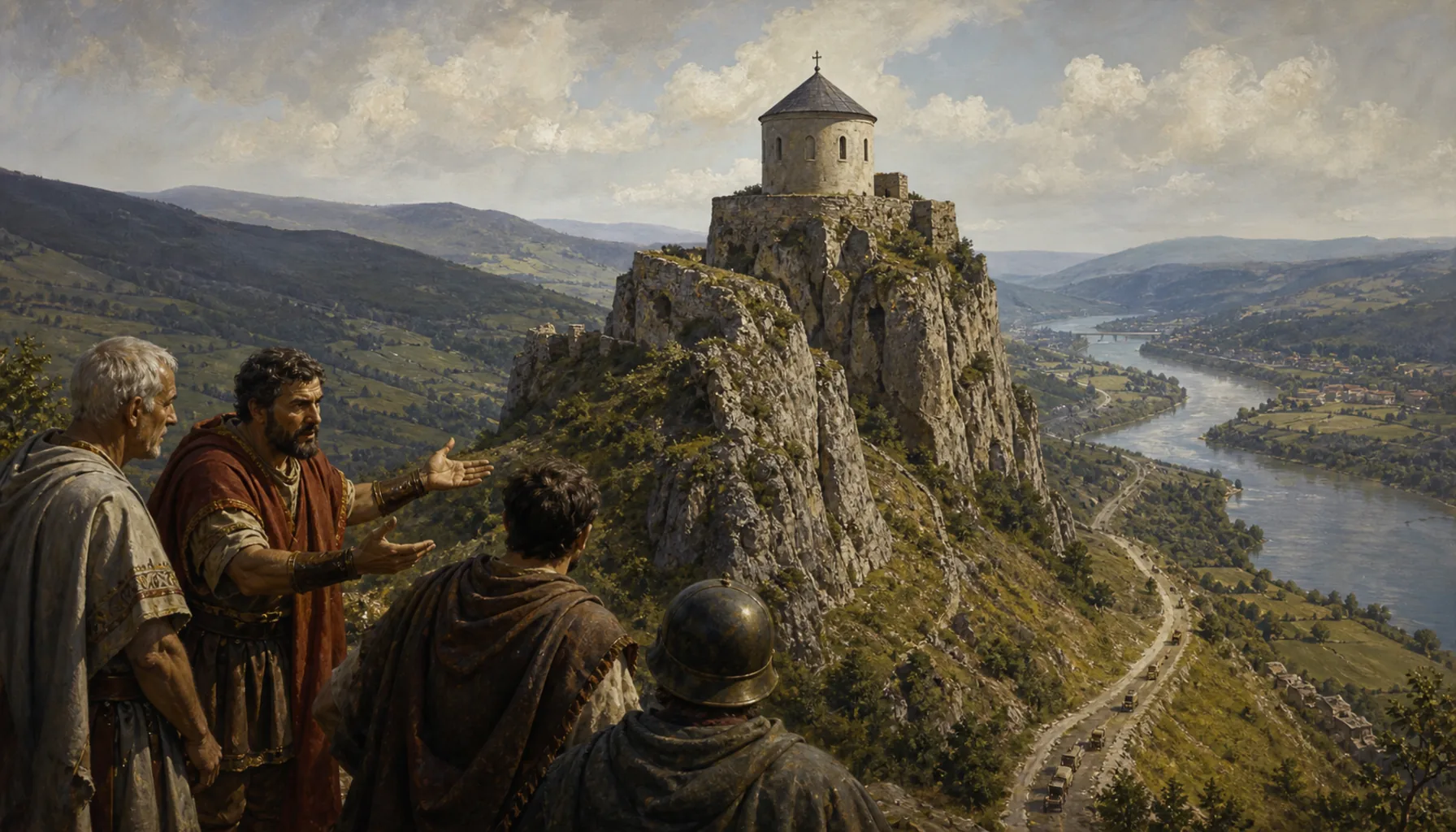
After Rome, the rock kept its job: it watches the road up the Váh, and whoever sat on it controlled the valley. In the ninth century, the century of Great Moravia, a small round church with four apses — shallow niches set round the circle — stood up here. Slovak archaeologists date it to that Great Moravian century and treat it as the oldest building on the hill; other descriptions call it Romanesque, which would make it some two hundred years younger. Both readings are in print, and the honest answer is that bare footings are hard to date. It is worth knowing that historians argue like this — a ruin does not come with a label on it.Po Rimanoch si bralo svoju úlohu podržalo: stráži cestu proti prúdu Váhu a kto na ňom sedel, ovládal celé údolie. V 9. storočí, v storočí Veľkej Moravy, tu stál malý okrúhly kostolík so štyrmi apsidami — plytkými výklenkami rozloženými po obvode. Slovenskí archeológovia ho datujú práve do veľkomoravského storočia a pokladajú ho za najstaršiu stavbu na kopci; inde sa opisuje ako románsky, čo by ho omladilo asi o dvesto rokov. Obe verzie sa dajú nájsť v literatúre a poctivá odpoveď znie, že holé základy sa datujú ťažko. Aj toto sa oplatí vedieť: zrúcanina neprichádza s menovkou.