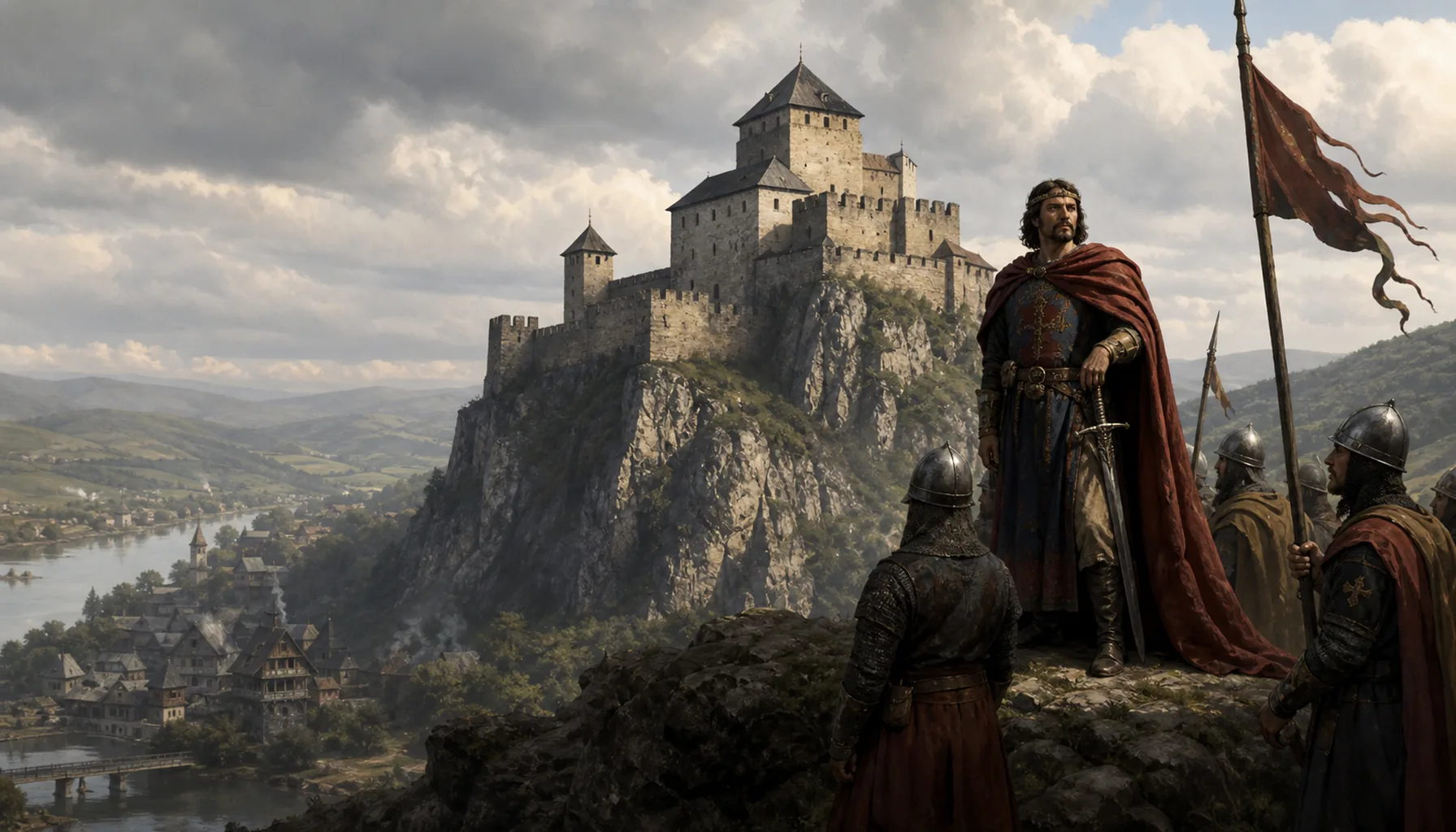
The castle came to the Čák family after 1275, and under Matúš Čák it became the capital of something very close to a private country. Historians call men like him oligarchs: great lords who ran whole provinces as their own, with their own officials, their own armies and their own courts, obeying the king only when it suited them. Matúš held the office of palatine — the highest post in the kingdom — twice, and ignored the crown in between. On 15 June 1312 King Charles Robert beat him at Rozhanovce near Košice, and after that he could never attack the king again, though his lands stayed his until he died here on 18 March 1321. The royal army took the whole domain back within months; what survived was the title Slovak tradition gave him, the Lord of the Váh and the Tatras.Hrad sa po roku 1275 dostal Čákovcom a za Matúša Čáka sa z neho stalo hlavné mesto čohosi, čo sa už veľmi podobalo na samostatnú krajinu. Historici takýchto pánov nazývajú oligarchami: veľmoži, ktorí spravovali celé kraje ako svoje vlastné, s vlastnými úradníkmi, vojskom aj súdmi, a kráľa poslúchali len vtedy, keď sa im to hodilo. Matúš bol dvakrát palatínom — najvyšším hodnostárom kráľovstva — a medzitým na panovníka nedbal. 15. júna 1312 ho kráľ Karol Róbert porazil pri Rozhanovciach neďaleko Košíc a odvtedy už na kráľa zaútočiť nedokázal, hoci jeho panstvo mu zostalo až do smrti 18. marca 1321 práve tu, v Trenčíne. Kráľovské vojsko získalo celé územie do niekoľkých mesiacov späť; prežil titul, ktorý mu dala slovenská tradícia — pán Váhu a Tatier.