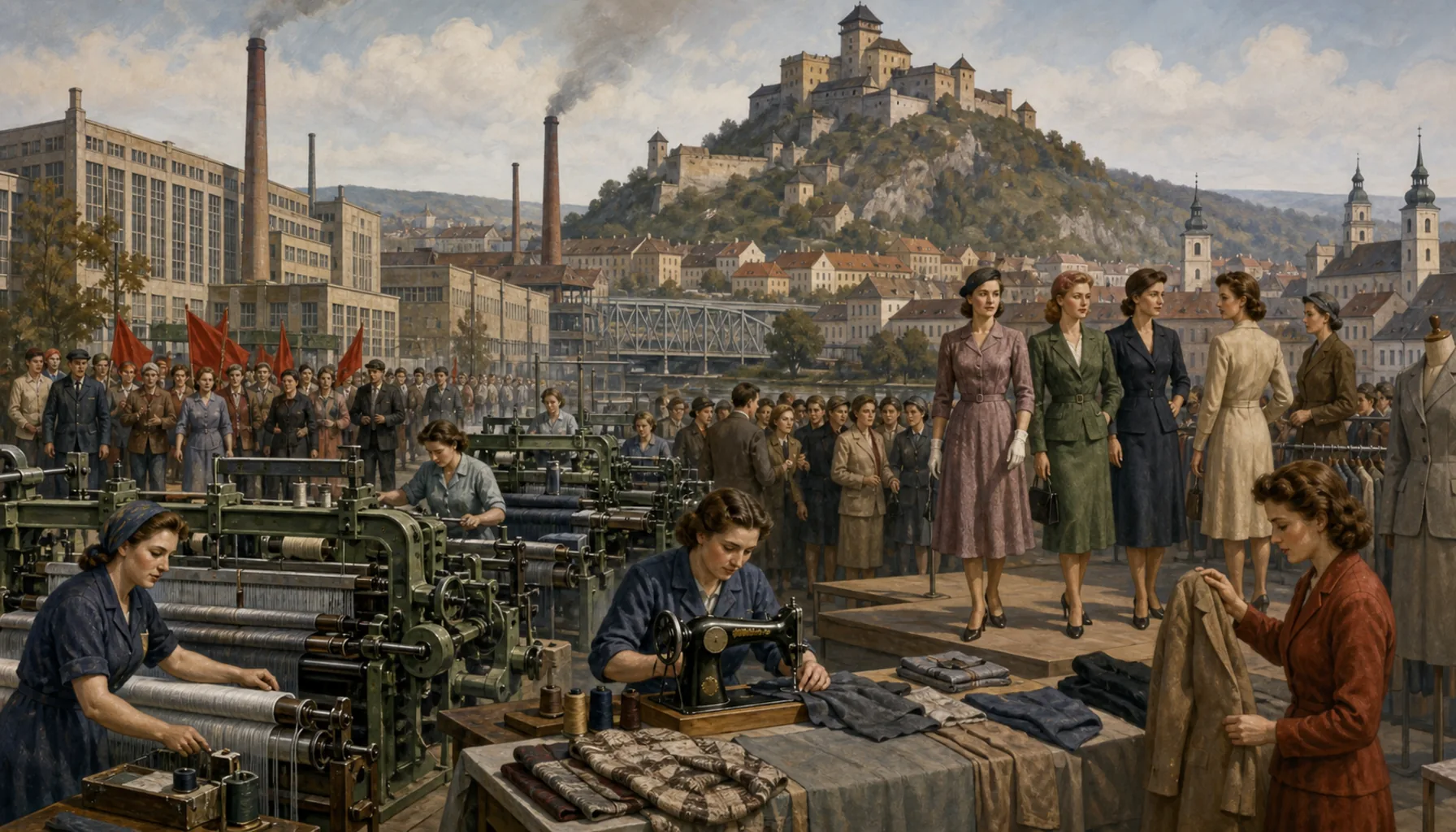
After the communist takeover of 1948 the textile trade was nationalised and rebuilt as a few very large state enterprises — the clothing works, the Merina wool mill, Kara — and Trenčín became what it still calls itself: the town of fashion, with textile and clothing fairs held here for decades. The factories needed workers and the workers needed flats, so the population went from 13,647 in 1940 to 47,887 in 1980, and whole new districts appeared: Juh, Soblahovská, Sihoť. The old town paid for it. In the 1970s the historic centre was cut about by insensitive building, which is why the streets around Mierové námestie are not all of a piece.Po komunistickom prevrate v roku 1948 textilný priemysel znárodnili a preorganizovali na niekoľko veľmi veľkých štátnych podnikov — odevné závody, vlnársku Merinu, Karu — a z Trenčína sa stalo to, čím sa nazýva dodnes: mesto módy, s textilnými a odevnými veľtrhmi, ktoré sa tu konali desaťročia. Fabriky potrebovali robotníkov a robotníci byty, takže počet obyvateľov stúpol z 13 647 v roku 1940 na 47 887 v roku 1980 a vyrástli celé nové štvrte: Juh, Soblahovská, Sihoť. Zaplatilo za to staré mesto. V sedemdesiatych rokoch zasiahla do historického jadra necitlivá výstavba, a preto ulice okolo Mierového námestia nie sú celistvé.