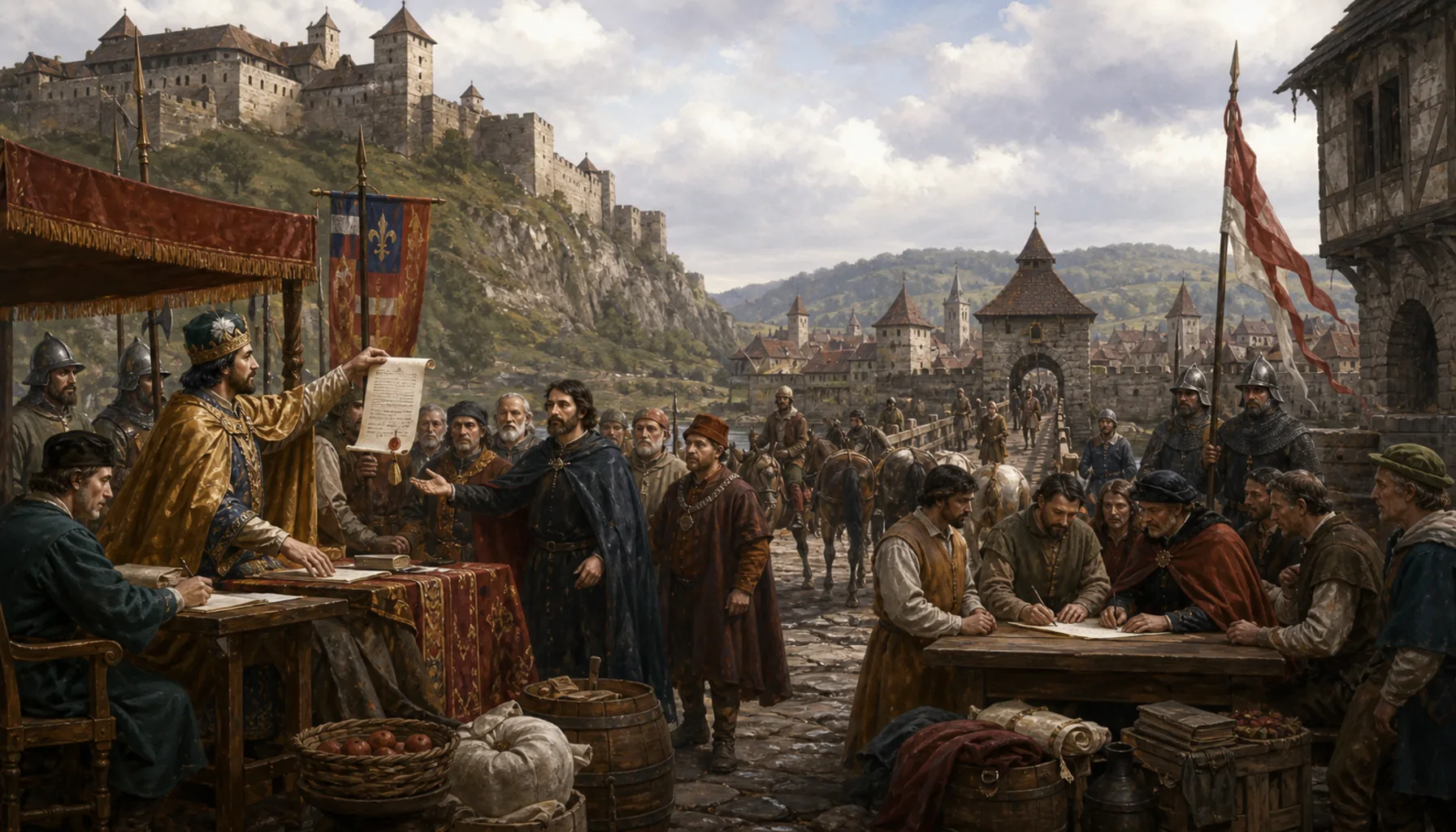
With Čák gone, the king had to make the town useful rather than dangerous. In 1324 its people were freed from paying tolls, which for a market town on the main road north was worth more than any length of wall. Eleven years later Trenčín was chosen as the place to settle a quarrel between three kings: in 1335 the envoys of Bohemia, Poland and Hungary agreed here that the Polish king would drop his claim to Silesia and the Bohemian king his claim to the Polish crown. The bargain was confirmed at the famous meeting of the three kings at Visegrád later that same year. A town is picked for something like that when it is safe, reachable and important — Trenčín was all of those.Po Čákovi musel kráľ z mesta urobiť skôr oporu než hrozbu. V roku 1324 oslobodil jeho obyvateľov od platenia mýta, čo pre trhové mesto na hlavnej ceste na sever znamenalo viac než ktorýkoľvek kus hradieb. O jedenásť rokov neskôr si Trenčín vybrali za miesto, kde sa urovná spor troch kráľov: v roku 1335 sa tu vyslanci Čiech, Poľska a Uhorska dohodli, že poľský kráľ sa vzdá nárokov na Sliezsko a český kráľ nárokov na poľskú korunu. Dohodu ešte v tom istom roku potvrdilo slávne stretnutie troch kráľov vo Visegráde. Na takúto vec si mesto vyberú vtedy, keď je bezpečné, dostupné a dôležité — a Trenčín taký vtedy bol.