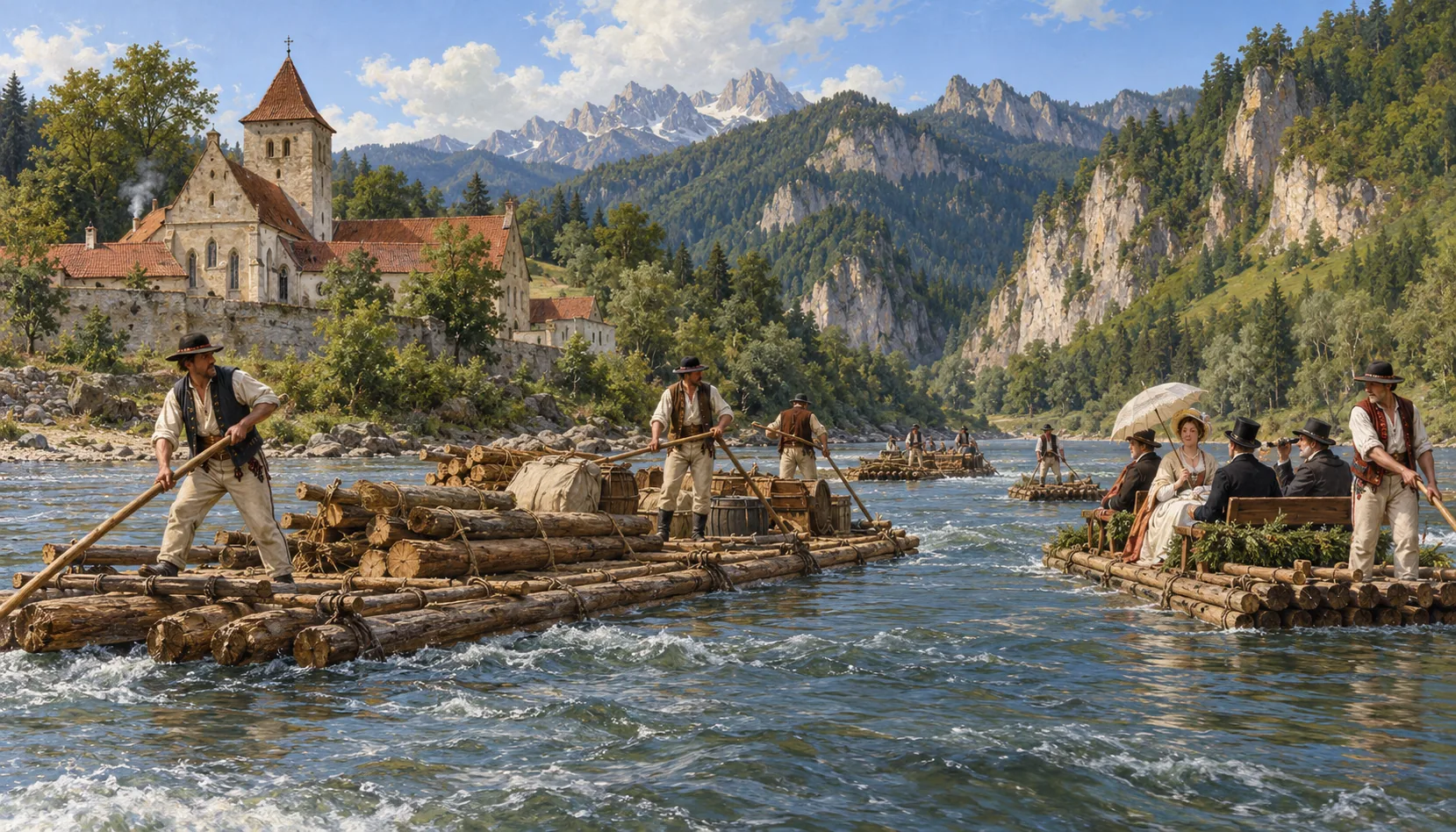
Rafts on the Dunajec were work long before they were fun: raftsmen floated timber and goods downstream towards the Vistula, and one of the oldest pictures of it anywhere is a seventeenth-century image in this monastery. Around 1831 Józef Szalay, who was building up the spa at Szczawnica on the far bank, began organising raft trips through the gorge for his patients — parties of up to a hundred, with music. Everything that happens on the water below the monastery today grew out of that: the modern ride is a nineteenth-century entertainment invented for people taking a cure. The raftsmen themselves were Goral villagers who already knew the river because moving timber on it had been their living.Plte na Dunajci boli najprv robota a až potom zábava: pltníci splavovali drevo a tovar po prúde k Visle a jedno z najstarších vyobrazení tejto práce vôbec je obraz zo 17. storočia práve v tomto kláštore. Okolo roku 1831 začal Józef Szalay, ktorý budoval kúpele v Szczawnici na druhom brehu, organizovať plavby prielomom pre svojich kúpeľných hostí — výpravy až po sto ľudí, s hudbou. Všetko, čo sa dnes deje na vode pod kláštorom, vyrástlo z toho: dnešný splav je zábava 19. storočia vymyslená pre ľudí na liečení. Samotní pltníci boli goralskí dedinčania, ktorí rieku poznali, lebo plavenie dreva bolo ich obživou.