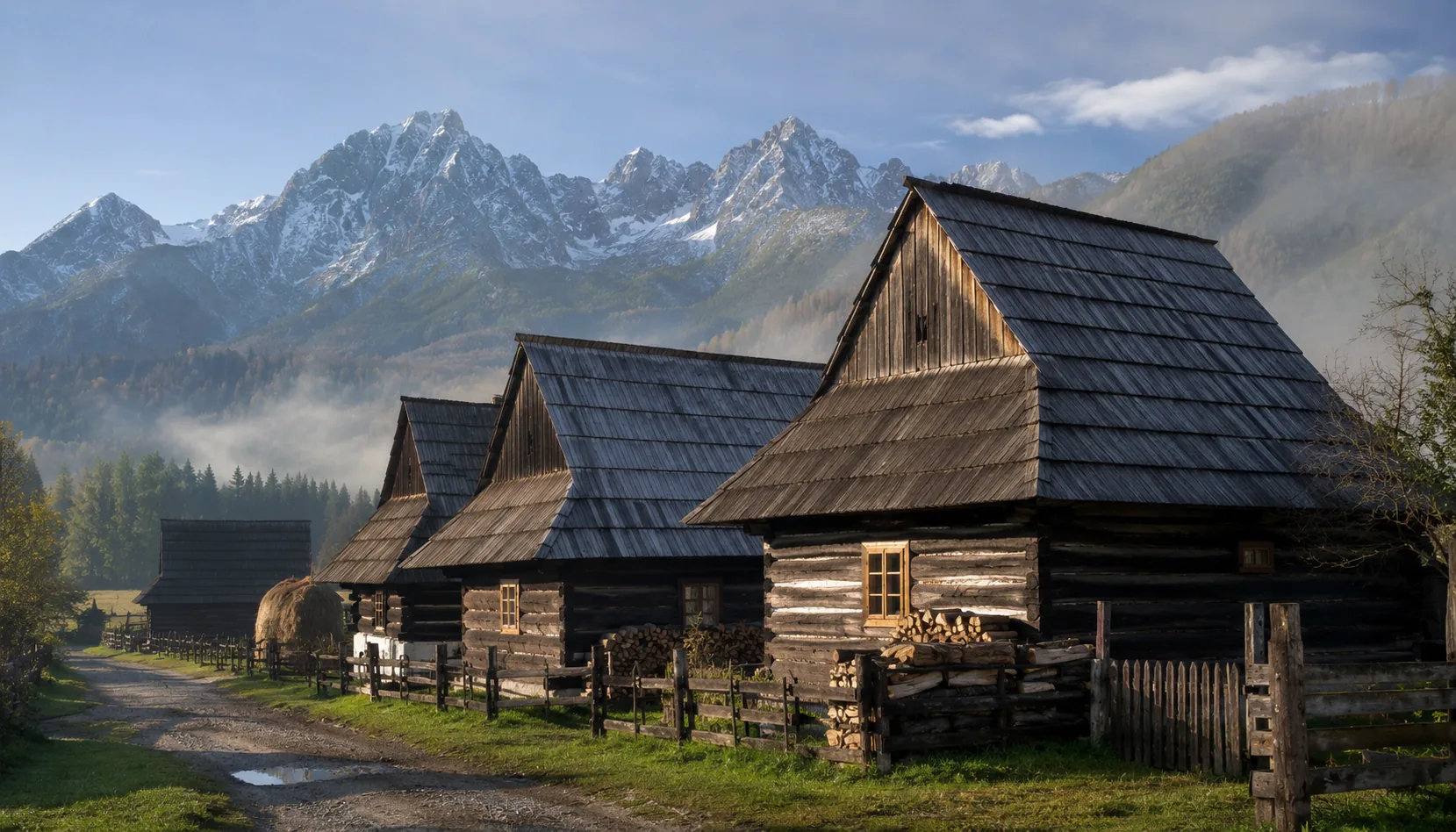
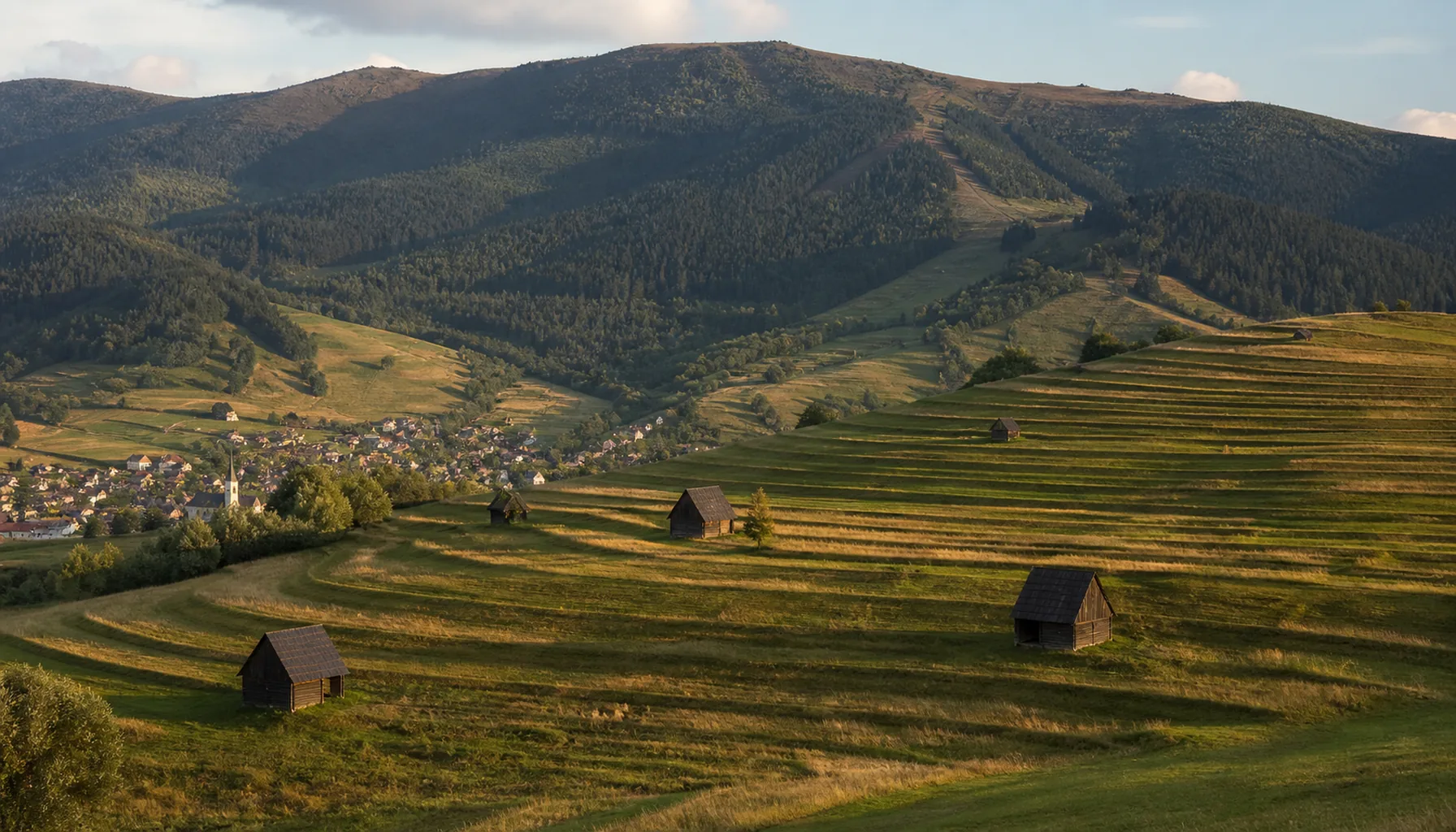
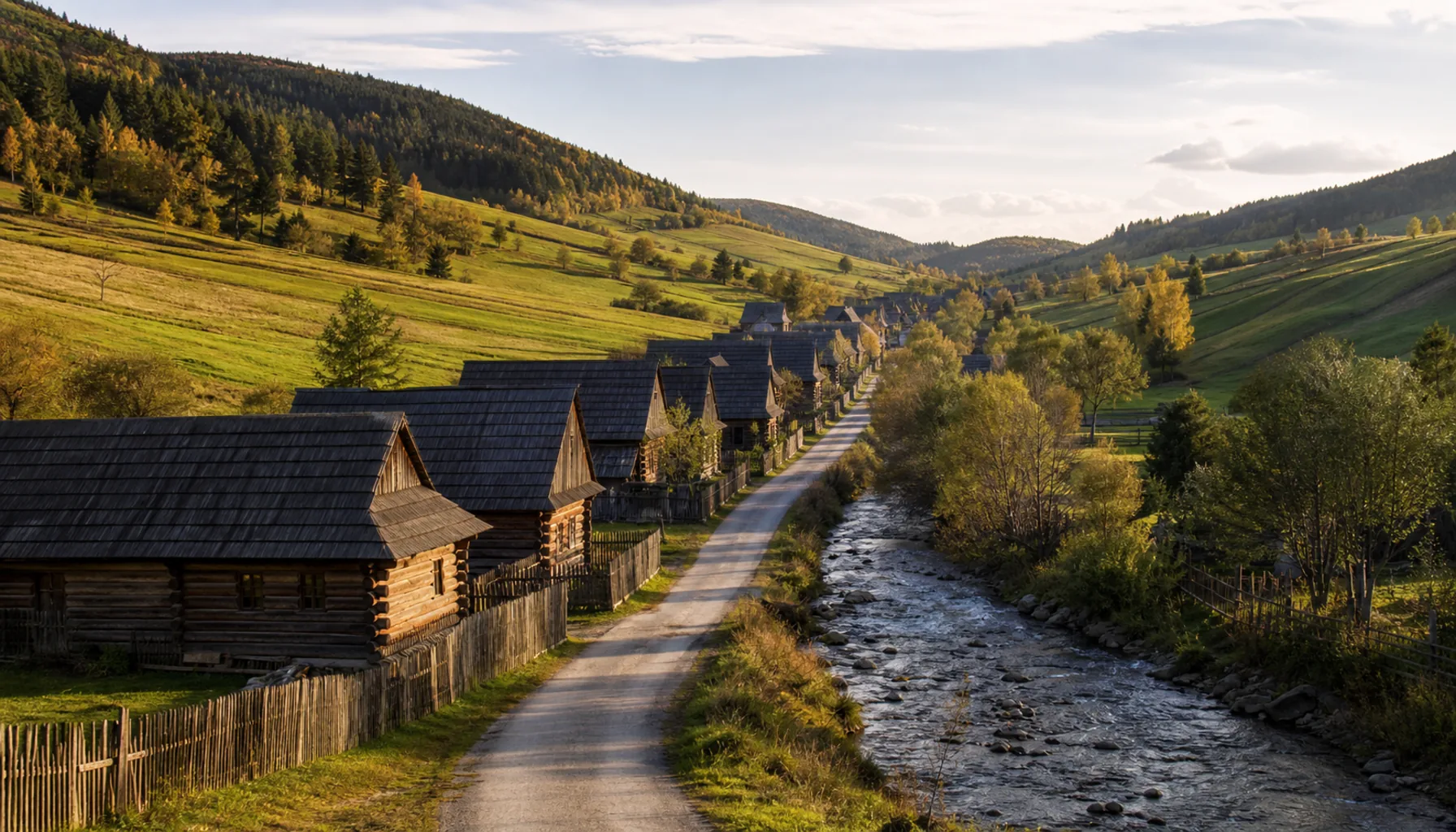
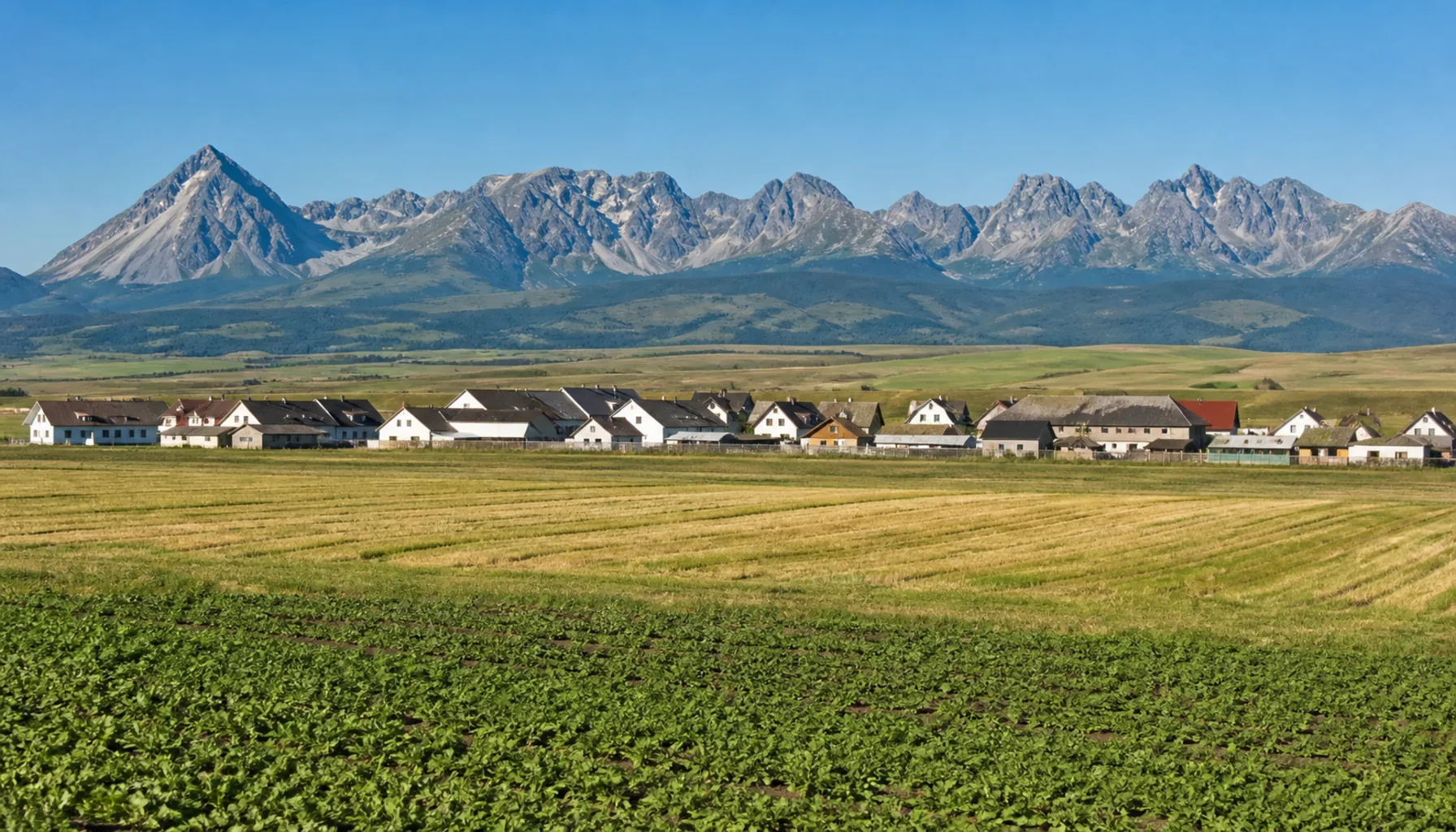
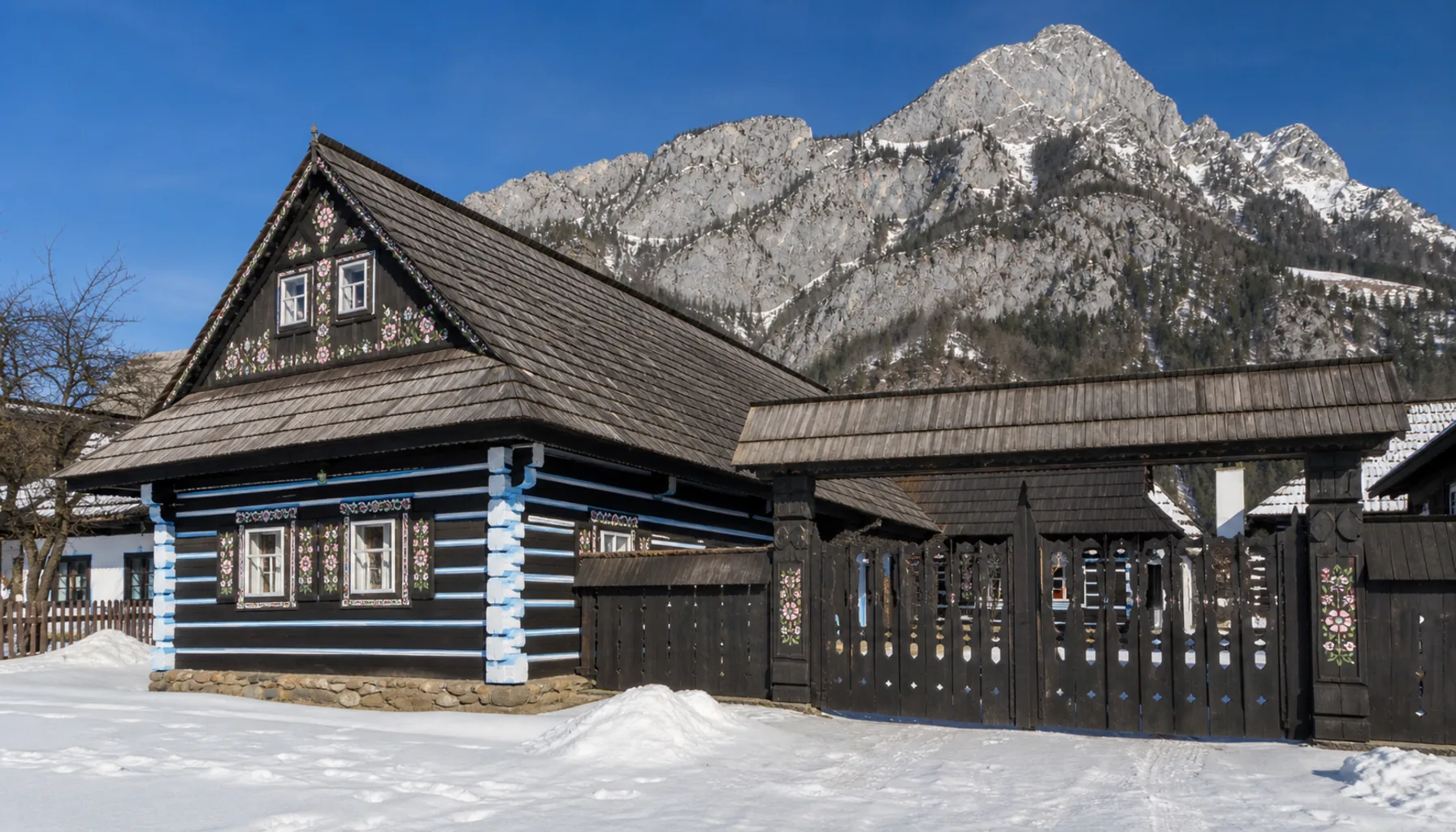
Around the Tatras the villages were built out of thin soil, high pasture and forest, and several still look it — painted Goral timber under the Belianske wall, a Rusyn street strung along one stream, terraced fields cut step by step into a mountainside.Obce okolo Tatier vyrástli z chudobnej pôdy, vysokých pasienkov a lesa a na viacerých to dodnes vidieť — maľované goralské drevenice pod stenou Belianskych Tatier, rusínska ulica natiahnutá popri jedinom potoku, terasové polia vyrezané krok za krokom do svahu.
A lane of log houses with shingle roofs in a village under the Tatra skylineUlica zrubových domov so šindľovými strechami v obci pod tatranským obzorom
Villages the mountains madeObce, ktoré vytvorili hory
The country under the Tatras is high, cold and short of ground worth ploughing, and it was settled in waves rather than all at once. Slovak farming villages took the valley floors and the saddles; from the sixteenth century onwards shepherding colonists working west and south along the ranges — Goral from the Polish side, Rusyn from the east — filled in the higher and poorer ground behind them.Krajina pod Tatrami je vysoká, chladná a má málo pôdy, ktorú sa oplatí orať, a osídľovala sa vo vlnách, nie naraz. Slovenské roľnícke dediny obsadili dná dolín a sedlá; od 16. storočia dopĺňali vyššiu a chudobnejšiu pôdu za nimi pastierski kolonisti postupujúci po pohoriach na západ a na juh — Gorali z poľskej strany, Rusíni z východu.
That mix, and not the mountains alone, is what makes these villages differ from one another within a few kilometres: a different dialect, a different church, a different roof pitch on the far side of one ridge. Almost nowhere here was rich. Holdings were small, the growing season short, and the surplus came from animals, timber and — once it arrived — the potato, which is the crop that made living at these heights possible at all.Práve táto zmes, a nie hory samy osebe, spôsobuje, že sa tunajšie obce líšia aj na pár kilometroch vzdialenosti: iné nárečie, iný kostol, iný sklon strechy za jedným hrebeňom. Bohatstvo tu nebolo takmer nikde. Usadlosti boli malé, vegetačné obdobie krátke a prebytok prinášal dobytok, drevo a — keď sa objavili — zemiaky, teda plodina, vďaka ktorej sa v týchto výškach vôbec dalo žiť.
Timber, shingle and what fire leftDrevo, šindeľ a to, čo zostalo po požiaroch
The building material was the forest. Spruce and fir logs dovetailed at the corners, roofs of shingle, foundations of field stone: the same kit everywhere, assembled differently from valley to valley. In the Goral belt the joints between the logs are limewashed white or blue so the wall reads as a band of stripes, and painted ornament runs round the windows and across the gable. Farther east the logs are left dark and the gable end faces the road.Stavebným materiálom bol les. Smrekové a jedľové brvná viazané v rohoch na zámok, šindľové strechy, základy z lámaného kameňa: tá istá výbava všade, len poskladaná v každej doline inak. V goralskom páse sú škáry medzi brvnami vybielené nabielo alebo namodro, takže stena pôsobí ako pás pruhov, a maľovaná výzdoba obieha okná a prechádza cez štít. Ďalej na východ ostávajú brvná tmavé a do ulice smeruje štítová stena.
Fire is why so little of it survives. A village of log houses under shingle burned as one thing, and more than one place here lost its whole historic street in a single afternoon — Važec in 1931 is the plainest example. What survives whole survives because it was protected in time: Ždiar and Osturňa are both reserves of folk architecture, which means the houses are listed where they stand rather than moved to an open-air museum somewhere else.Práve požiare sú dôvodom, prečo sa toho zachovalo tak málo. Dedina zrubových domov pod šindľom horela ako jeden celok a nejedna z nich tu prišla o celú historickú ulicu za jediné popoludnie — najnázornejším príkladom je Važec v roku 1931. Čo sa zachovalo vcelku, zachovalo sa preto, že to včas ochránili: Ždiar aj Osturňa sú pamiatkovými rezerváciami ľudovej architektúry, teda domy sú chránené tam, kde stoja, a nie prenesené do skanzenu inde.
Visiting them wellAko ich navštíviť s rozumom
These are inhabited villages, not open-air museums. The houses are private, the yards are private, and reserve status protects a building without opening its door. Where a house is shown, it is usually one house, often run by a family or the municipality, and open seasonally or by arrangement rather than to reliable hours. Look from the road, ask before walking through a gate, and do not photograph in through windows.Sú to obývané obce, nie skanzeny. Domy sú súkromné, dvory sú súkromné a pamiatková ochrana budovu chráni, no dvere jej neotvára. Kde je dom sprístupnený, býva to jeden dom, často v správe rodiny alebo obce, otvorený sezónne či po dohovore, nie na spoľahlivé hodiny. Pozerajte sa z cesty, pred vstupom do dvora sa spýtajte a nefotografujte cez okná dovnútra.
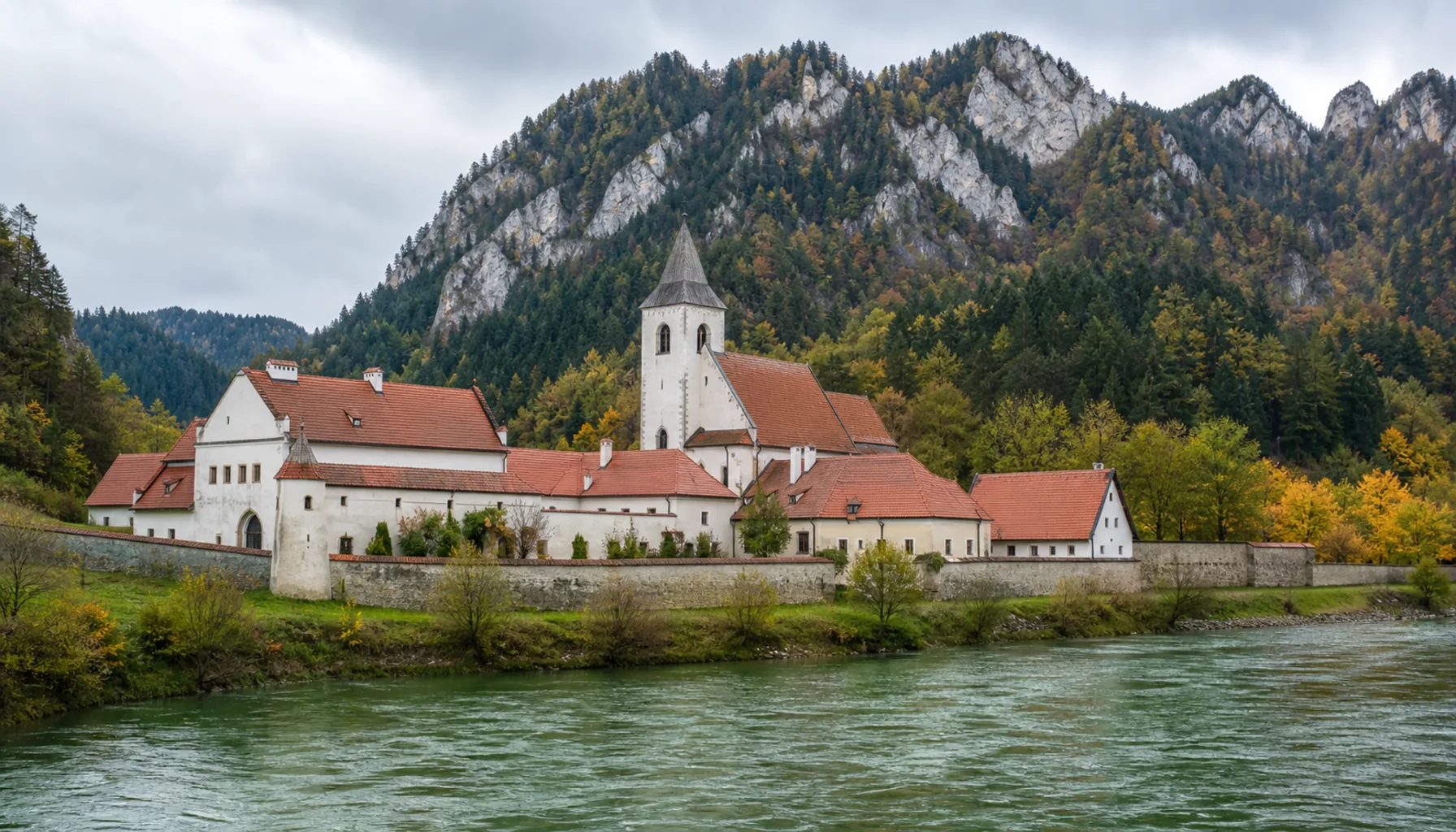
Practically, everything in this corner funnels through Poprad and the main railway along the foot of the range; from there it is buses, and outside the school year and the tourist season they thin out fast. Two national parks cover much of the ground — the Tatras and, on the Dunajec, the Pieniny — so trails have rules and seasons, and some of the finest walls above these villages are closed to walkers on purpose. Check the day's opening and the day's weather before you set out; a wasted drive up here is a long one.Prakticky sa v tomto kúte všetko zbieha v Poprade a na hlavnej trati popod pohorie; odtiaľ pokračujú autobusy a mimo školského roka a turistickej sezóny ich rýchlo ubúda. Veľkú časť územia pokrývajú dva národné parky — tatranský a na Dunajci pieninský —, takže chodníky majú svoje pravidlá aj sezóny a niektoré z najkrajších stien nad týmito obcami sú pre turistov zámerne zavreté. Pred cestou si overte otváranie aj počasie; zbytočná cesta sem hore je dlhá.