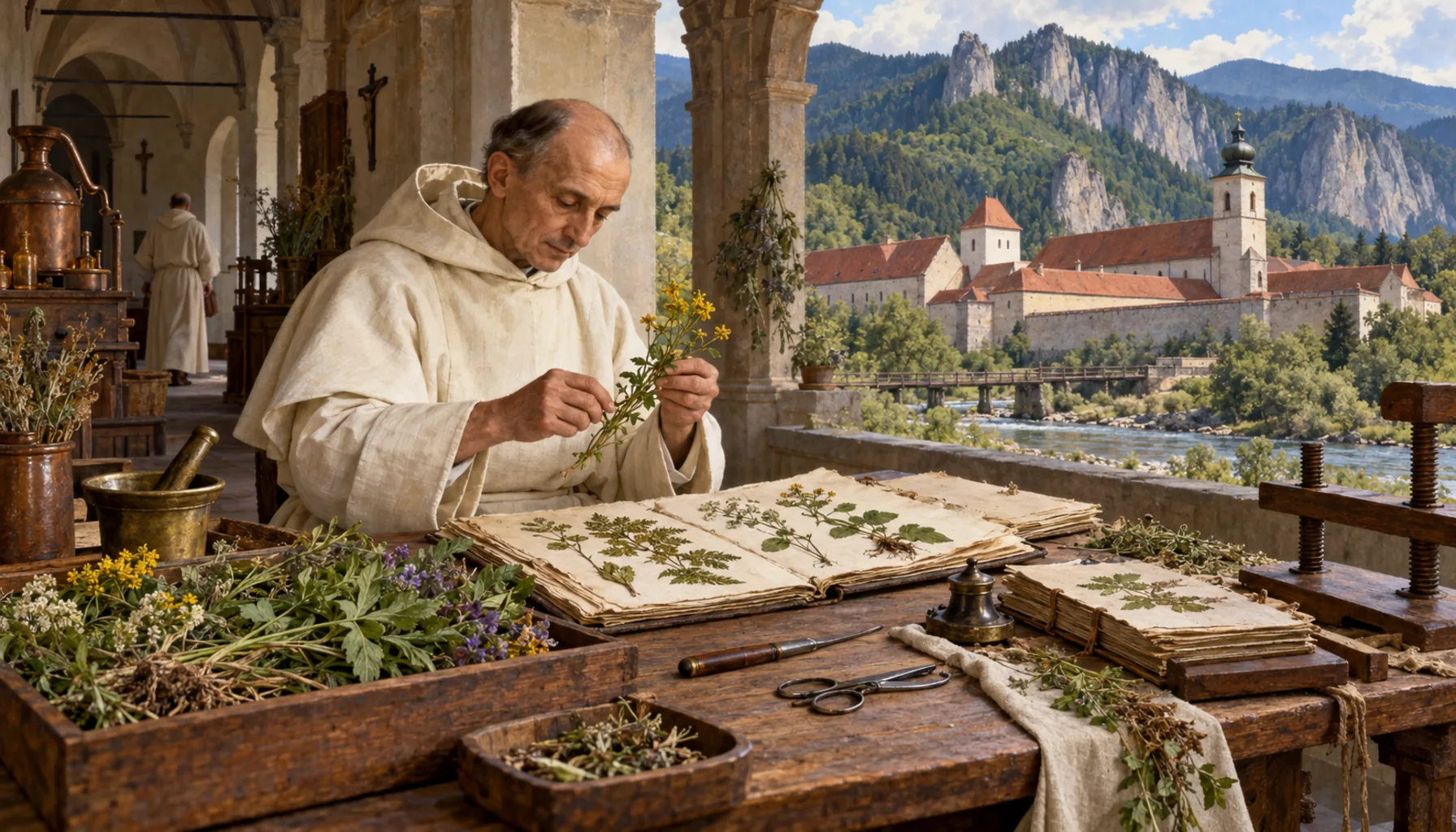
František Ignác Jäschke was born on 28 July 1724 at Polkowice in Silesia, took the name Cyprián as a Camaldolese lay brother, and died here on 16 April 1775. He was the house's barber-surgeon, apothecary and herbalist, and people walked in from the villages around to be treated by him, which is the real reason he is remembered. Between 1766 and 1771 he assembled a herbarium of 285 pressed sheets — vascular plants plus one lichen, about 265 different species — and it survives, in the Natural History Museum of the Slovak National Museum. Local tradition later gave him wings and a flight from the cliffs above the Dunajec; there is no contemporary document for any such flight, and the story is told as legend even by the sources that enjoy it most. What the record supports is a monk who could set a bone and name a plant. What people wanted was a monk who could fly.František Ignác Jäschke sa narodil 28. júla 1724 v sliezskych Polkoviciach, ako kamaldulský laický brat prijal meno Cyprián a 16. apríla 1775 tu aj zomrel. Bol kláštorným ránhojičom, lekárnikom a bylinkárom a ľudia z okolitých dedín za ním chodili na liečenie — a práve preto sa naňho spomína. V rokoch 1766 až 1771 zostavil herbár s 285 lisovanými listami — cievnaté rastliny a jeden lišajník, spolu asi 265 rôznych druhov — a zachoval sa: je v Prírodovednom múzeu Slovenského národného múzea. Ľudová tradícia mu neskôr pripísala krídla a let zo skál nad Dunajcom; nijaký súdobý doklad o takom lete nejestvuje a aj pramene, ktoré si príbeh najviac užívajú, ho podávajú ako legendu. Doložený je mních, ktorý vedel narovnať zlomeninu a pomenovať rastlinu. Ľudia chceli mnícha, ktorý vie lietať.