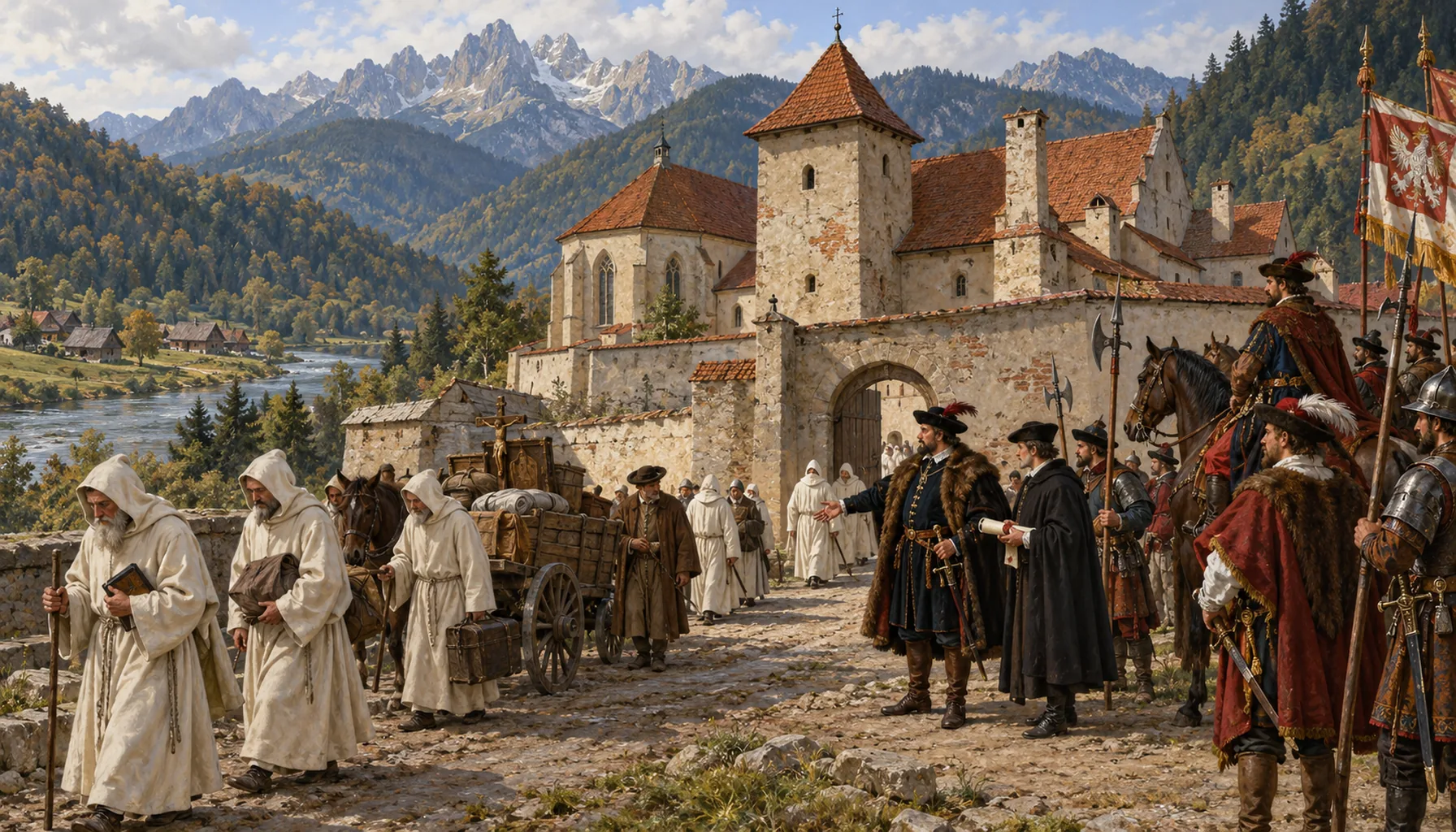
Another siege at the beginning of the sixteenth century forced the Carthusians out, and the community never really recovered. Through the Reformation century the estate slid into lay hands: in 1609 it was held by Štefan Tököli and in 1625 by Pavol Rákoci — two of the great Protestant magnate families of Upper Hungary, whose descendants would lead the uprisings against the Habsburgs a lifetime later. A monastery had become an estate, valued for its fields, its fish and its raftsmen rather than its prayers. The popular name Červený Kláštor, the Red Monastery, is usually explained by the colour of its roof; it was not the name the monks used.Ďalšie obliehanie na začiatku 16. storočia vyhnalo kartuziánov a komunita sa už poriadne nespamätala. Počas reformačného storočia prešiel majetok do svetských rúk: roku 1609 ho držal Štefan Tököli a roku 1625 Pavol Rákoci — dva veľké protestantské magnátske rody Horného Uhorska, ktorých potomkovia o generáciu neskôr povedú povstania proti Habsburgovcom. Z kláštora sa stalo panstvo, cenené pre polia, ryby a pltníkov, nie pre modlitby. Ľudové meno Červený Kláštor sa zvyčajne vysvetľuje farbou strechy; mnísi ho tak nevolali.