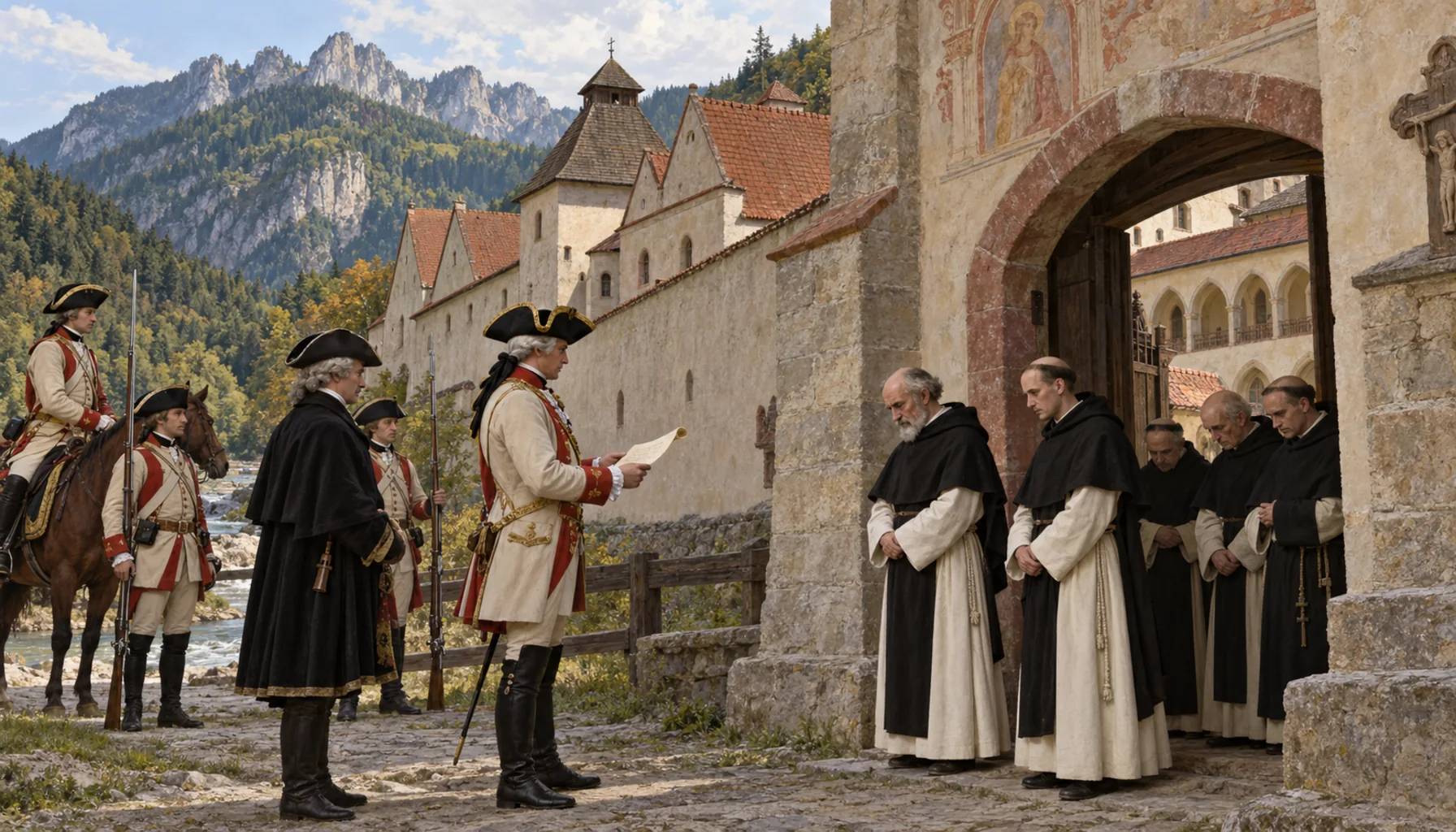
In 1782 Emperor Joseph II ordered the dissolution of religious orders he judged to be doing nothing useful, and the contemplative houses went first: no school, no hospital, no parish, no reason to exist in the eyes of a state that had begun to measure everything by its output. The Camaldolese left Červený Kláštor. Buildings without a community decay quickly, and the monastery began the long slide towards ruin that took most of the next two centuries to reverse. It is worth arguing about in class: the same Enlightenment thinking that ended serfdom and opened schools also shut down the workshop where Slovak got its first Bible.Roku 1782 nariadil cisár Jozef II. zrušiť rehole, o ktorých usúdil, že nerobia nič užitočné, a kontemplatívne kláštory šli na rad prvé: nijaká škola, nijaká nemocnica, nijaká fara — teda nijaký dôvod existovať v očiach štátu, ktorý začal všetko merať výkonom. Kamalduli z Červeného Kláštora odišli. Stavby bez spoločenstva chátrajú rýchlo a kláštor sa vydal na dlhú cestu k zrúcanine, ktorú bolo treba obracať väčšinu ďalších dvoch storočí. Je o čom diskutovať: to isté osvietenstvo, ktoré rušilo nevoľníctvo a otváralo školy, zavrelo aj dielňu, kde slovenčina dostala svoju prvú Bibliu.