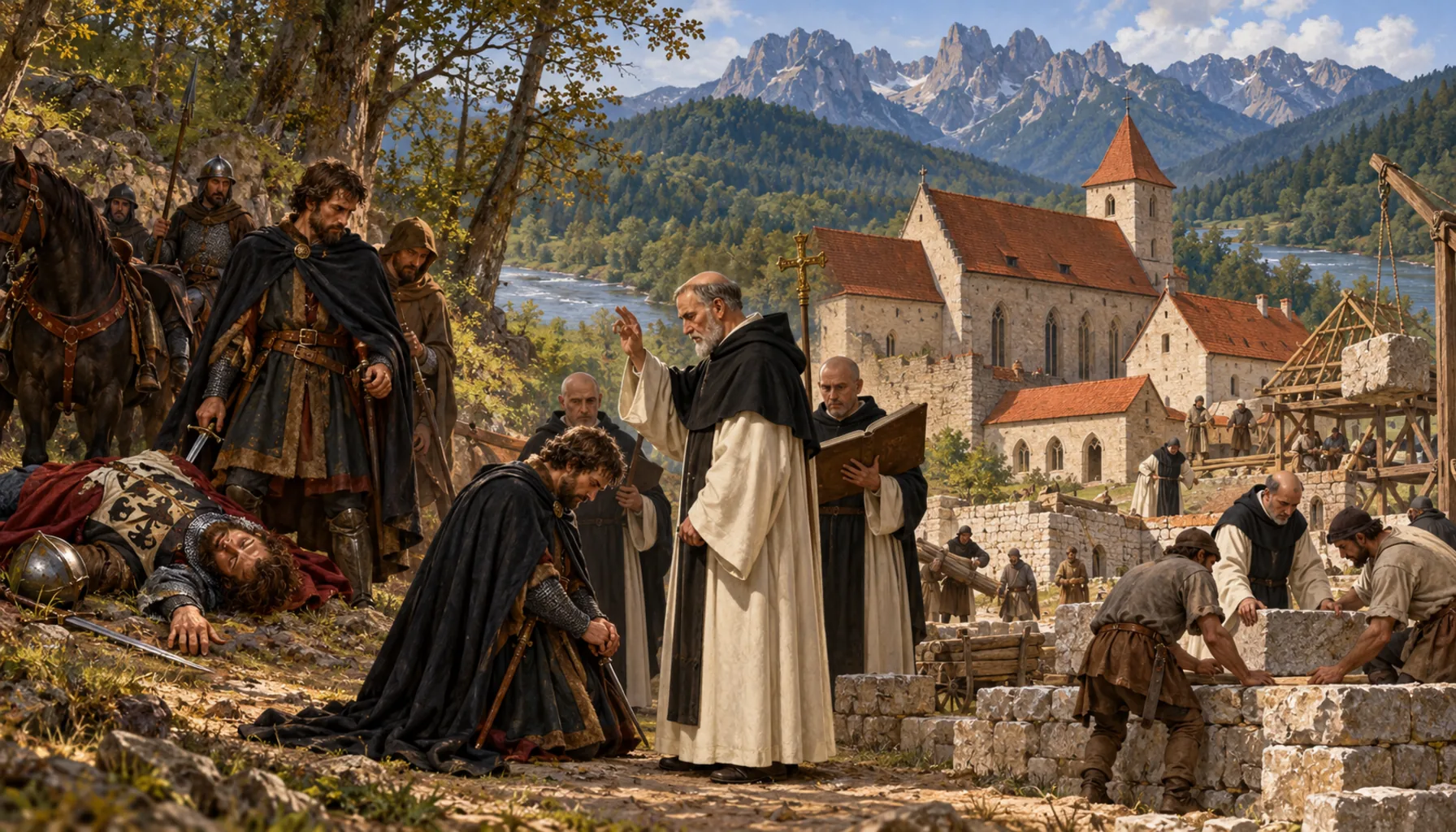
Magister Kokoš of the Berzeviczy family had taken part in the killing of Frederick of Hrhov, and the penance laid on him was to found six monasteries; he managed three. In 1319, after the death of his son Mikuláš, he gave land beside the Dunajec to the Carthusians — an order whose monks live alone, each in his own cell with his own walled garden, meeting only for certain services. The Spiš chapter confirmed the foundation in 1319 and King Charles Robert of Anjou approved the building in 1320, on land in the cadastre of the village of Lechnica. The order already had a house in Spiš, high on the Rock of Refuge in what is now the Slovak Paradise, so it knew exactly what it was looking for: enclosed, remote, hard to reach. That is why the site looks the way it does today, and why the church here is dedicated to St Anthony the Hermit.Magister Kokoš z rodu Berzeviciovcov mal podiel na zabití Frederika z Hrhova a za pokánie mu uložili založiť šesť kláštorov; stihol tri. Roku 1319, po smrti syna Mikuláša, daroval pozemok pri Dunajci kartuziánom — rádu, ktorého mnísi žijú osamote, každý vo vlastnej cele s vlastnou ohradenou záhradkou a stretávajú sa len na niektorých bohoslužbách. Založenie potvrdila roku 1319 Spišská kapitula a roku 1320 dal súhlas na stavbu kráľ Karol Róbert z Anjou; pozemok ležal v chotári obce Lechnica. Rád mal na Spiši dom už predtým, vysoko na Skale útočišťa v dnešnom Slovenskom raji, a presne vedel, čo hľadá: uzavretosť, odľahlosť, ťažkú prístupnosť. Preto areál vyzerá tak, ako vyzerá, a preto je tunajší kostol zasvätený svätému Antonovi Pustovníkovi.