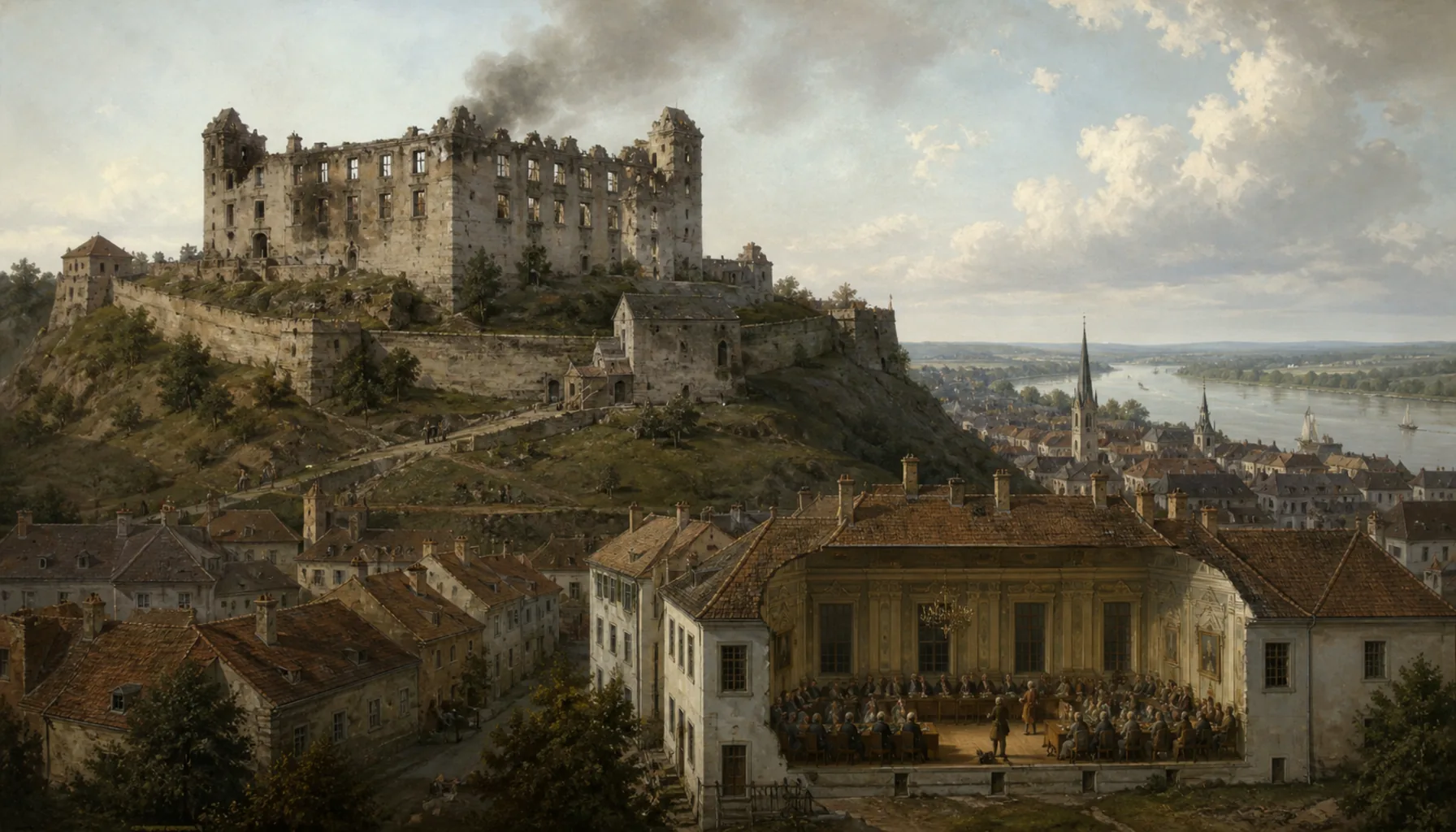
While the castle stood roofless, the most important assembly in the kingdom was meeting a few hundred metres below it. The diet that sat in Pressburg through the winter of 1847–48 was the last ever held in this city, and in the spring of 1848 it passed the laws that ended serfdom — the moment a peasant stopped belonging to a landlord. Ľudovít Štúr, who a few years earlier had codified the Slovak literary language, sat in it as a deputy and argued there for Slovak demands. The castle above took no part in any of it: it was army property, stone was carted off it, and there were proposals to clear the ruin away. The city drew it, painted it and printed it on postcards anyway — burnt out, it was still the emblem of the place.Kým hrad stál bez strechy, pár stoviek metrov pod ním zasadal najdôležitejší snem kráľovstva. Uhorský snem, ktorý v Prešporku rokoval cez zimu 1847 – 1848, bol posledný, aký sa v meste konal, a na jar 1848 prijal zákony, ktoré zrušili poddanstvo — okamih, keď sedliak prestal patriť zemepánovi. Sedel v ňom aj Ľudovít Štúr, ktorý pár rokov predtým kodifikoval spisovnú slovenčinu, a hovoril v ňom za slovenské požiadavky. Hrad nad tým všetkým z toho nemal nič: patril vojsku, kameň sa z neho odvážal a objavovali sa návrhy zrúcaninu odstrániť. Mesto ho aj tak kreslilo, maľovalo a tlačilo na pohľadnice — aj vyhorený zostal znakom Prešporka.