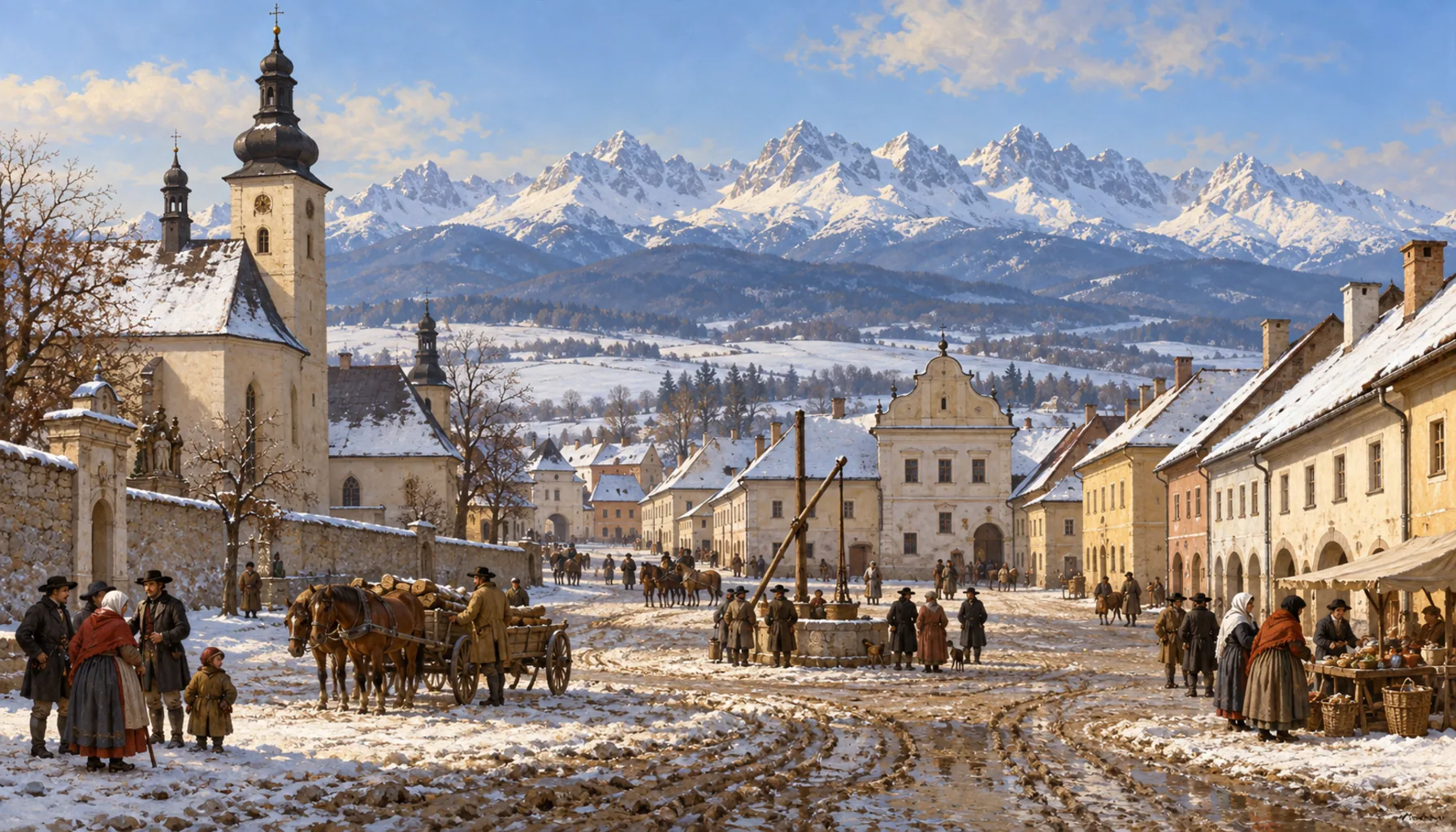
Jozef Maximilián Petzval was born in this town on 6 January 1807. He became a mathematician, taught in Pest and then for forty years at the University of Vienna, and in 1840 he calculated — on paper, by hand — a photographic lens far faster than anything then in use. It let through roughly sixteen times more light, which cut the time a sitter had to hold still from between five and thirty minutes down to under a minute. That one calculation turned photography from a laboratory experiment into a trade, and portrait studios opened across Europe within a few years. Petzval died in Vienna on 19 September 1891; the house where he was born is now a museum of photography.Jozef Maximilián Petzval sa v tomto meste narodil 6. januára 1807. Stal sa matematikom, prednášal v Pešti a potom štyridsať rokov na Viedenskej univerzite a roku 1840 vypočítal — na papieri, rukou — fotografický objektív oveľa svetelnejší než čokoľvek vtedy používané. Prepúšťal asi šestnásťkrát viac svetla, a tak sa čas, počas ktorého musel fotografovaný nehybne vydržať, skrátil z piatich až tridsiatich minút na menej ako minútu. Jediný výpočet premenil fotografiu z laboratórneho pokusu na remeslo a v priebehu pár rokov sa po celej Európe otvárali portrétne ateliéry. Petzval zomrel vo Viedni 19. septembra 1891; dom, v ktorom sa narodil, je dnes múzeom fotografie.