The Tatras · Beyond the resortsTatry · Za strediskami
Towns of the Tatra FoothillsMestá pod Tatrami
Five towns in the basin below the High Tatras, each with its own page — the gateway town of Poprad, the Baťa factory town of Svit, the resort municipality of Vysoké Tatry, and the old Spiš towns of Spišská Belá and Podolinec on the Poprad river.Päť miest v kotline pod Vysokými Tatrami, každé s vlastnou stránkou — brána Tatier Poprad, Baťovo továrenské mesto Svit, strediskové mesto Vysoké Tatry a staré spišské mestá Spišská Belá a Podolinec na rieke Poprad.
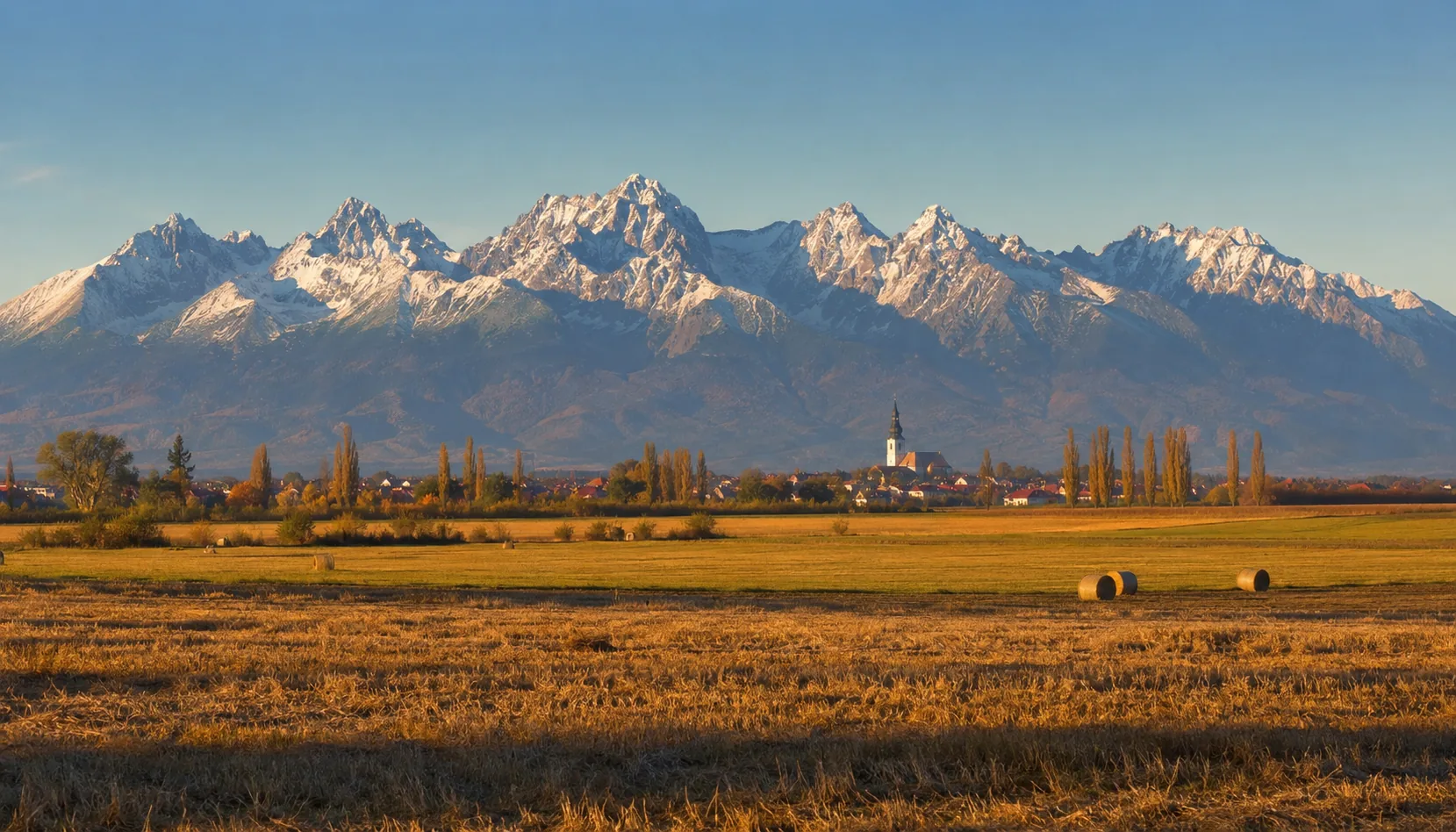
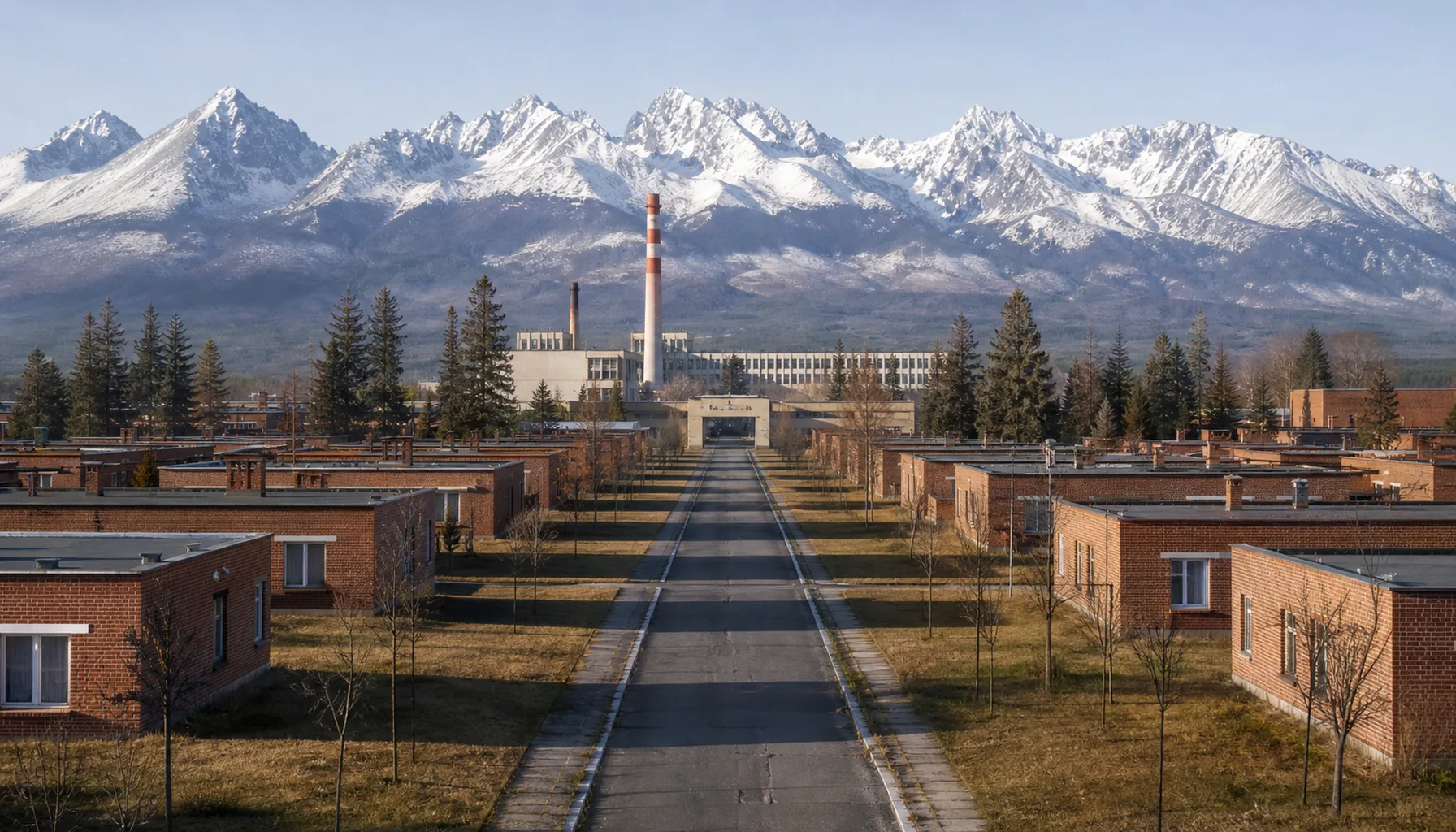
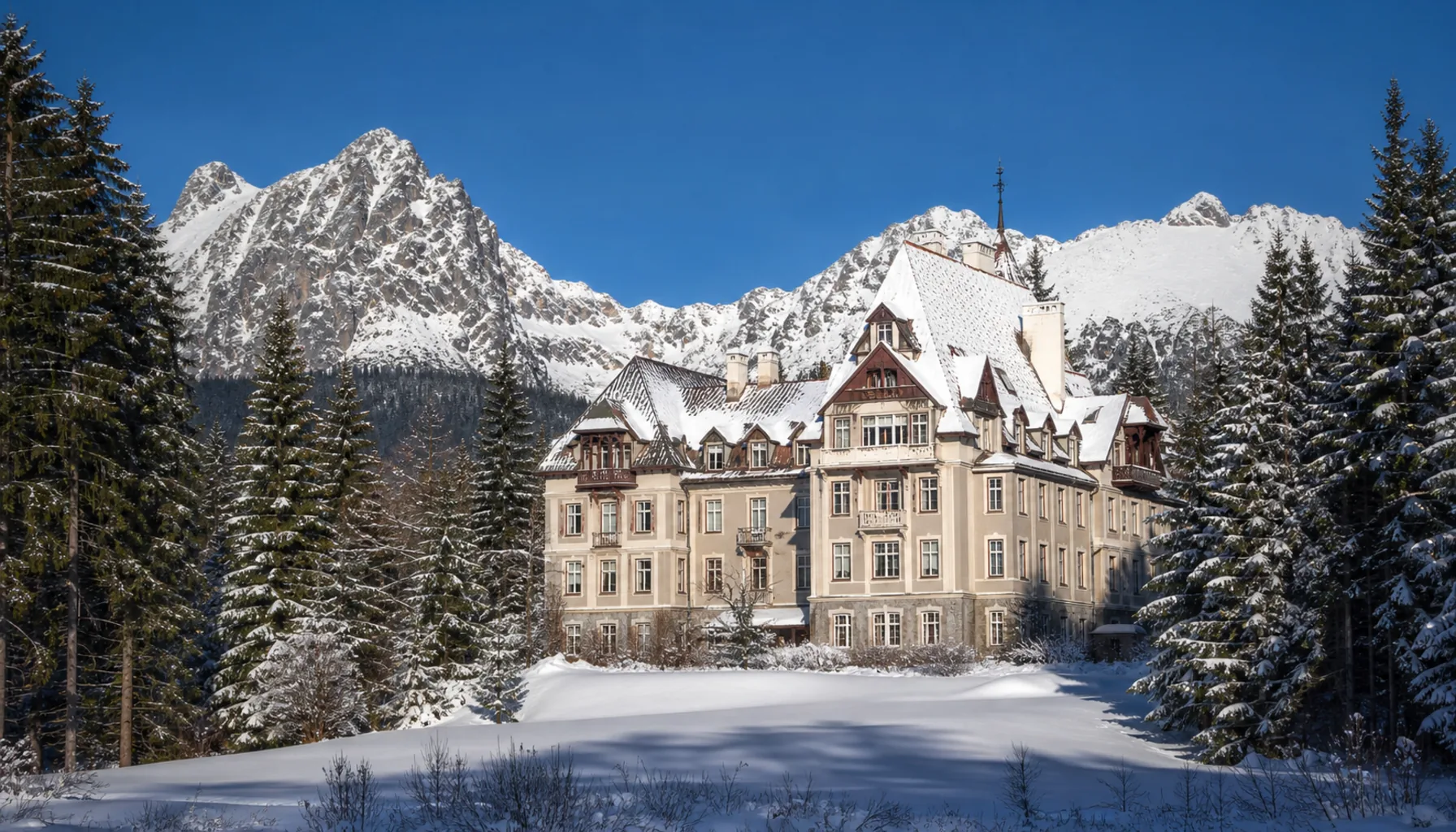
The wall of the High Tatras above the fields of the Poprad basinStena Vysokých Tatier nad poľami Podtatranskej kotliny
The basin under the rangeKotlina pod pohorím
The Podtatranská kotlina is a high basin — most of it lies between 650 and 750 metres — pinched between the granite wall of the High Tatras to the north and the Kozie chrbty and Low Tatras to the south. There are no foothills: the range starts where the fields stop. Winters are long, the frost-free window is short, and the farming that works here is seed potatoes, cattle and sheep rather than grain.Podtatranská kotlina je vysoko položená — väčšina jej plochy leží medzi 650 a 750 metrami — a je zovretá medzi žulovou stenou Vysokých Tatier na severe a Kozími chrbtami s Nízkymi Tatrami na juhu. Podhorie tu neexistuje: pohorie sa začína tam, kde sa končia polia. Zimy sú dlhé, obdobie bez mrazov krátke a darí sa tu skôr sadbovým zemiakom, dobytku a ovciam než obilninám.
The basin also straddles the main European watershed. The Poprad river runs north out of it, crosses into Poland and reaches the Baltic by way of the Dunajec and the Vistula — one of the very few Slovak rivers that does — while the Hornád, rising a few valleys away, goes south-east to the Black Sea. Three of the towns here stand on the Poprad, which is why their history looks north as much as south.Kotlinou zároveň prechádza hlavné európske rozvodie. Rieka Poprad z nej odteká na sever, prekračuje poľskú hranicu a cez Dunajec a Vislu sa dostane až do Baltského mora — čo o slovenských riekach platí len o máloktorej — kým Hornád, prameniaci o pár dolín ďalej, mieri na juhovýchod do Čierneho mora. Tri z tunajších miest stoja na Poprade, a preto sa ich dejiny obzerajú na sever rovnako často ako na juh.
Spiš towns and factory townsSpišské mestá a továrenské mestá
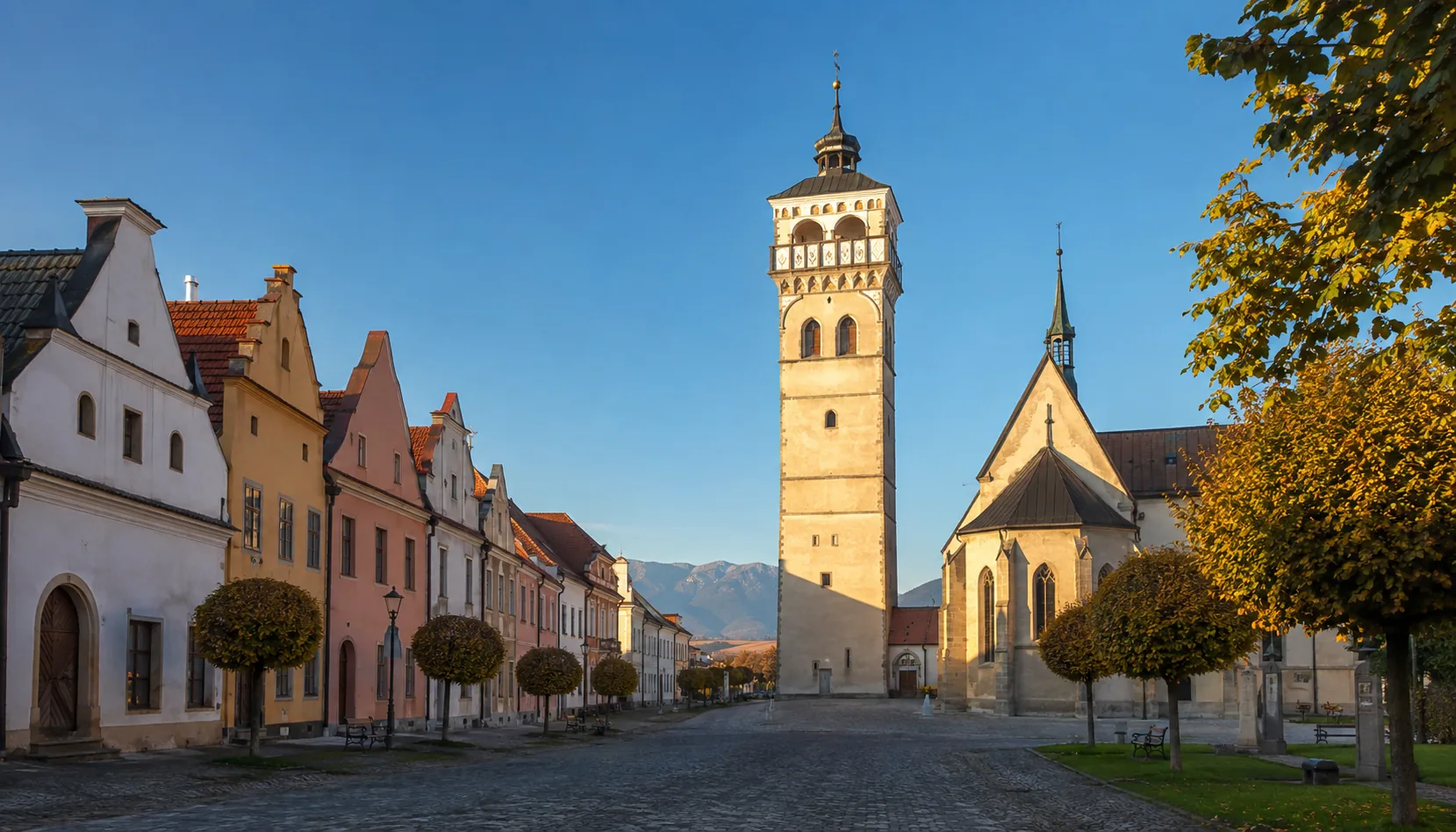
Poprad, Spišská Belá and Podolinec are Spiš towns of the medieval German settlement, and they share one long episode: in 1412 King Sigismund pawned thirteen of the Spiš towns, together with the estates of Ľubovňa, Podolinec and Hniezdne, to the Polish crown to pay for a war. The pledge was not redeemed until 1772, so for three and a half centuries these towns were administered from Poland while the country around them was not. The gabled squares, the free-standing Renaissance bell towers and the winged altars are what that world left behind.Poprad, Spišská Belá a Podolinec sú spišské mestá stredovekej nemeckej kolonizácie a spája ich jedna dlhá epizóda: v roku 1412 dal kráľ Žigmund trinásť spišských miest spolu s panstvami Ľubovne, Podolinca a Hniezdneho do zálohy poľskej korune, aby zaplatil vojnu. Záloh vykúpili až v roku 1772, takže tri a pol storočia spravovali tieto mestá z Poľska, hoci krajina okolo nich pod Poľsko nepatrila. Štítové námestia, samostatne stojace renesančné zvonice a krídlové oltáre sú tým, čo po tom svete zostalo.
The other two towns were made by the twentieth century. Svit was laid out from nothing in 1934 around a Baťa fibre works and is named after it. Vysoké Tatry is a single municipality assembled after the Second World War out of the spa and resort settlements strung along the mountain slope, and it is the one town here that lives entirely on the mountains. Poprad, meanwhile, is a real industrial town under its tourist reputation — freight wagons, washing machines and preserved food are all made there.Zvyšné dve mestá vytvorilo 20. storočie. Svit vyrástol z ničoho v roku 1934 okolo Baťovho závodu na umelé vlákno a nesie po ňom meno. Vysoké Tatry sú jedna obec, poskladaná po druhej svetovej vojne z kúpeľných a strediskových osád rozvešaných po úbočí — a jediné tunajšie mesto, ktoré žije výlučne z hôr. Poprad je zase pod svojou turistickou povesťou skutočným priemyselným mestom: vyrábajú sa v ňom nákladné vagóny, práčky aj konzervy.
Using this pageAko túto stránku použiť
Each town below has its own page: where it stands, what happened there, what is worth seeing, what people do for a living, and how to reach it. Some of the region's headline sights are covered elsewhere on this site and are only pointed at here — the ski areas, the glacial lakes, Belianska cave and the two museum castles at Kežmarok and Stará Ľubovňa.Každé mesto nižšie má vlastnú stránku: kde leží, čo sa tam stalo, čo stojí za pozretie, čím sa tam ľudia živia a ako sa tam dostať. Niektorým hlavným lákadlám regiónu sa venujú iné časti tejto stránky a tu na ne len ukazujeme — lyžiarskym strediskám, plesám, Belianskej jaskyni a dvom múzejným hradom v Kežmarku a Starej Ľubovni.
These are real mountains and the weather changes fast. High trails, cable cars, cave tours and boat services all run to seasonal regimes, and in the national park the closures are legal rather than advisory. Confirm conditions and opening directly with the operators before you set out.Toto sú skutočné hory a počasie sa tu mení rýchlo. Vysokohorské chodníky, lanovky, prehliadky jaskýň aj plavby majú sezónne režimy a uzávery v národnom parku nie sú odporúčaním, ale predpisom. Podmienky a otváranie si pred cestou overte priamo u prevádzkovateľov.