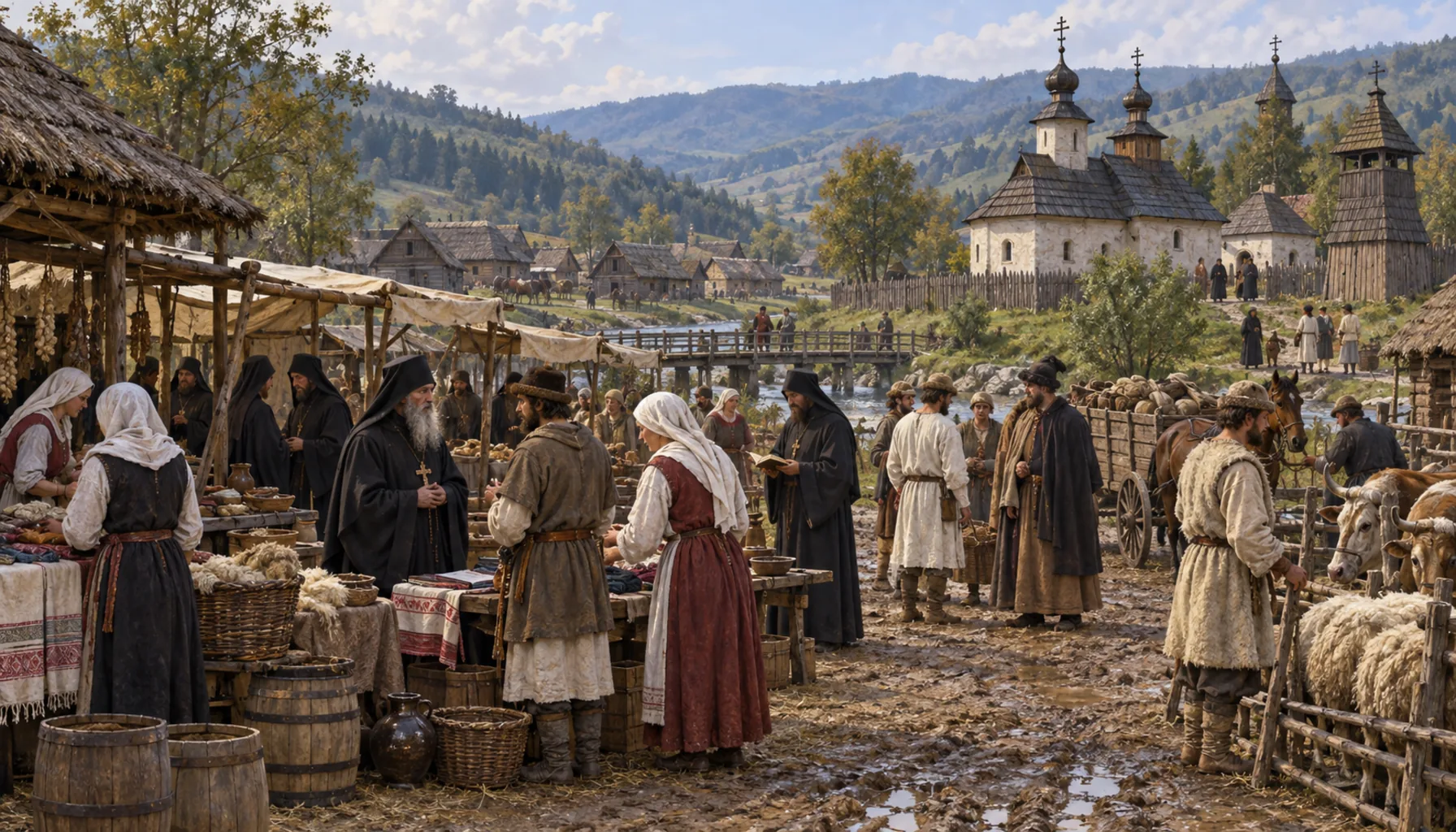
By the fifteenth century Snina had grown to around 130 inhabitants and had won some town privileges of its own — the right to hold markets and to run a little of its own business. The most telling record from these years is a monastery of Basilian monks documented in 1487. Basilians follow the Eastern rite, the Byzantine liturgy of the Rusyn people who settled these high valleys, and that single line in a document is the first written proof of a culture which still shapes the district: the wooden churches, the icon screens, the Cyrillic lettering on old gravestones.V pätnástom storočí mala Snina okolo stotridsať obyvateľov a získala aj isté mestské výsady — právo držať trhy a spravovať si kúsok vlastných vecí. Najvýrečnejším záznamom z tých čias je bazilánsky kláštor doložený v roku 1487. Baziliáni sú mnísi východného obradu, ktorí sa držia byzantskej liturgie Rusínov — ľudí, čo osídlili tieto vysoké doliny. Jediný riadok v listine je tak prvým písomným dôkazom kultúry, ktorá kraj formuje dodnes: drevené chrámy, ikonostasy, cyrilika na starých náhrobkoch.