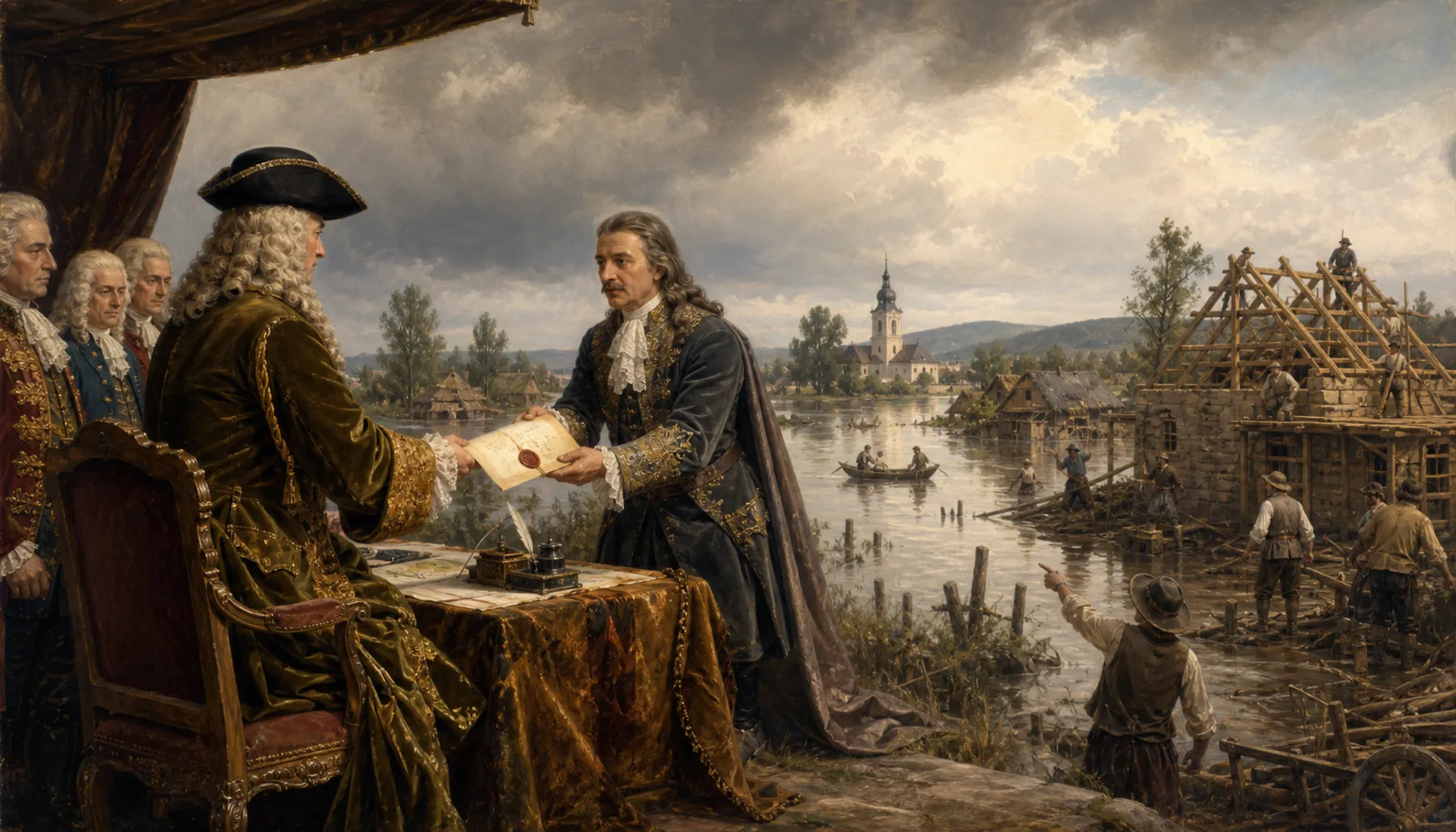
In 1720 Emperor Charles VI granted the Hlohovec estate, and with it Piešťany, to Ján Leopold Erdődy. The family would hold the town until 1848 and the spa until 1940 — two hundred and twenty years, by far the longest grip anyone has had on these springs. What they inherited was a bathing place with no buildings: people lay in pits dug in the warm mud by the river, and the Váh kept shifting its bed and ruining them, as it ruined the whole settlement in the great floods of 1683, 1744 and 1813. Doctors arrived before architects — Ján Justus Torkoš, chief physician of Pressburg, published the first medical description of the waters in 1745, and the balneologist Heinrich von Cranz came to see them in 1772. Only after Cranz's visit, in 1778, did the first permanent bath building finally go up.Roku 1720 daroval cisár Karol VI. hlohovecké panstvo a s ním aj Piešťany Jánovi Leopoldovi Erdődymu. Rod držal mestečko do roku 1848 a kúpele do roku 1940 — dvestodvadsať rokov, zďaleka najdlhšie zo všetkých majiteľov týchto prameňov. Zdedili však kúpalisko bez budov: ľudia ležali v jamách vyhĺbených v teplom bahne pri rieke a Váh si menil koryto a jamy ničil, tak ako veľkými povodňami v rokoch 1683, 1744 a 1813 zničil celú osadu. Skôr než architekti prišli lekári — Ján Justus Torkoš, hlavný fyzikus Prešporka, vydal roku 1745 prvý lekársky opis vôd a roku 1772 sa na ne prišiel pozrieť balneológ Heinrich von Cranz. Až po Cranzovej návšteve, roku 1778, tu napokon vyrástla prvá stála kúpeľná budova.