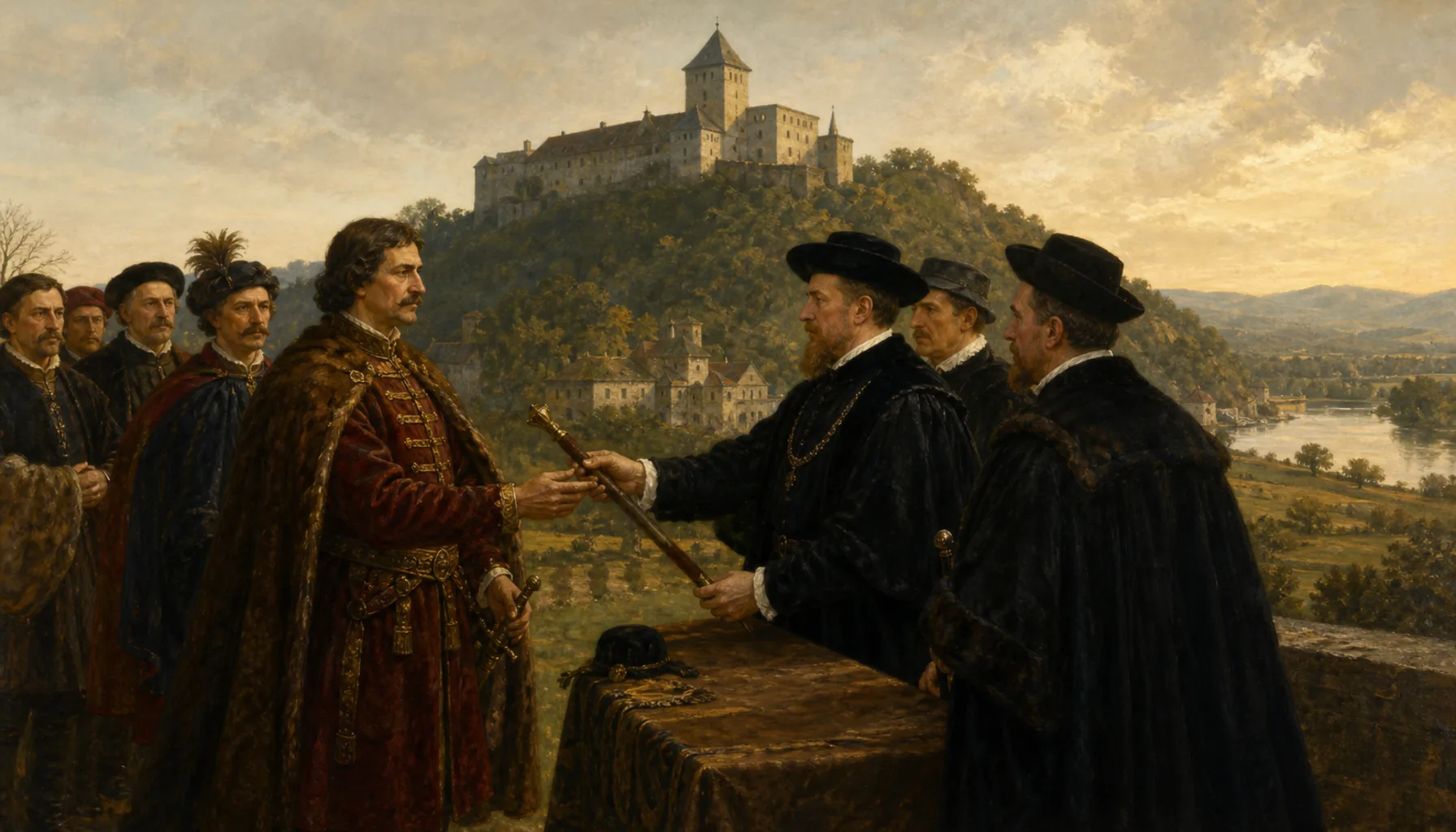
Adam Forgách bought the estate in 1656, and his family held it until the Rákóczi uprising against the Habsburgs collapsed — after which the emperor confiscated Šimon Forgách's property, and Piešťany changed owner simply because its lord had backed the losing side. The castle above the town died the same way, and its story is worth knowing, because so many Slovak ruins are wrongly blamed on the Turks. Tematín's last owner, Mikuláš Bercsényi, born in the castle in 1665, was the second man of the uprising; on 22 January 1710 he slipped away at night in disguise with a single servant, imperial troops began the siege the next morning, and the garrison surrendered after three days. The imperial army then pulled the castle down, and it has been a ruin ever since — demolished by the emperor's own soldiers, not by an Ottoman army.Roku 1656 kúpil panstvo Adam Forgáč a jeho rod ho držal až do konca Rákociho povstania proti Habsburgovcom — po jeho porážke cisár Šimonovi Forgáčovi majetky odobral a Piešťany zmenili majiteľa jednoducho preto, že sa ich zemepán postavil na stranu porazených. Rovnako zanikol aj hrad nad mestečkom a jeho príbeh stojí za to poznať, lebo za veľa slovenských zrúcanín sa neprávom viní Turek. Posledný majiteľ Tematína Mikuláš Berčéni, narodený na hrade roku 1665, bol druhým mužom povstania; 22. januára 1710 sa v noci v prestrojení a s jediným sluhom vytratil, cisárske vojsko začalo na druhý deň obliehať a posádka sa po troch dňoch vzdala. Cisárski potom hrad rozbúrali a odvtedy je v ruinách — zrúcalo ho cisárovo vlastné vojsko, nie osmanská armáda.