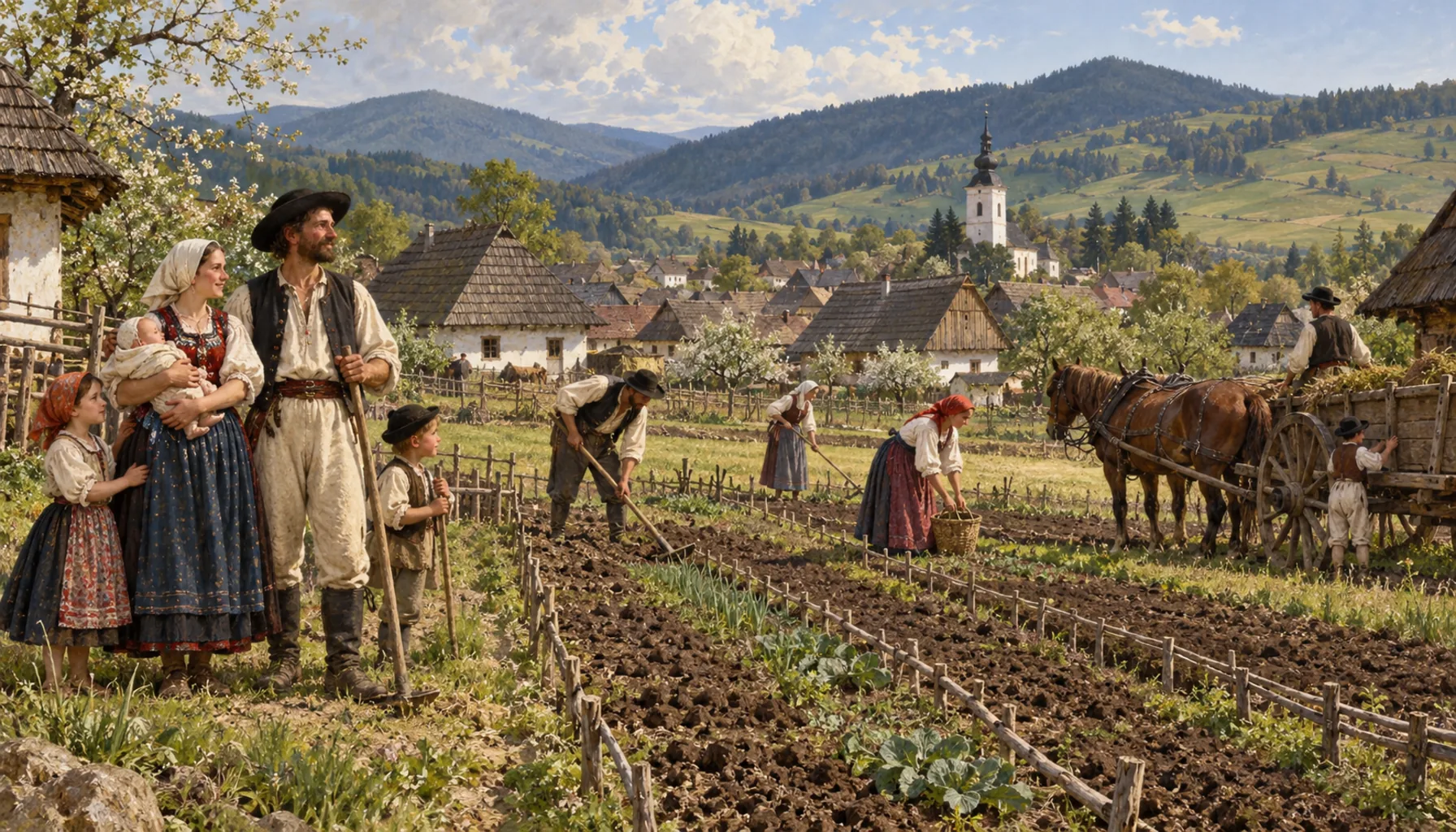
The revolution of 1848 abolished serfdom throughout the Kingdom of Hungary: the families here no longer owed labour or dues to a landlord, and the strips they worked became their own. In a hill village that mattered less than it sounds. The holdings were tiny, the soil was thin, and the forest and the better pasture generally stayed with the former lord, so a family that could not live off its land had to hire itself out to someone who could. For the rest of the century the only institutions in the village were the church and its cantor, who in Greek Catholic villages was usually the schoolteacher as well.Revolučný rok 1848 zrušil v celom Uhorsku poddanstvo: tunajšie rodiny už zemepánovi nedlhovali robotu ani dávky a pásiky, ktoré obrábali, sa stali ich vlastnými. V horskej dedine to však znamenalo menej, než to znie. Usadlosti boli maličké, pôda tenká a les i lepšie pasienky spravidla zostali bývalému pánovi, takže rodina, ktorá sa zo svojho neuživila, sa musela najímať u toho, kto na to mal. Po zvyšok storočia boli jedinými ustanovizňami v obci chrám a jeho kantor, ktorý v gréckokatolíckych dedinách býval zároveň učiteľom.