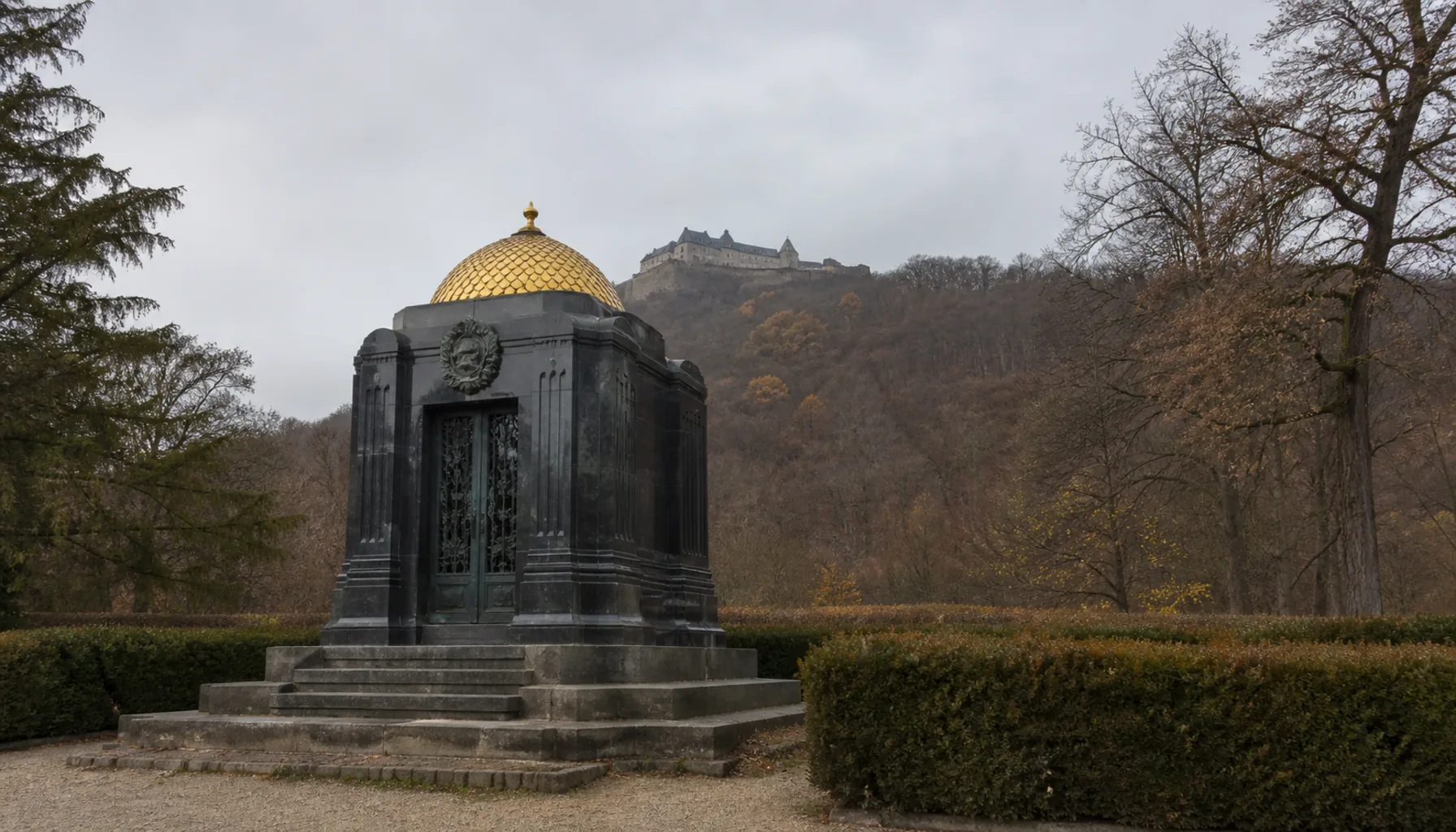
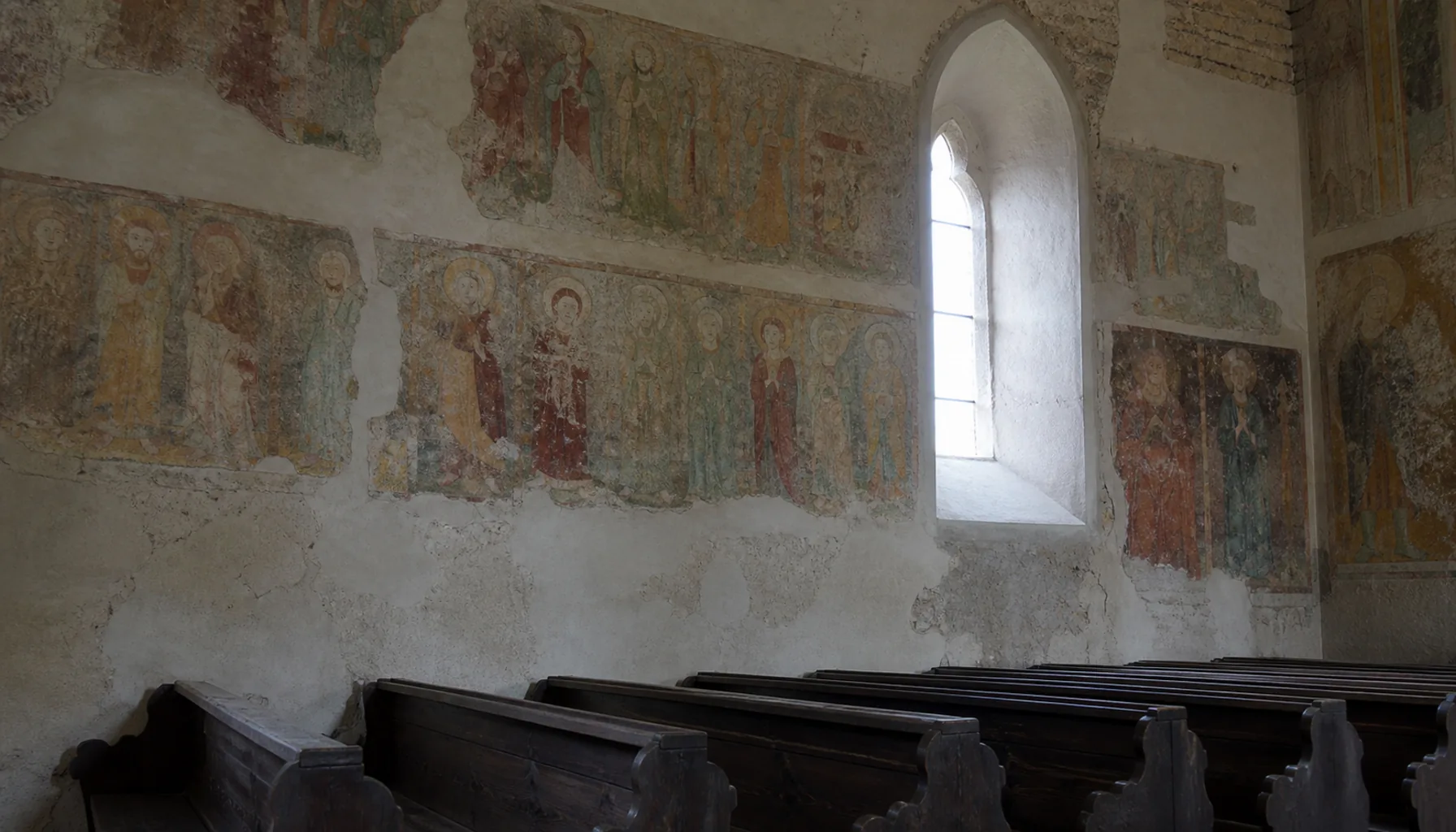
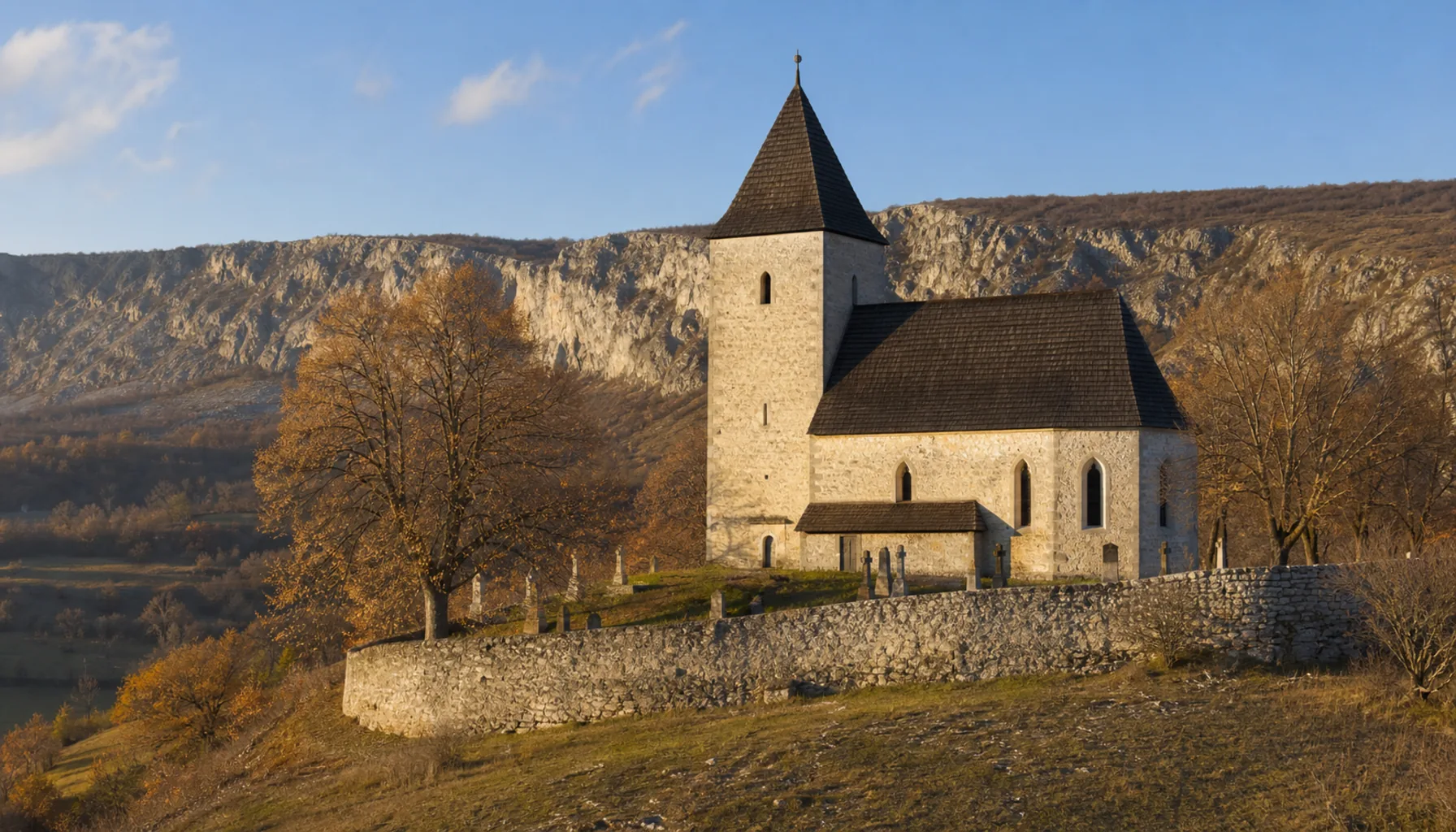
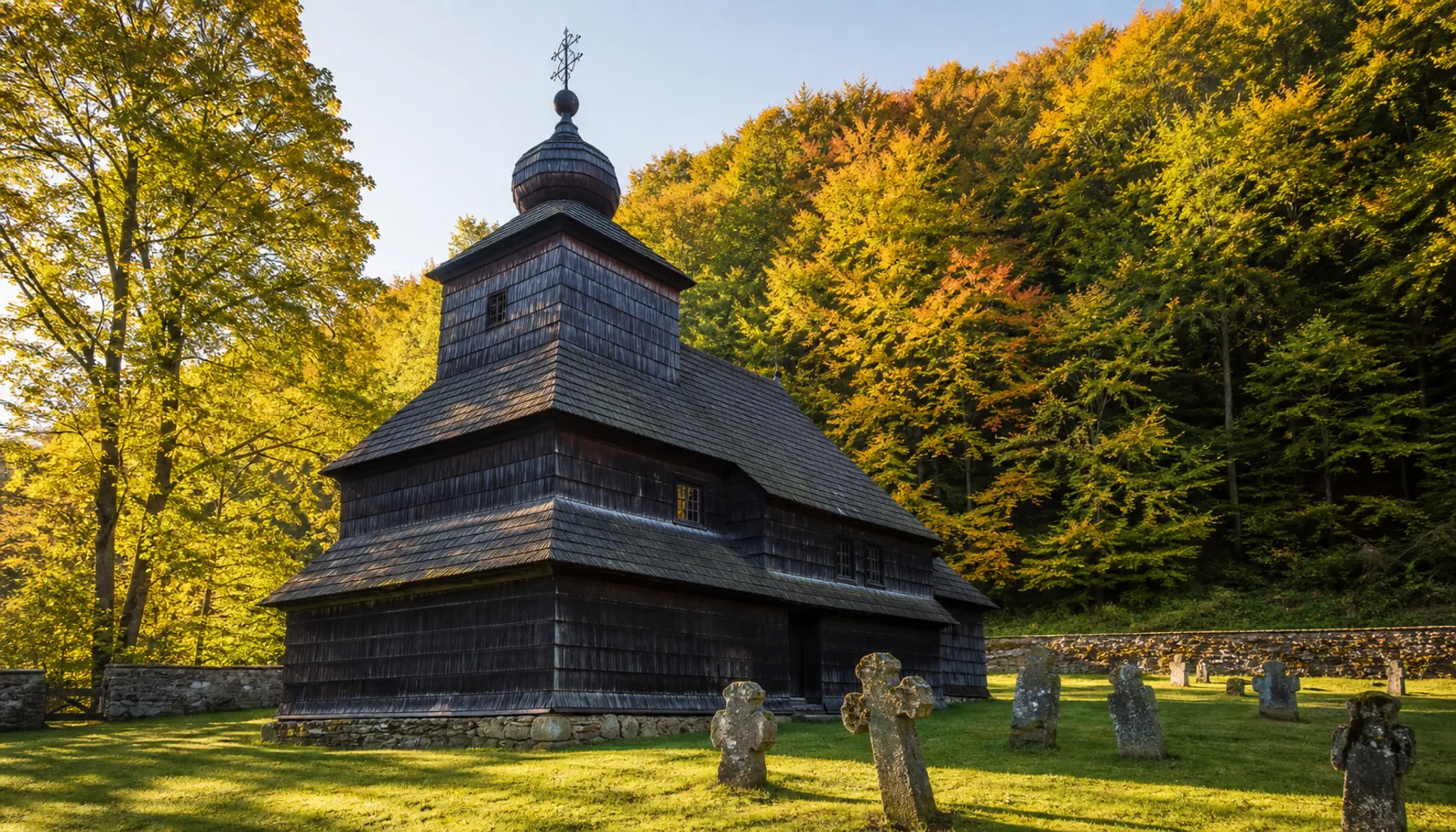
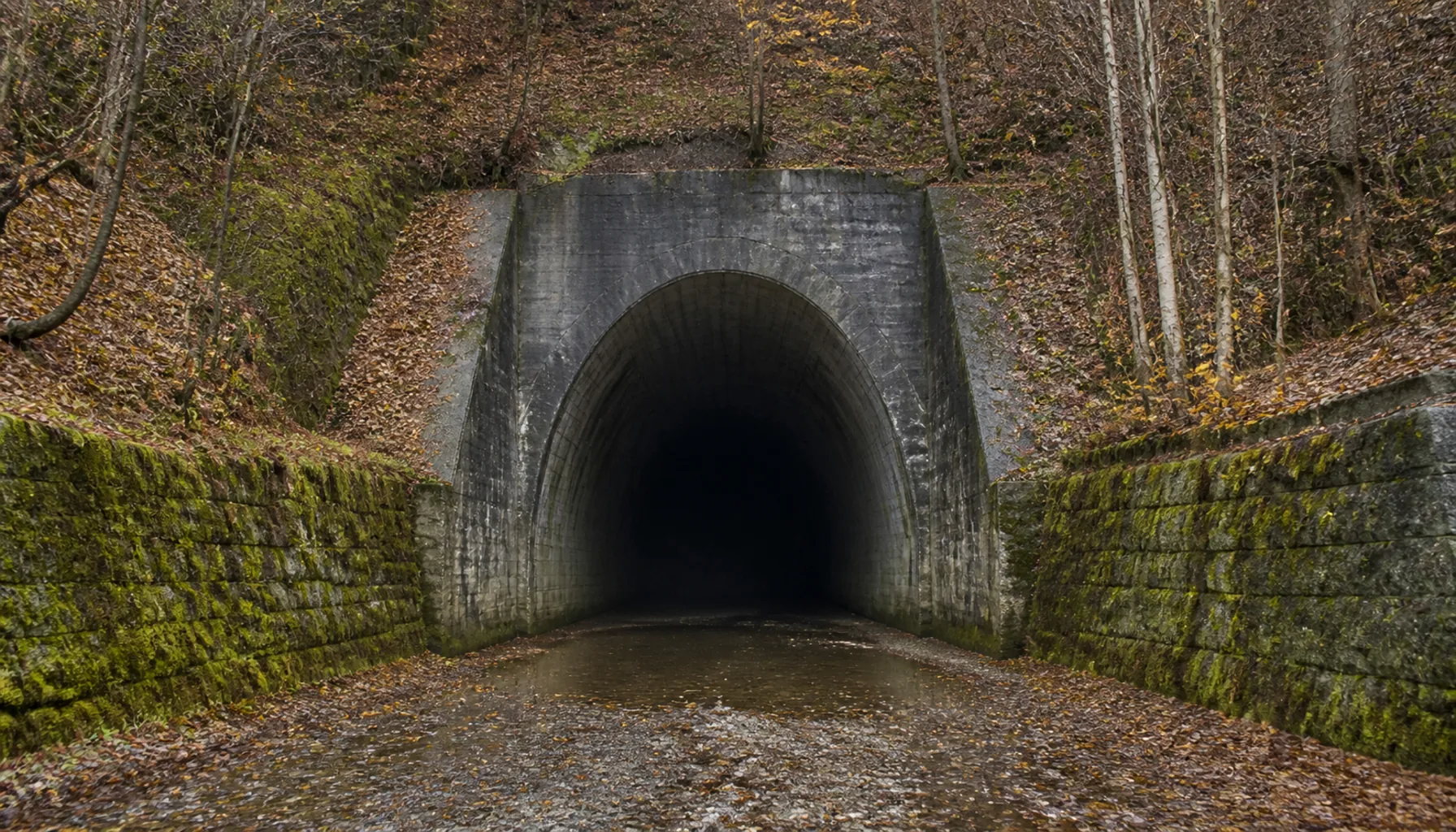
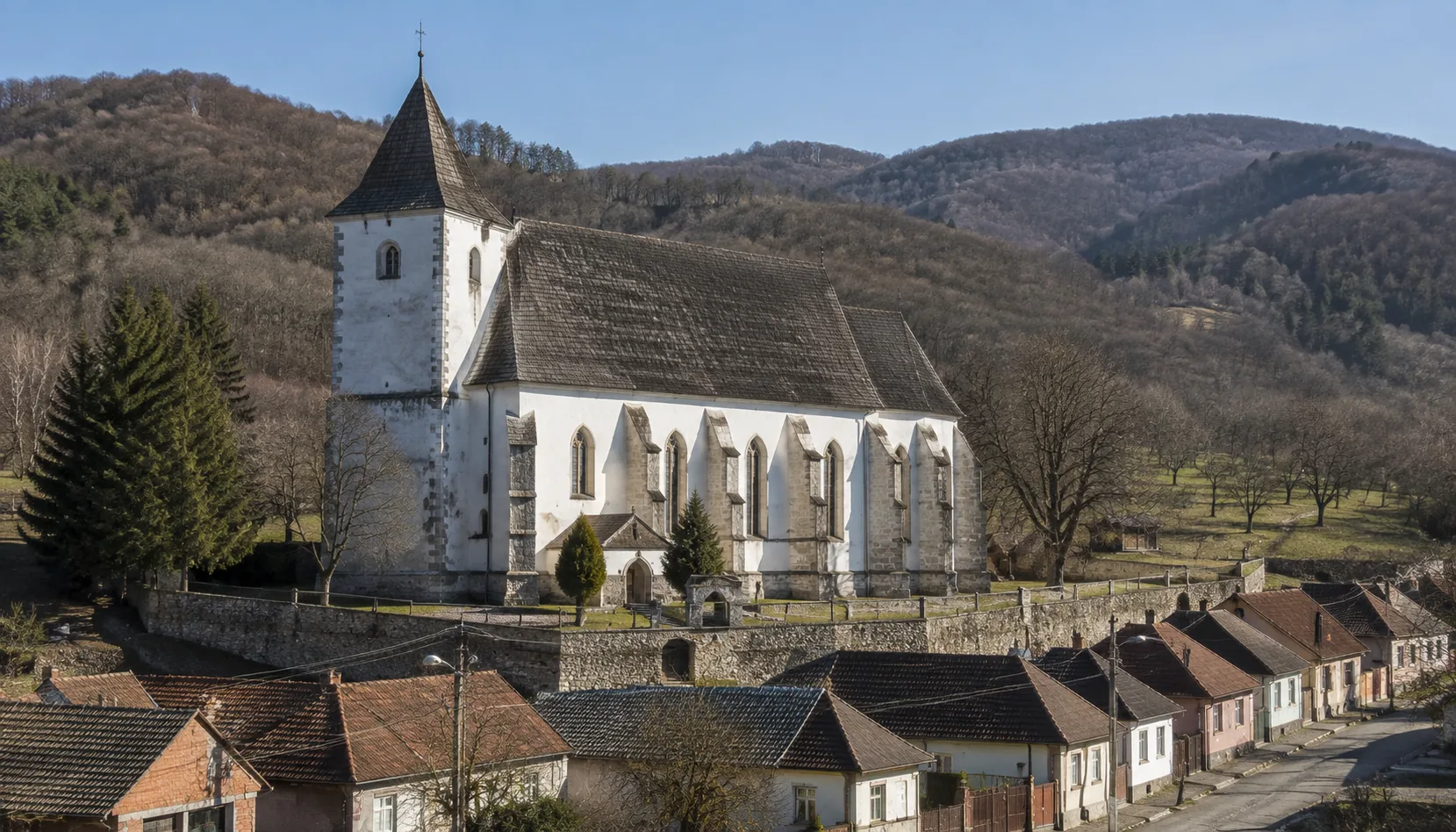
Gemer, Abov, Spiš and Zemplín meet inside one region, and their villages were built for different reasons: ore under the hills, a spring in the limestone, a landowner's park, a wooden church on the eastern edge of the Latin world.V jednom kraji sa stretávajú Gemer, Abov, Spiš a Zemplín a ich obce vznikali z rozdielnych dôvodov: pre rudu pod kopcami, prameň vo vápenci, panský park či drevený chrám na východnom okraji latinského sveta.
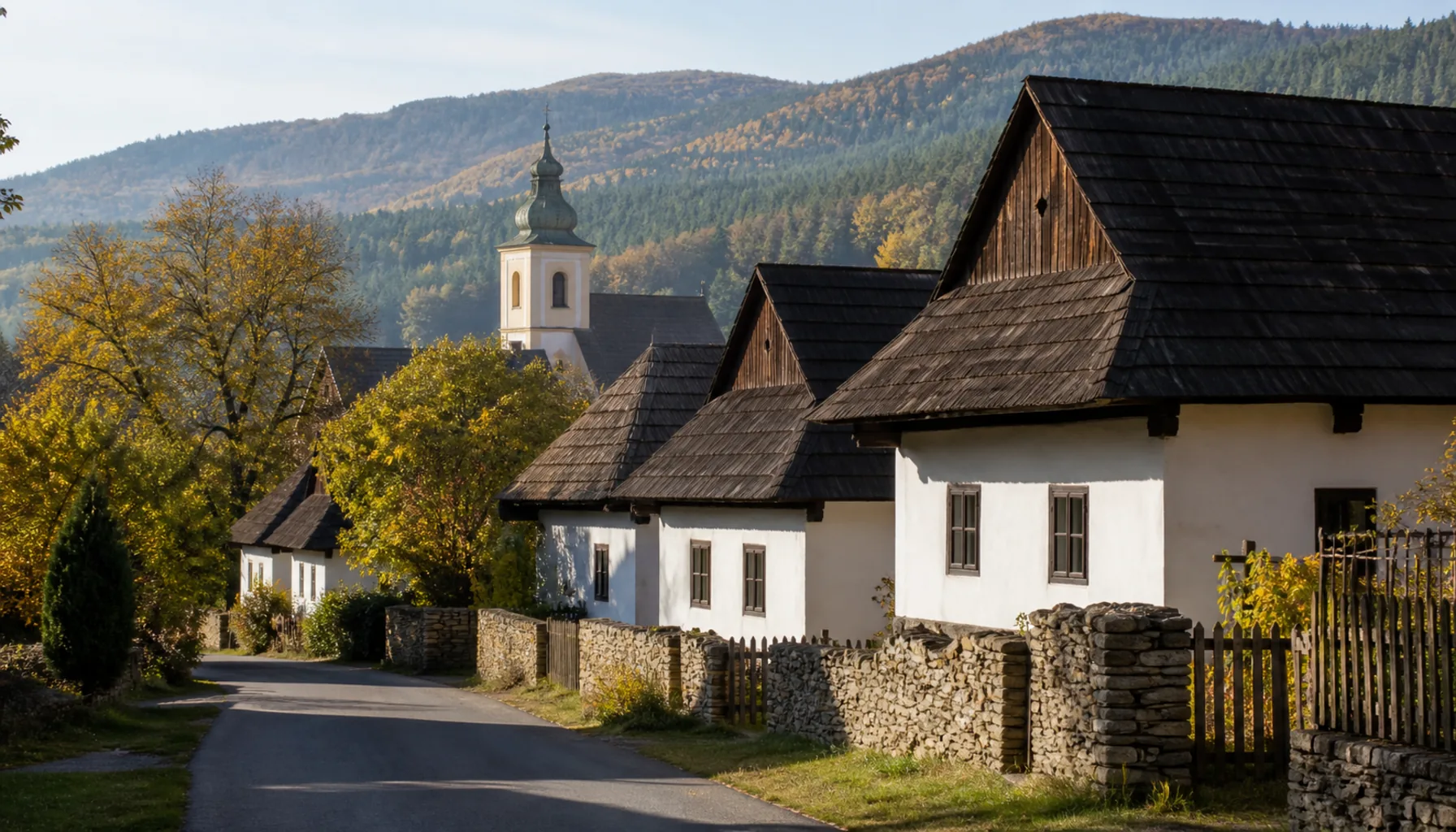
A village street in the Gemer valleys under the Slovak Ore MountainsDedinská ulica v gemerských dolinách pod Slovenským rudohorím
Four countrysides, one regionŠtyri krajiny, jeden kraj
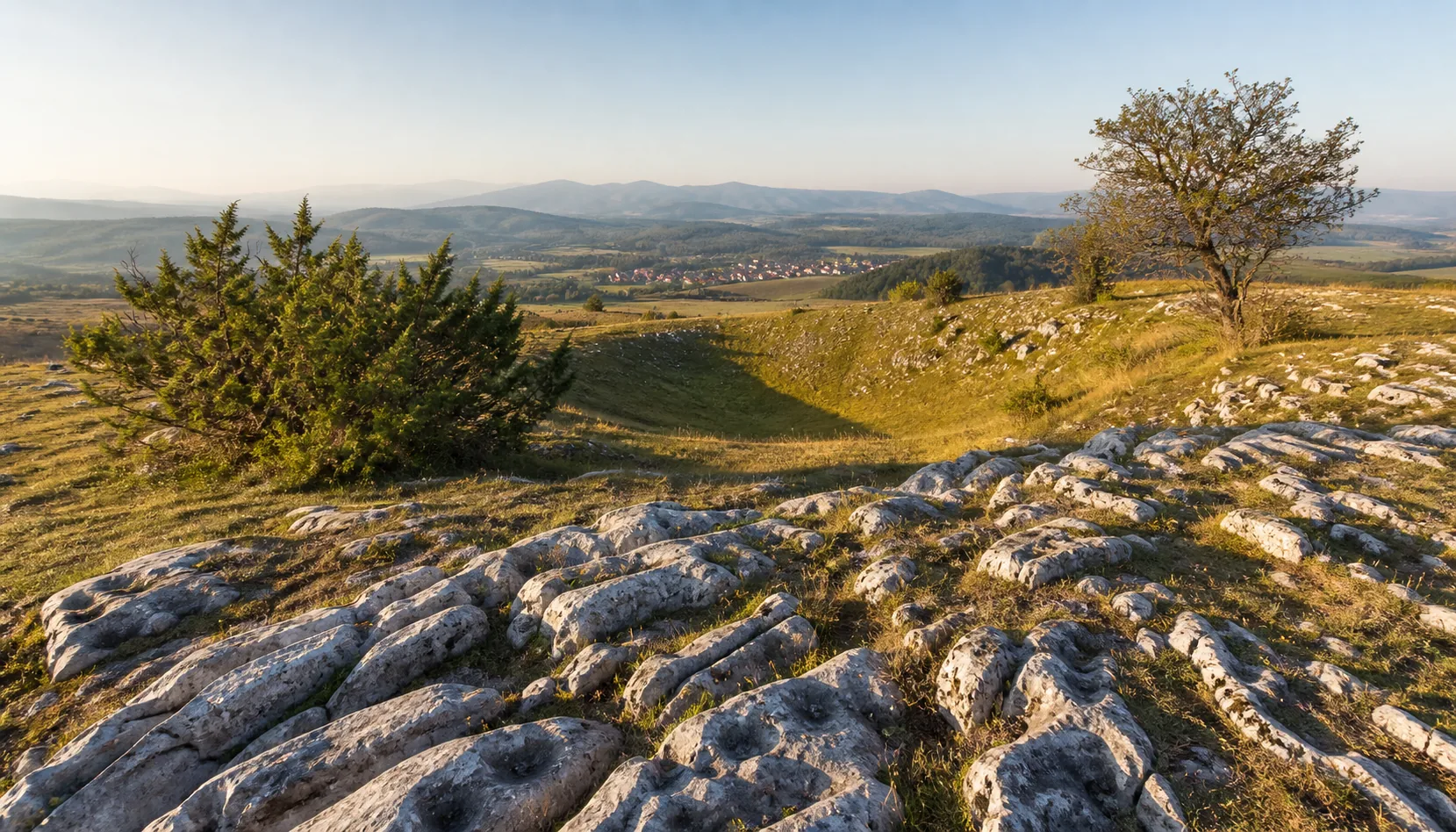
This is not one landscape. West of Košice the limestone plateaus of the Slovak Karst run down to the Hungarian border; north of them the Slovak Ore Mountains close off Gemer with its mining valleys; to the east the Zemplín lowland spreads towards the Bodrog and the first Tokaj slopes; and beyond Michalovce the hill country under the Vihorlat begins. A village here belongs to its own countryside first and to the region second.Nie je to jedna krajina. Západne od Košíc klesajú vápencové planiny Slovenského krasu k maďarskej hranici; severne od nich uzatvára Gemer Slovenské rudohorie so svojimi baníckymi dolinami; na východe sa Zemplínska nížina rozbieha k Bodrogu a k prvým tokajským svahom; a za Michalovcami sa začínajú kopce pod Vihorlatom. Obec tu patrí najprv svojmu starému regiónu — Gemeru, Abovu, Spišu či Zemplínu — a až potom kraju na mape.
What that means in practice is that the villages had different founding problems. In Gemer they grew around ore, smelting and the estates of families who owned both. On the karst they grew around water, because a limestone plateau swallows its rain and has almost no surface streams. In the far east they grew as small farming and grazing settlements in the folds of the hills, each with its own church and its own graveyard. The distances between them are short. The differences are not.V praxi to znamená, že obce riešili pri svojom vzniku odlišné problémy. Na Gemeri rástli okolo rudy, hutí a panstiev rodov, ktoré vlastnili oboje. Na krase rástli okolo vody, lebo vápencová planina svoj dážď prehltne a povrchové potoky na nej takmer nie sú. Na ďalekom východe vznikali ako malé roľnícke a pastierske osady v záhyboch kopcov, každá s vlastným chrámom a vlastným cintorínom. Vzdialenosti medzi nimi sú krátke. Rozdiely nie.
What the houses are made ofZ čoho sú domy
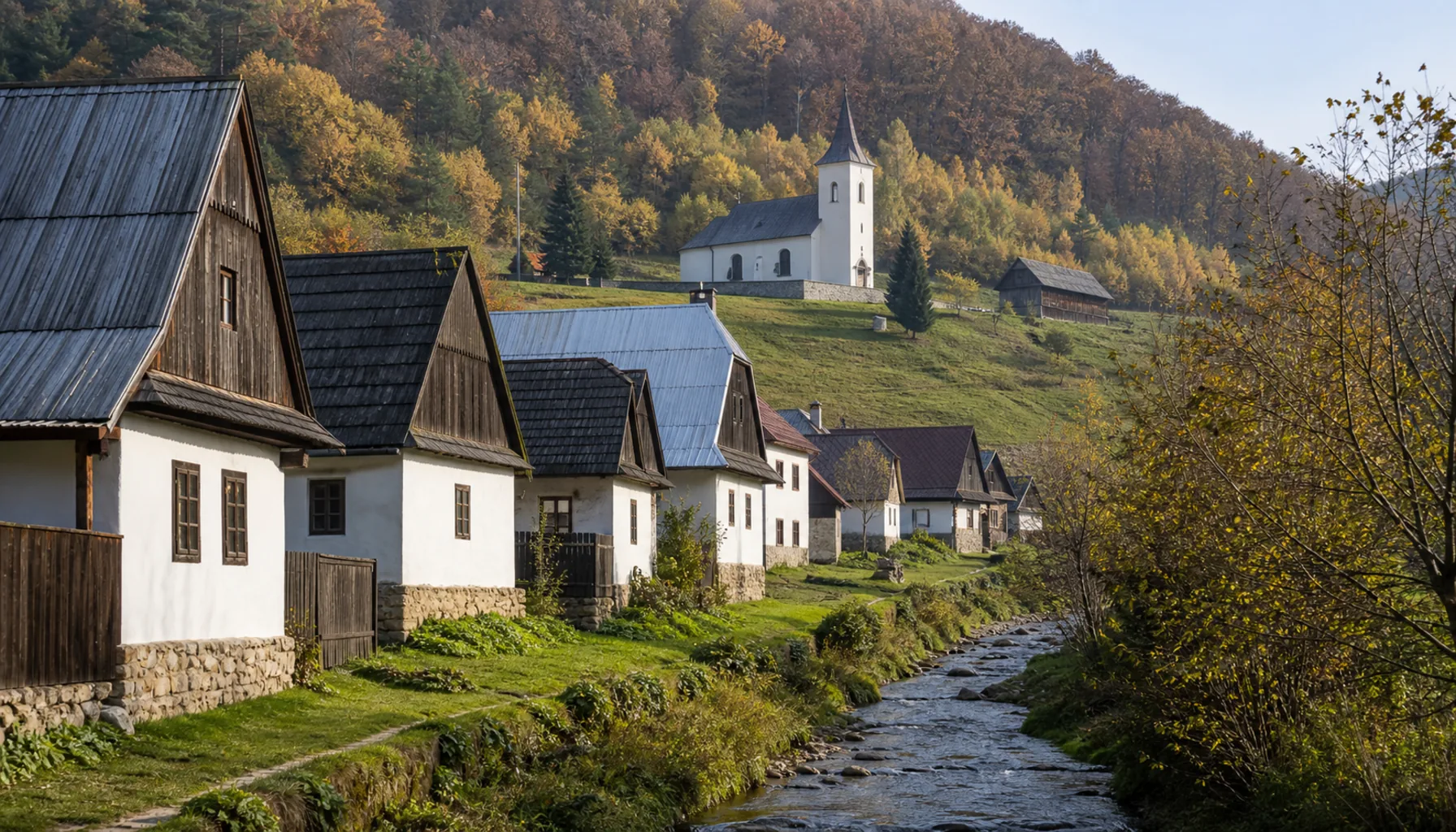
Building material follows the ground. On the karst the houses are stone under lime render, low and turned inwards against the wind that crosses the open plateau, and the water problem is written into the plan: roofed wells, cisterns, a pond puddled into a patch of clay where the limestone allows one. Up in the Ore Mountains the walls are stone at the base and timber above, with roofs pitched steeply for snow.Stavebný materiál sa riadi podložím. Na krase sú domy kamenné pod vápennou omietkou, nízke a obrátené dovnútra dvora proti vetru, ktorý prechádza otvorenou planinou, a problém s vodou je zapísaný priamo v pôdoryse: zastrešené studne, cisterny, jazierko vyklepané do ílovitého miesta tam, kde to vápenec dovolí. Hore v rudohorí sú steny v spodku kamenné a nad nimi drevené, strechy strmé kvôli snehu.
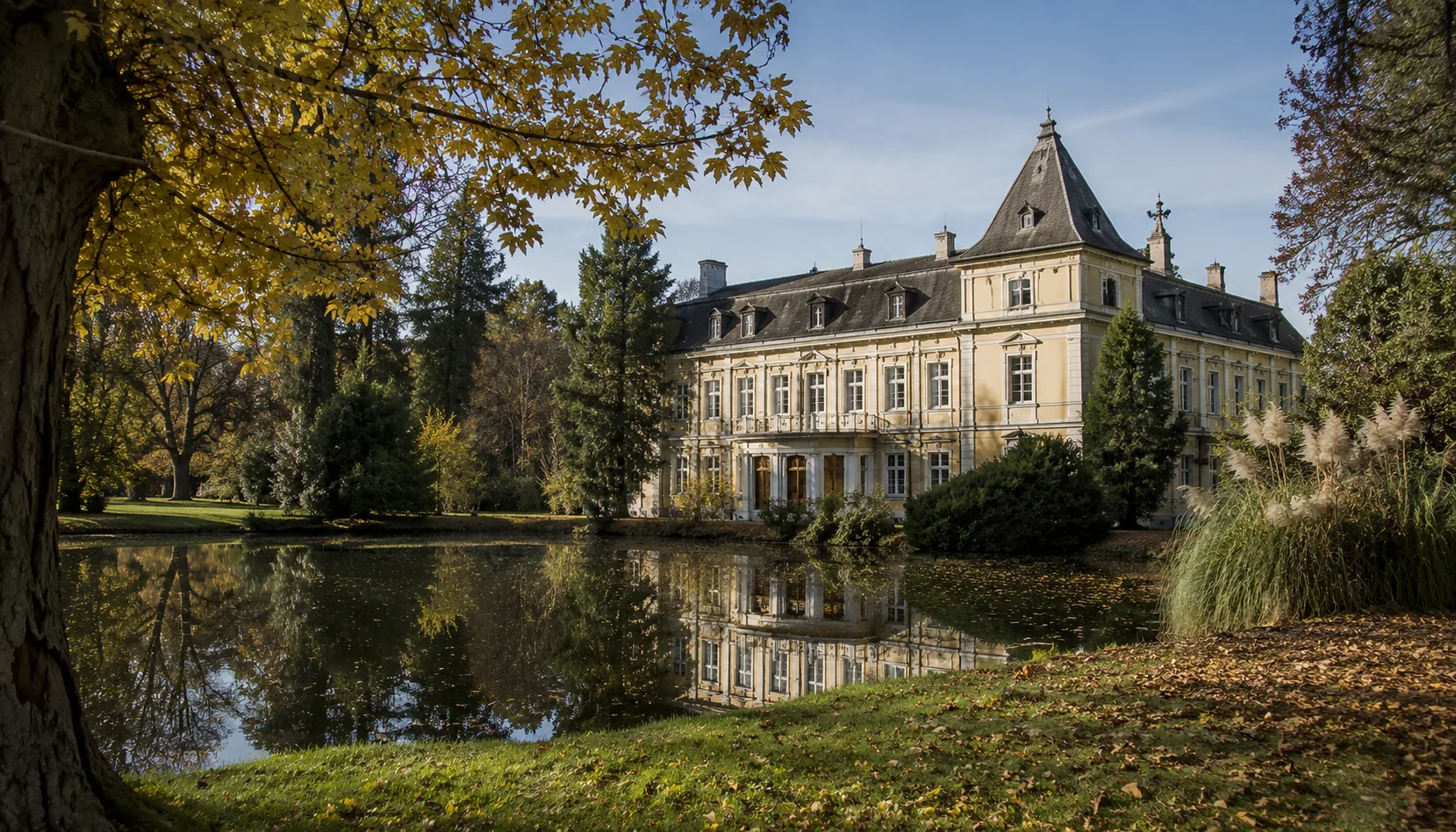
In the far east, where forest reaches the last houses, log building is carried to its limit. The Greek Catholic churches of that corner are built entirely of jointed logs and clad in shingle from footing to dome, with the frame held together without metal. They are the reason several very small villages here are known at all. The great houses are the exception to everything around them: brick and plaster brought in, an architect's drawing, and a park planted with trees that do not belong in this country.Na ďalekom východe, kde les dosahuje posledné domy, je zrubová stavba dovedená na hranicu svojich možností. Tamojšie gréckokatolícke chrámy sú celé zrubové a od podmurovky po kupolu obité šindľom, s konštrukciou spájanou bez kovu. Práve vďaka nim sa o niekoľkých veľmi malých obciach vôbec vie. Kaštiele sú výnimkou zo všetkého okolo: dovezená tehla a omietka, výkres architekta a park vysadený drevinami, ktoré do tejto krajiny nepatria.
Visiting them wellAko ich navštíviť
Almost nothing in these villages is open all day, every day. The show caves run guided tours to a timetable and shut for part of the winter; museum houses are seasonal; and a village church — the wooden ones especially, but the medieval Gemer ones just as much — is normally locked and is opened by a keyholder who lives nearby and has other things to do. A telephone call beforehand is the difference between a good day and a long drive to photograph a closed door.Takmer nič v týchto obciach nie je otvorené každý deň od rána do večera. Sprístupnené jaskyne majú prehliadky v pevných časoch a časť zimy sú zatvorené, múzejné kaštiele fungujú sezónne a dedinský kostol — a drevený obzvlášť, no gemerský stredoveký rovnako — býva zamknutý a otvára ho kľúčnik, ktorý býva neďaleko a má aj iné povinnosti. Telefonát vopred je rozdiel medzi vydareným dňom a dlhou cestou za fotografiou zamknutých dverí.
The other half of visiting well is remembering that people live here. Yards are private, farm tracks are working roads, and in the karst villages along the border a good deal of the everyday conversation is in Hungarian. None of that asks anything of a visitor beyond ordinary manners and the assumption that the place was not arranged for them.Druhá polovica dobrej návštevy je pamätať na to, že tu ľudia bývajú. Dvory sú súkromné, poľné cesty sú pracovné cesty a v krasových obciach pri hranici sa veľká časť bežných rozhovorov vedie po maďarsky. Nič z toho od návštevníka nežiada viac než bežnú slušnosť a predpoklad, že to miesto nebolo zariadené preňho.