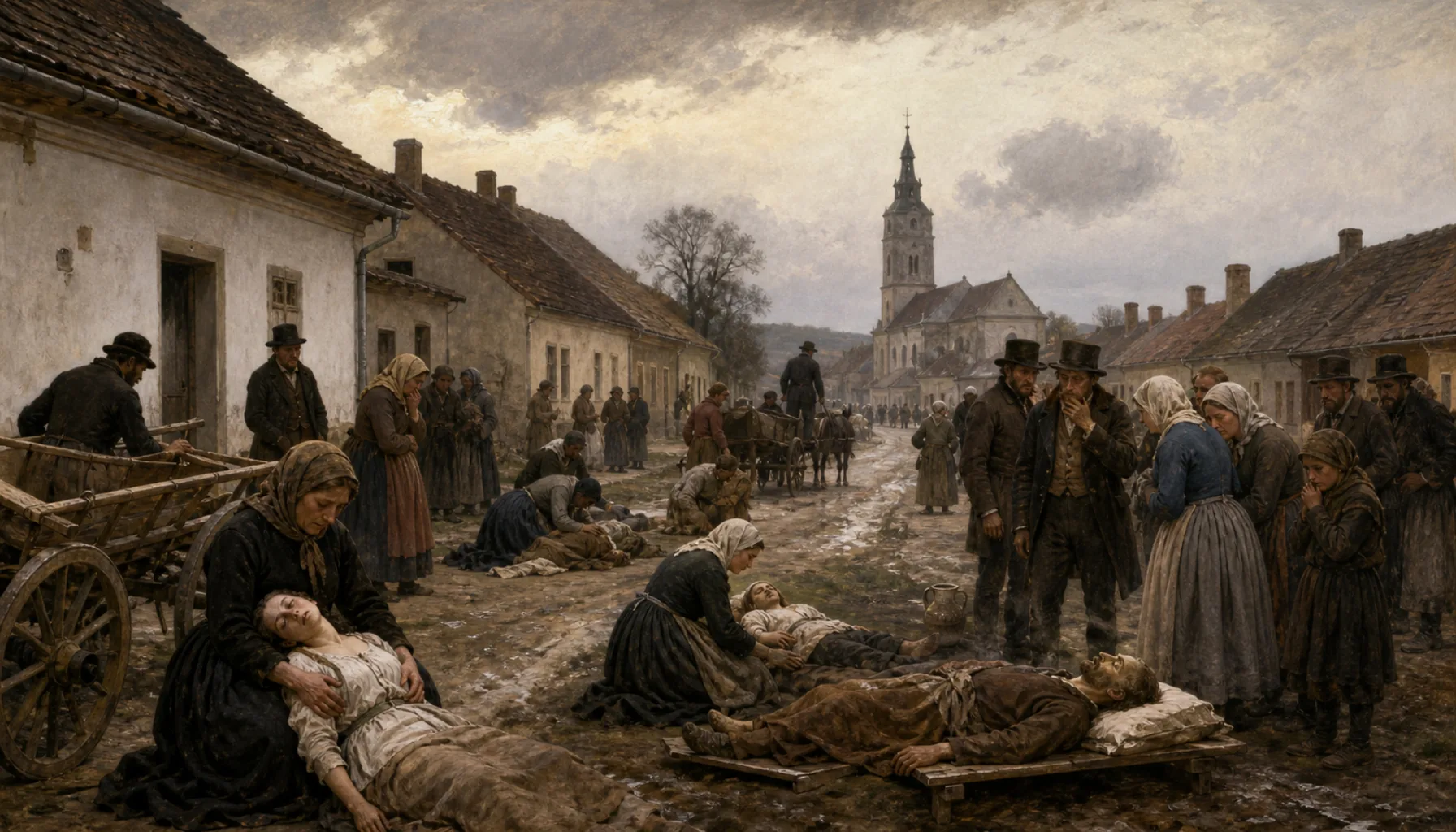
In 1831 cholera came up the roads from the east and killed 397 people in Malacky — a catastrophe in a town of a few thousand. The same epidemic set off a peasant rising in eastern Slovakia, and everywhere it left behind the feeling that the old order could protect nobody. In 1848 the revolution abolished serfdom: the villagers of the Pálffy estate stopped owing their lord labour days and dues, and the land they worked began to become their own. The family kept the manor, the forests and most of the wealth, but the legal relationship that had shaped life here for six hundred years was finished.V roku 1831 prišla po cestách z východu cholera a v Malackách zabila 397 ľudí — v meste s pár tisíc obyvateľmi pohroma. Tá istá epidémia vyvolala na východnom Slovensku roľnícke povstanie a všade po sebe zanechala pocit, že starý poriadok neochráni nikoho. V roku 1848 zrušila revolúcia poddanstvo: ľudia z pálfiovského panstva prestali pánovi dlhovať robotu a dávky a pôda, ktorú obrábali, sa začala stávať ich vlastnou. Rodu zostal kaštieľ, lesy aj väčšina bohatstva, no právny vzťah, ktorý tu šesťsto rokov určoval život, sa skončil.